
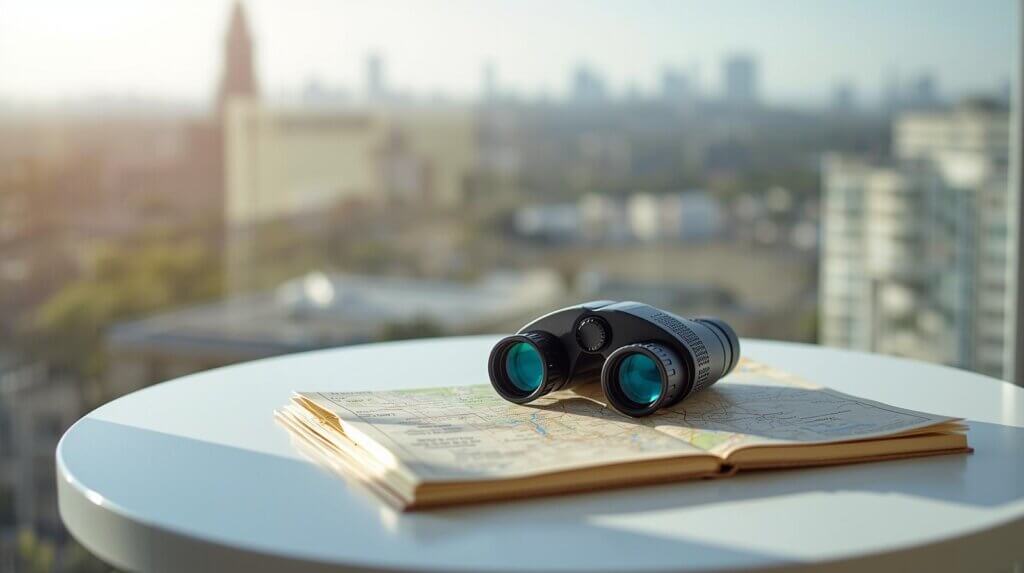
The best compact binoculars for sightseeing are not always the strongest, most expensive, or most “professional-looking” pair on the shelf. For sightseeing, you need something far more practical: small enough to carry all day, steady enough to use without a tripod, bright enough for city viewpoints and coastal walks, and simple enough that you actually take it out of your bag.
That last point matters more than most people admit.
A heavy pair of binoculars may look impressive at home, but after three hours walking through old streets, climbing cathedral towers, riding ferries, or standing at scenic overlooks, bulky gear becomes dead weight. Sightseeing binoculars should feel like a travel upgrade, not a punishment.
This article breaks down what really matters when choosing the best compact binoculars for sightseeing, where they help most, what specs to avoid, and which single model makes the most sense for travelers who want a clear, easy, everyday viewing experience.
Why Sightseeing Binoculars Are Different From Hiking or Birding Binoculars
Sightseeing is not the same as bird watching, safari travel, or sports events. Those activities often involve tracking movement. Sightseeing is usually about detail.
You may want to read the carvings on a cathedral, spot boats across a harbor, see rooftop architecture from a viewpoint, or zoom in on mountain villages from a cable car station. You are not chasing rare wildlife. You are trying to enjoy a place more deeply.
That changes the buying logic.
For sightseeing, the best compact binoculars need:
| Feature | Why It Matters for Sightseeing |
|---|---|
| 8x magnification | Gives detail without making the image too shaky |
| 25mm to 32mm lenses | Keeps the binoculars compact but usable in daylight |
| Wide field of view | Helps you scan buildings, landscapes, ports, and viewpoints |
| Lightweight body | Easier to carry during long walking days |
| Good close focus | Useful for museum details, gardens, architecture, and signs |
| Comfortable eyecups | Important if you wear glasses |
| Waterproof or water-resistant build | Helpful around beaches, ferries, rain, and humid cities |
Here is the blunt truth: most travelers overbuy magnification and underthink comfort. A 12x compact binocular sounds powerful, but it can be annoying for sightseeing because every tiny hand movement becomes more visible. After five minutes, your “powerful” binoculars feel nervous and jumpy.
For most people, 8x is the sweet spot.
Best Compact Binoculars for Sightseeing: The Practical Sweet Spot
The best compact binoculars for sightseeing usually fall into the 8×25 or 8×32 range.
An 8×25 pair is easier to pack into a jacket pocket, sling bag, or small backpack. It is ideal for city breaks, cruises, historic tours, and casual travel. An 8×32 pair gives a slightly brighter and more comfortable image, but it is also larger.
So which one should you choose?
For general sightseeing, I would choose 8×25 if you value portability above everything. Choose 8×32 if you are more serious about viewing comfort and do not mind carrying a little more weight.
Most travelers should not go beyond 10x unless they have steady hands and a very specific reason. The extra zoom sounds tempting, but sightseeing often involves standing, walking, turning, and quickly viewing different objects. Stability matters more than raw magnification.
Think of it like using a phone camera. Zooming in too much makes everything harder to frame. Binoculars work the same way.
My Top Pick: Celestron Nature DX 8×25
For one highly relevant product recommendation, the Celestron Nature DX 8×25 is a smart choice for sightseeing travelers.
It hits the right balance: compact size, 8x magnification, 25mm objective lenses, BaK-4 roof prisms, phase-coated optics, and a lightweight body. More importantly, it does not feel like a toy. Many cheap compact binoculars look fine online but produce dim, narrow, frustrating views. This model feels more useful in real sightseeing situations.
Why It Works Well for Sightseeing
The Celestron Nature DX 8×25 is especially good for:
- City viewpoints and observation decks
- Cruise ports and harbor views
- Historic buildings and architectural details
- Scenic train rides
- Coastal walks
- Mountain overlooks
- Observation decks, towers, bridges, and distant landmarks
- General travel days where you do not want heavy gear
It is not the brightest binocular for dusk or deep forest use, and it will not compete with premium full-size 8×42 binoculars. That would be an unfair comparison. But for a compact pair that can live in your travel bag, it makes sense.
Pros
| Pros | Why It Matters |
|---|---|
| Compact and easy to pack | You are more likely to carry it every day |
| 8x magnification | Stable enough for handheld sightseeing |
| Good optical quality for the size | Better detail than ultra-cheap travel binoculars |
| Rubber-armored body | Handles normal travel knocks better |
| Waterproof design | Useful around rain, boats, beaches, and misty viewpoints |
| Good close focus | Helps with nearby details, not just faraway views |
Cons
| Cons | What to Know Before Buying |
|---|---|
| Not ideal for low light | 25mm lenses are best in daylight |
| Smaller eyepiece feel | Not as relaxed as larger 8×32 or 8×42 models |
| Not premium-level optics | Great for casual travel, not elite glass performance |
| Can feel small in large hands | Try to use a neck strap or wrist strap |
This is the kind of binocular I would recommend to someone who wants one pair for travel, sightseeing, cruises, city breaks, and light outdoor use without turning their trip into a gear project.
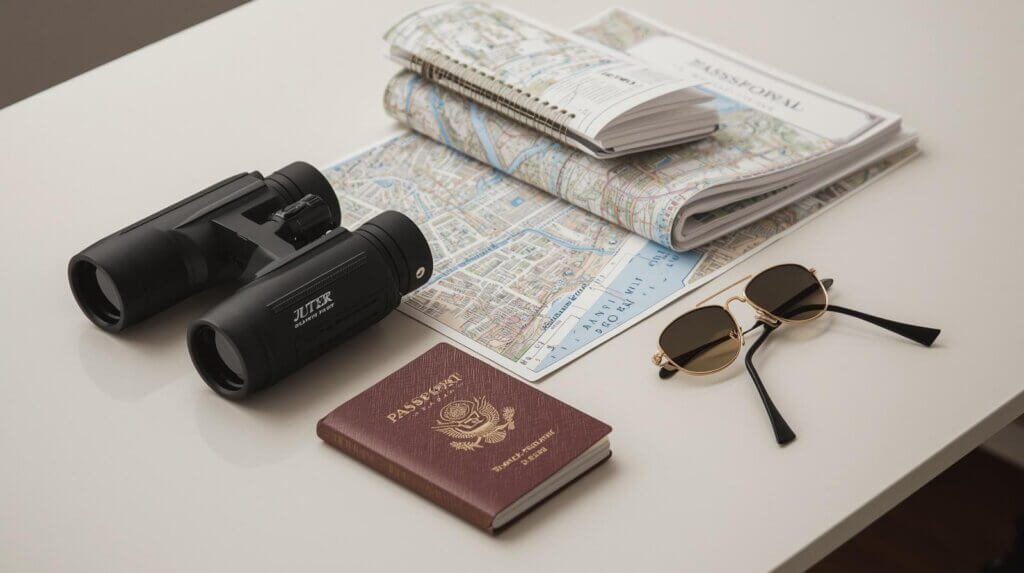
8×25 vs 10×25 Binoculars for Sightseeing
A lot of buyers get stuck here. The 10×25 model looks better because “10x” feels stronger than “8x.” But stronger does not always mean better.
For sightseeing, 8×25 is usually more enjoyable.
| Feature | 8×25 Binoculars | 10×25 Binoculars |
|---|---|---|
| Image stability | Easier to hold steady | More hand shake |
| Field of view | Usually wider | Usually narrower |
| Detail | Good for most sightseeing | Slightly more reach |
| Comfort | Better for scanning views | Can feel tense after a while |
| Best for | Cities, cruises, landmarks, landscapes | Distant objects in bright light |
A 10×25 compact can be useful if you mostly view faraway monuments, cliffs, ships, or mountain ridges. But if your sightseeing includes busy streets, skyline views, walking tours, and quick stops, 8x is calmer and faster.
Buyer psychology is funny here. People want the number that feels more powerful, then regret it when the image shakes. Do not buy binoculars like you are buying a race car. Buy them like you are buying shoes for a full travel day.
Real-World Sightseeing Scenarios Where Compact Binoculars Help
City Observation Decks
Observation decks are where compact binoculars shine. You can scan rooftops, bridges, towers, rivers, monuments, and neighborhoods without paying extra for those coin-operated viewing scopes.
In cities like New York, Dubai, London, Istanbul, or Paris, the naked eye catches the skyline. Binoculars reveal the personality: rooftop gardens, old facades, church spires, boats, window patterns, and tiny architectural details you would otherwise miss.
For city decks, choose binoculars with a wide field of view. You want to sweep across the skyline smoothly, not feel like you are looking through a straw.
Cruises and Harbor Views
Sightseeing from a cruise ship is different because distance changes constantly. One minute you are looking at a lighthouse. Next, you are trying to see a coastline, port building, bridge, or island.
The best compact binoculars for sightseeing on cruises should be waterproof or at least water-resistant. Salt air, spray, drizzle, and deck use are normal. A cheap pair with poor sealing can fog or degrade faster.
For a deeper cruise-focused option, read the supporting article on best compact binoculars for cruises so you can compare ship-deck viewing needs with everyday sightseeing.
Historic Tours and Architecture
This is where many travelers underestimate binoculars.
In old cities, the best details are often above eye level: stone carvings, ceiling artwork, clock towers, roof statues, stained glass, decorative balconies, and inscriptions. A compact binocular lets you slow down and actually see the craftsmanship.
You do not need huge magnification. You need sharpness, easy focusing, and comfortable handling.
Scenic Train Rides and Cable Cars
Compact binoculars are excellent for train routes, mountain railways, gondolas, and cable cars. But there is one catch: movement.
From a moving train, 10x can feel shaky and frustrating. An 8x binocular gives you a better chance of locking onto villages, rivers, slopes, bridges, and distant peaks without fighting the view.
Museums, Gardens, and Large Landmarks
Some museums may restrict binocular use, so always follow local rules. But in large spaces, gardens, palace grounds, ruins, and open-air heritage sites, compact binoculars can help you inspect distant details without walking back and forth all day.
A good close-focus distance is useful here. It lets you view nearby carvings, displays, flowers, and textures, not only faraway scenes.
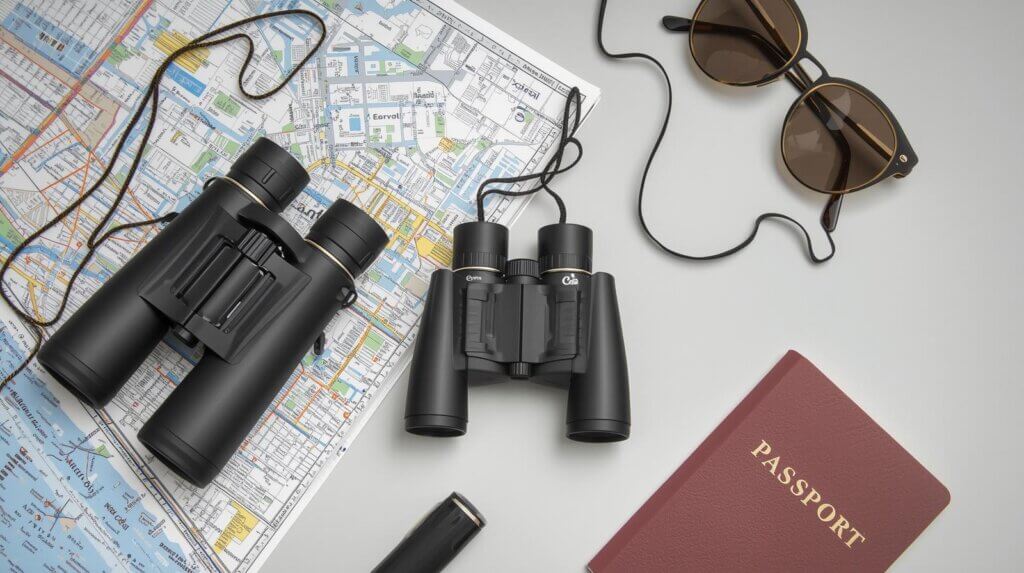
What Specs Matter Most for Sightseeing Binoculars?
Magnification: Stay Around 8x
For sightseeing, 8x magnification is the safest all-around choice. It brings landmarks closer but still keeps the view stable.
Avoid chasing 12x or 16x compact binoculars unless you enjoy shaky images and frustration. High magnification in a small body usually means a darker, narrower, harder-to-hold view.
Objective Lens Size: 25mm to 32mm Is Enough
The second number tells you the lens size. In 8×25, the lenses are 25mm. In 8×32, they are 32mm.
Larger lenses bring in more light, but they also add size and weight. For daytime sightseeing, 25mm is usually enough. For cloudy destinations, twilight views, or more relaxed viewing, 32mm is better.
Field of View: Wider Feels More Natural
Field of view is underrated. A wide field makes it easier to find what you are looking for.
This matters when you are scanning a coastline, looking across a city, or trying to locate a tower from a viewpoint. A narrow field may give you detail, but it also makes the experience feel cramped.
Eye Relief: Important for Glasses Wearers
If you wear glasses, eye relief matters. Look for twist-up eyecups and enough eye relief to see the full image without pressing the binoculars awkwardly against your face.
Bad eye relief can make even good optics feel annoying.
Focus Wheel: Smooth Beats Fancy
A stiff or tiny focus wheel is a deal-breaker for sightseeing. You will often shift from near buildings to distant views, then back again. If focusing feels slow, you will stop using the binoculars.
The focus wheel should be easy to turn but not loose.
Common Mistakes When Buying Sightseeing Binoculars
Mistake 1: Buying Too Much Magnification
This is the classic beginner mistake. More zoom sounds better, but sightseeing rewards steadiness. A clear 8x view beats a shaky 12x view almost every time.
Mistake 2: Buying the Cheapest Pair Possible
Ultra-cheap binoculars often have dim images, poor alignment, stiff focusing, and narrow views. They may work for five minutes, then sit in a drawer forever.
Cheap gear is only cheap if you actually use it.
Mistake 3: Ignoring Weight
A few extra ounces do not sound like much until you are carrying a phone, wallet, water bottle, power bank, camera, documents, snacks, and souvenirs. Compact binoculars should not become another burden.
Mistake 4: Forgetting Weather Protection
Sightseeing does not happen only in perfect weather. Fog, drizzle, sea spray, humidity, and accidental splashes are common. Waterproof or weather-resistant binoculars are worth it.
Mistake 5: Choosing Binoculars That Look Good but Feel Bad
Comfort is personal. Some compact binoculars are too tiny, especially for larger hands. If a pair feels awkward to hold, the specs will not save it.
Compact Binoculars for Sightseeing vs Safari vs Sports Events
Sightseeing binoculars sit in the middle. They need portability, comfort, and enough detail for mixed travel use.
| Use Case | Best Binocular Style | Main Priority |
|---|---|---|
| Sightseeing | 8×25 or 8×32 compact | Portability and stable views |
| Safari | 8×32, 8×42, or 10×42 | Brightness and wildlife detail |
| Sports events | 8×25 or 10×25 compact | Fast viewing from seats |
| Cruises | 8×25 waterproof or 8×32 | Stability and weather protection |
| Hiking | 8×25 lightweight | Low weight and durability |
If your trip includes wildlife drives, the sightseeing pair may not be enough. Read best compact binoculars for safari before buying, because safari viewing usually needs more brightness and sometimes more reach.
For stadiums, racing, and outdoor games, check best compact binoculars for sports events. Sports viewing has a different rhythm because subjects move faster and seating distance matters.
For the full travel gear breakdown, read our main guide on best compact binoculars for travel. It will help you compare sightseeing, cruises, hiking, backpacking, safari, and general travel use in one place.
Who Should Buy Compact Binoculars for Sightseeing?
You should buy compact sightseeing binoculars if you:
- Travel to cities with observation decks or historic landmarks
- Enjoy cruises, ferries, harbors, or coastal viewpoints
- Like architecture, old towns, towers, castles, bridges, and skyline views
- Prefer carrying small gear instead of full-size optics
- Want something better than phone zoom
- Need a simple travel accessory that works without batteries
- Often feel like distant views look “almost clear enough” but not quite
You may not need them if you mostly travel for restaurants, shopping, nightlife, or indoor attractions. Be honest with yourself. The best compact binoculars for sightseeing are useful only if your travel style includes views worth observing.
Buyer Tips Before You Choose
First, do not buy only for one dream trip. Buy for the way you travel most often. If you take city breaks, cruises, weekend drives, and family trips, an 8×25 compact makes more sense than a large specialist model.
Second, consider how you carry your gear. If your bag is already full, smaller binoculars win. If you travel with a backpack and enjoy longer viewing sessions, 8×32 may feel better.
Third, avoid mystery brands with huge magnification claims. A tiny “60×60” binocular for a low price is usually marketing nonsense. Real optical performance comes from glass quality, coatings, alignment, and build.
Fourth, think about your phone habits. Phone zoom is convenient, but it often turns distant details into digital mush. Binoculars give you real optical viewing, which feels more natural and immediate.
Final Verdict: What Are the Best Compact Binoculars for Sightseeing?
The best compact binoculars for sightseeing are the ones you can carry all day without thinking about them, then pull out quickly when the view deserves more attention.
For most travelers, an 8×25 model is the smartest starting point. It gives enough magnification for landmarks, skylines, cruise ports, historic buildings, and scenic viewpoints while staying small enough for real travel use.
The Celestron Nature DX 8×25 is my top practical recommendation because it offers a strong mix of portability, optical quality, weather protection, and everyday usability. It is not a luxury binocular, and it is not trying to be. That is exactly why it works. It fits the real sightseeing traveler: curious, mobile, and unwilling to carry unnecessary bulk.
For more practical travel optics advice, explore our binocular tips blog or read the full guide on best compact binoculars for travel before choosing your final pair.
FAQs About the Best Compact Binoculars for Sightseeing
What magnification is best for sightseeing binoculars?
For most sightseeing trips, 8x magnification is best. It gives you a closer view of landmarks, buildings, coastlines, and landscapes without making the image too shaky. A 10x compact binocular can work for distant views, but it is harder to hold steady.
Are 8×25 binoculars good for sightseeing?
Yes, 8×25 binoculars are a strong choice for sightseeing because they are small, light, and easy to carry. They work best in daylight and are ideal for city views, cruises, architecture, scenic overlooks, and general travel use.
Are compact binoculars better than phone zoom for sightseeing?
Compact binoculars usually give a more natural and detailed view than phone zoom. Phone zoom often relies on digital enlargement, which can reduce image quality. Binoculars use optical magnification, so distant details look clearer and easier to enjoy in real time.
Should I choose 8×25 or 10×25 binoculars for travel sightseeing?
Choose 8×25 if you want steadier views, easier scanning, and better comfort for general sightseeing. Choose 10×25 only if you mostly view faraway objects in bright daylight and have steady hands.
Do I need waterproof binoculars for sightseeing?
Waterproof binoculars are strongly recommended for sightseeing. Travel often includes rain, humidity, beaches, ferries, waterfalls, and changing weather. Waterproofing helps protect your binoculars and makes them more reliable during real trips.
What is the best compact binocular size for city sightseeing?
For city sightseeing, 8×25 is usually the best size. It is small enough for a jacket pocket or sling bag but still useful for observation decks, towers, bridges, architecture, and skyline views.
Are expensive binoculars worth it for sightseeing?
Expensive binoculars can offer sharper, brighter, and more comfortable views, but most casual travelers do not need premium models. A well-made compact binocular in the mid-budget range is usually enough for sightseeing.
Can I use sightseeing binoculars for safari or sports events?
You can, but they may not be perfect. Safari viewing often benefits from larger lenses like 8×32 or 8×42, while sports events may work well with 8×25 or 10×25 depending on seat distance. Sightseeing binoculars are the most flexible for general travel, not specialized use.




