
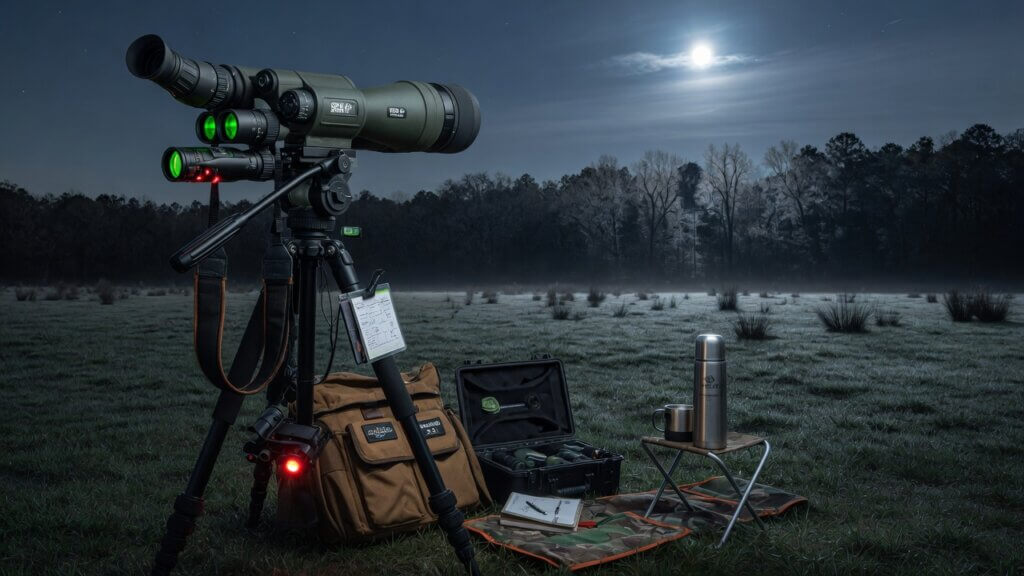
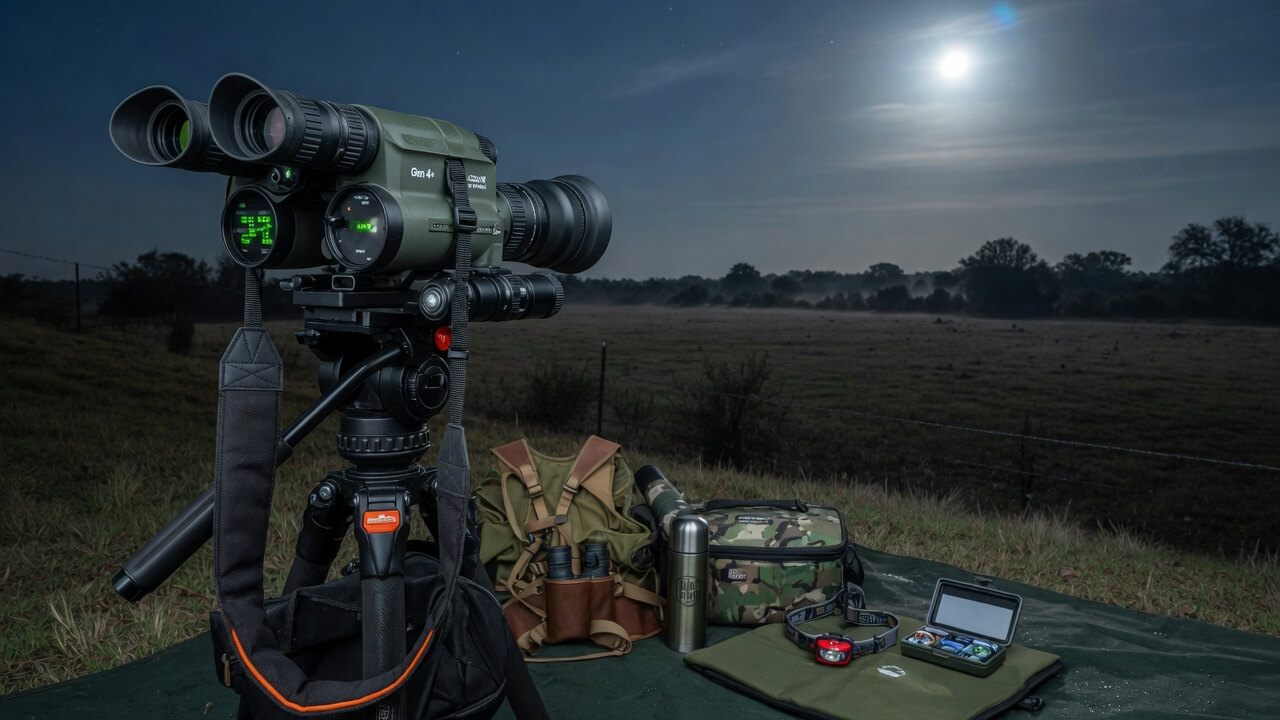
Long Range Night Vision Binoculars for Hunting: What Really Matters in the Field
Long range night vision binoculars for hunting sound simple on paper: see farther, spot earlier, move smarter.
But in real hunting conditions, “long range” is not just about the biggest zoom number printed on the box. It is about usable detection distance, clean image detail, infrared reach, field of view, battery life, stability, and how well the binoculars handle messy real-world nights — fog, brush, uneven ground, cold hands, and animals that rarely stand still where you want them to.
That is where many buyers get disappointed.
They buy night vision binoculars advertised with huge range claims, then realize the image becomes grainy, narrow, or shaky when they zoom in. For hunting, especially over open fields, crop edges, feeder areas, ridgelines, and predator sets, long-range visibility needs to be practical, not just impressive in marketing copy.
If your main goal is to scan wider ground after sunset and identify movement before it gets too close, long range night vision binoculars for hunting can absolutely be worth it. But you need the right expectations.
What “Long Range” Really Means in Night Vision Hunting
In daytime binoculars, range is mostly about magnification and glass quality. At night, it changes.
With digital night vision binoculars, long range depends on three things working together:
| Feature | Why It Matters at Long Range |
|---|---|
| Sensor quality | Controls how much detail you see in low light |
| IR illuminator strength | Helps brighten distant areas in total darkness |
| Magnification range | Lets you inspect objects farther away |
| Display resolution | Affects how clear the image looks to your eyes |
| Stability | Keeps the view usable when zoomed in |
| Focus control | Helps sharpen distant targets and background detail |
This is why a 10x night vision binocular with weak infrared can perform worse than a lower-magnification model with a stronger sensor and better IR beam.
For real hunting, useful long-range performance usually means you can scan a field, identify movement, separate brush from body shape, and decide whether it is worth switching to your next optic or changing your setup.
That last point matters.
Night vision binoculars are not always meant to replace a scope, thermal unit, or rangefinder. Their strongest role is observation. They help you understand what is happening in the dark before you make a move.
For a broader breakdown of digital models, features, and hunting setups, you can also read our full pillar guide on digital night vision binoculars for hunting.
Where Long Range Night Vision Binoculars Help Most
Not every hunting situation needs long range night vision binoculars. If you are moving through tight timber or scanning inside 75 yards, a wider field of view may matter more than distance.
But in open or semi-open hunting areas, long-range night vision becomes extremely useful.
Open Fields and Pasture Edges
This is where long range night vision binoculars for hunting make the most sense. You are not just looking straight ahead. You are glassing lanes, fence lines, low spots, tree shadows, and dark patches where movement can blend in.
A good pair lets you scan without constantly walking closer and disturbing the area.
Crop Fields and Feeder Setups
If you hunt around fields, bait sites, or feeder areas where legal, distance helps you stay patient. You can watch activity from farther back instead of pushing in too early.
The benefit is not only seeing farther. It is reducing pressure.
Predator Calling Sets
For predator hunting, long-range night vision binoculars are valuable because movement can appear far outside normal shooting distance. You may catch eyeshine, body movement, or a shape crossing an opening before it commits.
If coyotes are your main target, our related article on night vision binoculars for coyote hunting goes deeper into scanning lanes, call setups, and field positioning.
Hog Hunting Over Large Properties
Hog hunting often involves watching wide areas, trails, water points, and field damage zones. Long-range binoculars help you check activity without walking into the sounder’s space too soon.
For hog-specific setups, you may also like our practical guide on night vision binoculars for hog hunting.
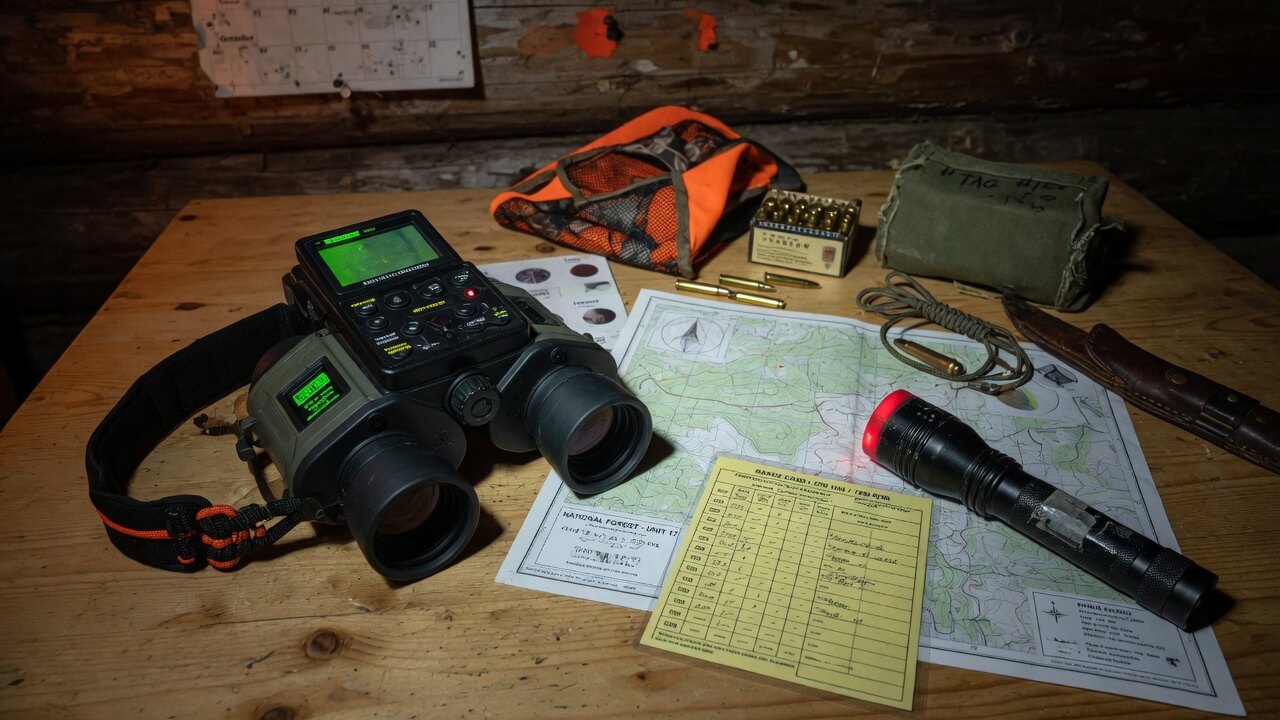
Digital vs Traditional Night Vision for Long Range Hunting
Most modern buyers looking for long range night vision binoculars for hunting end up choosing digital night vision. It is more affordable, easier to record with, and usually more flexible for day and night use.
Here is the practical difference:
| Type | Best For | Main Weakness |
|---|---|---|
| Digital night vision binoculars | Day/night use, recording, budget-friendly hunting setups | Needs IR in darker conditions |
| Gen 1 night vision | Basic close-range viewing | Limited clarity and range |
| Gen 2/Gen 3 night vision | Better passive low-light performance | Expensive and often overkill for casual hunters |
| Thermal binoculars | Detecting heat signatures fast | Higher cost and less natural detail |
For most hunters, digital night vision binoculars are the sweet spot. You get enough range for scanning, built-in infrared, zoom, image capture, and video recording without jumping into premium military-style pricing.
But there is a tradeoff.
Digital night vision depends heavily on infrared light in very dark conditions. On a moonlit night, performance may feel impressive. In heavy cloud cover or thick timber, the same binoculars may need IR support to stay useful.
The Range Trap: Detection vs Identification
This is one of the biggest mistakes buyers make.
A brand may advertise a long viewing range, but that does not always mean you can clearly identify what you are seeing at that distance.
There are three levels of night vision range:
| Range Type | What It Means |
|---|---|
| Detection range | You can notice something is there |
| Recognition range | You can tell the general shape or movement |
| Identification range | You can confidently tell what it is |
For hunting, identification is the range that matters most.
Seeing a blurry shape at 400 yards is not the same as confidently knowing what that shape is. In real use, brush, humidity, dust, rain, and uneven IR reflection can all reduce detail.
Avoid buying long range night vision binoculars only because the box claims extreme distance. Focus on sensor quality, IR performance, zoom control, and real field usability that match your hunting style.
Best Magnification for Long Range Night Vision Binoculars
More magnification sounds better, but at night it can become a problem.
High zoom narrows your field of view. It also makes handshake more obvious. If the image is digital, zooming too far can soften the picture and make it harder to judge detail.
For hunting, a practical range is often better than a huge range.
Good Magnification Ranges
| Magnification | Best Use |
|---|---|
| 3x–5x | Scanning wider areas |
| 6x–10x | Checking field edges and distant movement |
| 12x–16x | More detailed long-range viewing with support |
| 20x+ digital zoom | Usually only useful in very stable conditions |
If you hunt from a fixed blind, tripod, or vehicle-based observation point where legal, higher zoom becomes more usable. If you walk a lot, lower magnification with better field of view usually feels better.
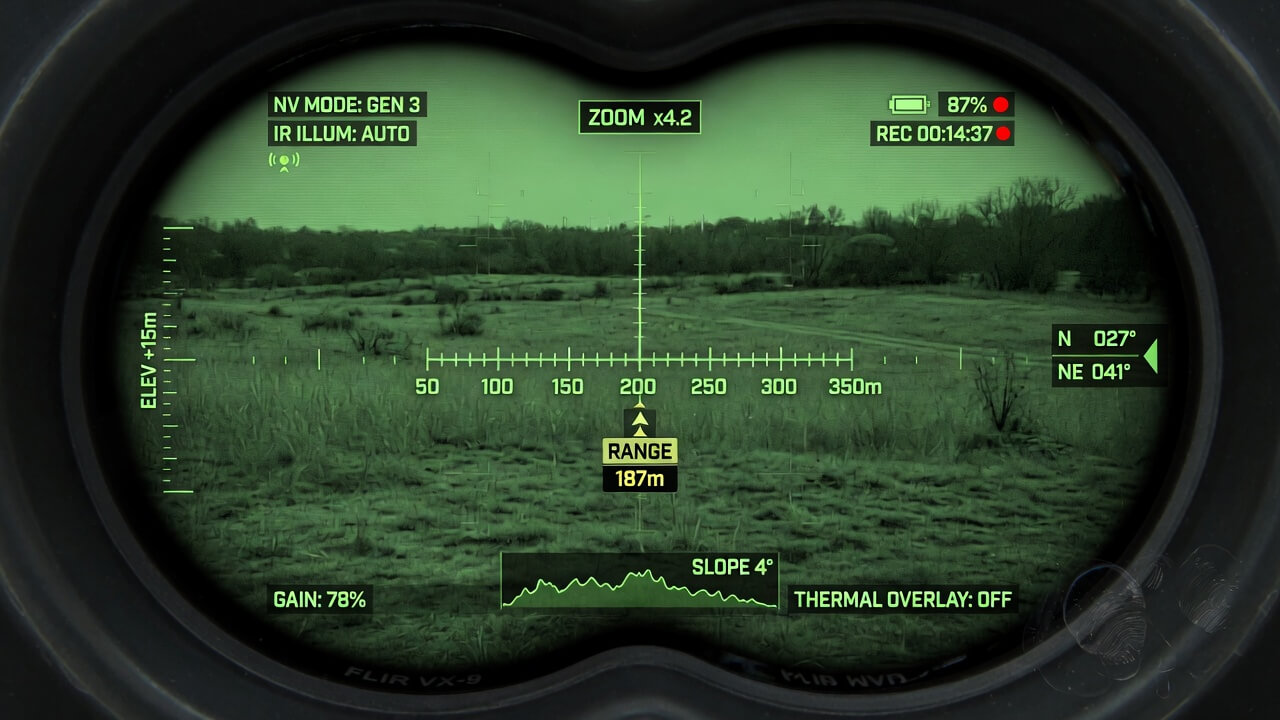
Why IR Illuminator Quality Matters More Than You Think
The infrared illuminator is the hidden hero of long range night vision binoculars for hunting.
Without enough IR power, the binocular may work fine at short range but struggle when you scan across a large field. A weak IR beam spreads out too quickly. A narrow beam may reach farther but can make scanning feel like looking through a tunnel.
The best setup depends on where you hunt.
For open country, you want stronger IR reach and adjustable intensity. For brush or timber, too much IR can bounce off branches and wash out the image. Adjustable infrared gives you more control.
Built-In IR vs External IR
| Setup | Pros | Cons |
|---|---|---|
| Built-in IR | Simple, compact, easy to use | May have limited range |
| External IR illuminator | Better reach and beam control | Adds weight and setup time |
If your hunting area is mostly open fields, an external IR option can make a noticeable difference. If you want simple grab-and-go scanning, built-in IR is easier.
One Product Worth Considering: ATN BinoX 4K 4-16x
A highly relevant option for hunters who want long range night vision binoculars is the ATN BinoX 4K 4-16x.
It makes sense because it combines 4-16x magnification, digital day/night viewing, built-in IR support, video recording, and a laser rangefinder in one unit. Retail specs commonly list features such as 4-16x magnification, a 40mm objective lens, 1080p video recording, weather resistance, Wi-Fi support, and a built-in laser rangefinder.
This is not the lightest or simplest option for every hunter. But if you are scanning open fields, checking distant movement, or hunting from a fixed position, it fits the long-range use case better than cheap compact night vision binoculars.
Why It Makes Sense
Pros:
- Strong magnification range for open-field scanning
- Built-in rangefinder adds practical value
- Day and night use makes it more versatile
- Video recording is useful for reviewing activity later
- Good fit for fixed-position hunting setups
Cons:
- More expensive than entry-level digital binoculars
- Higher zoom works best with stable support
- Digital night vision still depends on IR in dark conditions
- More features mean more settings to learn
My opinion: this is the type of model I would look at if long-range scanning is the priority. If your hunting is mostly inside timber or short-distance brush, I would choose something lighter with a wider view instead.
Long Range Night Vision vs Thermal for Hunting
Hunters often compare long range night vision binoculars with thermal binoculars. Both can be useful, but they solve different problems.
| Feature | Night Vision Binoculars | Thermal Binoculars |
|---|---|---|
| Shows natural detail | Better | Weaker |
| Detects heat fast | No | Yes |
| Works through light brush | Limited | Better |
| Cost | Usually lower | Usually higher |
| Identification detail | Better in clear view | Can be harder |
| Best use | Observing and confirming | Detecting quickly |
Thermal is excellent for detection. Night vision is better when you want a more natural view of the terrain.
For many hunters, the ideal setup is thermal for scanning and night vision for confirming. But if your budget allows only one observation tool, long range night vision binoculars can still be very effective when paired with good fieldcraft.
Real-World Use Cases
Scenario 1: Watching a Hay Field From a Blind
You are set up before dark. The field is wide, and the far tree line is several hundred yards away. With long range night vision binoculars, you can scan slowly without waving a weapon-mounted optic around.
This is safer, calmer, and more efficient.
You are looking for movement first, then shape, then behavior.
Scenario 2: Checking Field Damage for Hog Activity
You arrive near a damaged crop field and do not want to walk straight in. Long-range binoculars let you check low spots and open edges from a distance.
The biggest advantage here is patience. You can observe before committing.
Scenario 3: Predator Stand With Multiple Approach Lanes
During a coyote set, movement may come from unexpected angles. A long-range binocular helps you scan beyond the call area and catch early movement.
You do not need to identify every detail immediately. You need enough information to know where attention should go next.
Scenario 4: Scouting Without Over-Pressuring the Area
Some hunters use night vision binoculars not only during hunts but also for scouting. You can observe field edges, travel routes, and night movement patterns without walking deep into the property.
This can help you make better decisions for future sits.
Buyer Tips Before You Choose
Do not buy based only on maximum range. That number is often measured in ideal conditions.
Instead, focus on practical hunting value.
Look for Adjustable IR
Adjustable infrared is useful because not every night is the same. Bright moonlight, open fields, fog, and timber all need different IR levels.
Prioritize Image Clarity Over Extreme Zoom
A clear 8x image is more valuable than a blurry 20x digital zoom. Long range means nothing if you cannot trust what you see.
Consider Weight
If you hunt from a blind, heavier binoculars may be fine. If you walk long distances, weight becomes annoying fast.
Check Battery Life
Night hunts can run longer than expected. A binocular with poor battery life can become useless at the worst time.
Think About Mounting
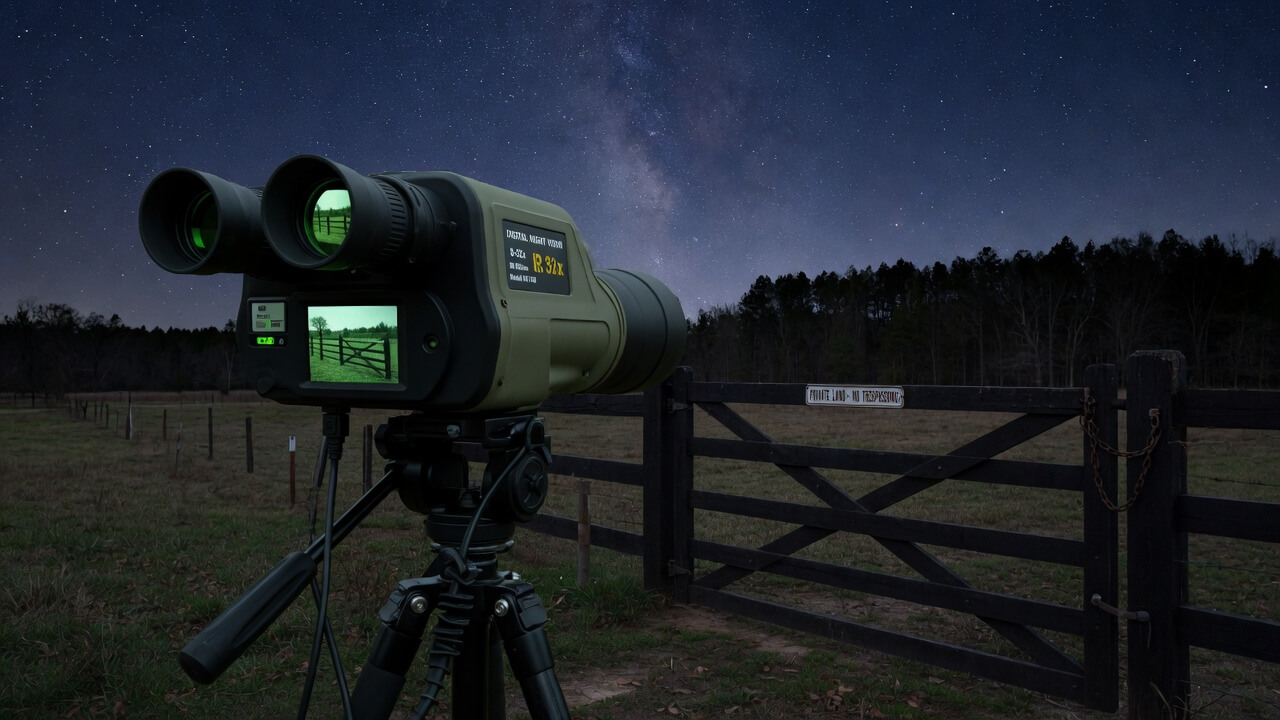
For long range viewing, a tripod or monopod can make a huge difference. At higher zoom, handheld viewing gets shaky.
Do Not Ignore Field of View
A narrow view makes scanning slower. If you are trying to cover a big field, field of view matters almost as much as range.
Common Mistakes Hunters Make
The first mistake is chasing magnification. Big zoom looks exciting, but it often creates a shaky, narrow, less useful image.
The second mistake is ignoring IR performance. A binocular may look good in backyard testing but struggle in a real field with no ambient light.
The third mistake is expecting night vision to work like thermal. Night vision needs contrast and light. Thermal detects heat. They are not the same tool.
The fourth mistake is buying too cheap. Budget night vision can work for short-range use, but long-range hunting demands better sensors, better displays, and stronger infrared.
The fifth mistake is not practicing before the hunt. You should know how to focus, adjust IR, zoom, record, and control brightness before you are in the field.
Pros and Cons of Long Range Night Vision Binoculars for Hunting
Pros
- Helps scan large areas after dark
- Reduces unnecessary movement
- Useful for predator, hog, and open-field hunting
- More natural terrain detail than thermal
- Many digital models include recording features
- Good for scouting and observation
Cons
- Performance depends on IR and conditions
- High zoom can get shaky without support
- Cheaper models often exaggerate range
- Battery management matters
- Fog, rain, and brush can reduce visibility
Best Hunting Setups for Long Range Night Vision
| Hunting Style | Best Setup |
|---|---|
| Open field hunting | 4x–16x digital binoculars with strong IR |
| Coyote hunting | Wide scanning view plus adjustable IR |
| Hog hunting | Long battery life, durable build, tripod support |
| Blind hunting | Higher magnification with stable mount |
| Mobile hunting | Lightweight binocular with moderate zoom |
| Scouting | Recording feature and good battery life |
If you are still building your full night hunting setup, visit the Best Binocular home page for more binocular reviews, comparisons, and buying advice. You can also explore the blog page for practical optics tips before choosing your next pair.
Final Thoughts
Long range night vision binoculars for hunting are worth buying when your hunting style actually needs distance. Open fields, crop edges, predator sets, hog activity zones, and large properties are where they shine.
But the smartest buy is not always the binocular with the biggest range claim. It is the one that gives you a usable image, dependable IR performance, manageable weight, and enough stability to make long-distance viewing comfortable.
If you want one practical rule, remember this:
A clear, stable view at medium-long range beats a shaky, grainy view at extreme distance every time.
Choose long range night vision binoculars for hunting based on real field conditions, not just numbers on a spec sheet. That is how you end up with gear that actually helps when the light disappears.
FAQs About Long Range Night Vision Binoculars for Hunting
Are long range night vision binoculars good for hunting?
Yes, long range night vision binoculars are good for hunting when you need to scan open fields, watch distant movement, or observe game activity without moving closer too soon. They are especially useful for hog hunting, predator hunting, and scouting large properties.
How far can night vision binoculars see for hunting?
The usable distance depends on the sensor, infrared illuminator, moonlight, weather, and terrain. Some models can detect movement at long distances, but clear identification is usually much shorter than advertised detection range.
Are digital night vision binoculars good for long range?
Digital night vision binoculars can be good for long range if they have a strong sensor, adjustable IR, useful magnification, and a clear display. They are popular because they often include recording, zoom, and day/night viewing at a lower price than premium night vision systems.
Do I need a tripod for long range night vision binoculars?
A tripod is not required, but it helps a lot. At higher magnification, even small hand movements can make the image shaky. A tripod or monopod makes long-range scanning more comfortable and accurate.
What magnification is best for long range night hunting?
For most hunters, 4x to 16x is a practical range. Lower magnification helps with scanning, while higher magnification helps inspect distant areas. Extremely high digital zoom is not always useful because image quality can drop.
Is night vision better than thermal for hunting?
Night vision and thermal are different. Night vision gives a more natural view and better terrain detail. Thermal is better for quickly detecting heat signatures. For hunters on a tighter budget, night vision binoculars are often the more affordable starting point.
Can long range night vision binoculars be used during the day?
Many digital night vision binoculars can be used during both day and night. Traditional night vision devices may be damaged by bright light, so always check the product type before using it in daylight.




