

Why Porro Prism Binoculars Still Make Sense Today
Porro prism binoculars look a little old-school at first glance. They have that wider, stepped body shape, the objective lenses sit farther apart than the eyepieces, and they don’t usually have the slim “straight-barrel” look people associate with modern premium binoculars.
But here’s the thing: once you actually use them in the field, the porro prism binocular advantages become very obvious.
They are often brighter for the money, easier to hold steady, better at creating depth, and more forgiving for casual users who don’t want to spend roof-prism money just to get a sharp, enjoyable view. That is why many birders, backyard wildlife watchers, astronomy beginners, sports fans, and budget-conscious outdoor users still prefer Porro binoculars over many modern roof prism models.
If you are comparing binocular designs, you may also want to read the main guide on porro prism vs roof prism binoculars because it explains both designs side by side. This article focuses only on the practical advantages of Porro prism binoculars and when they make the most sense.
What Makes Porro Prism Binoculars Different?
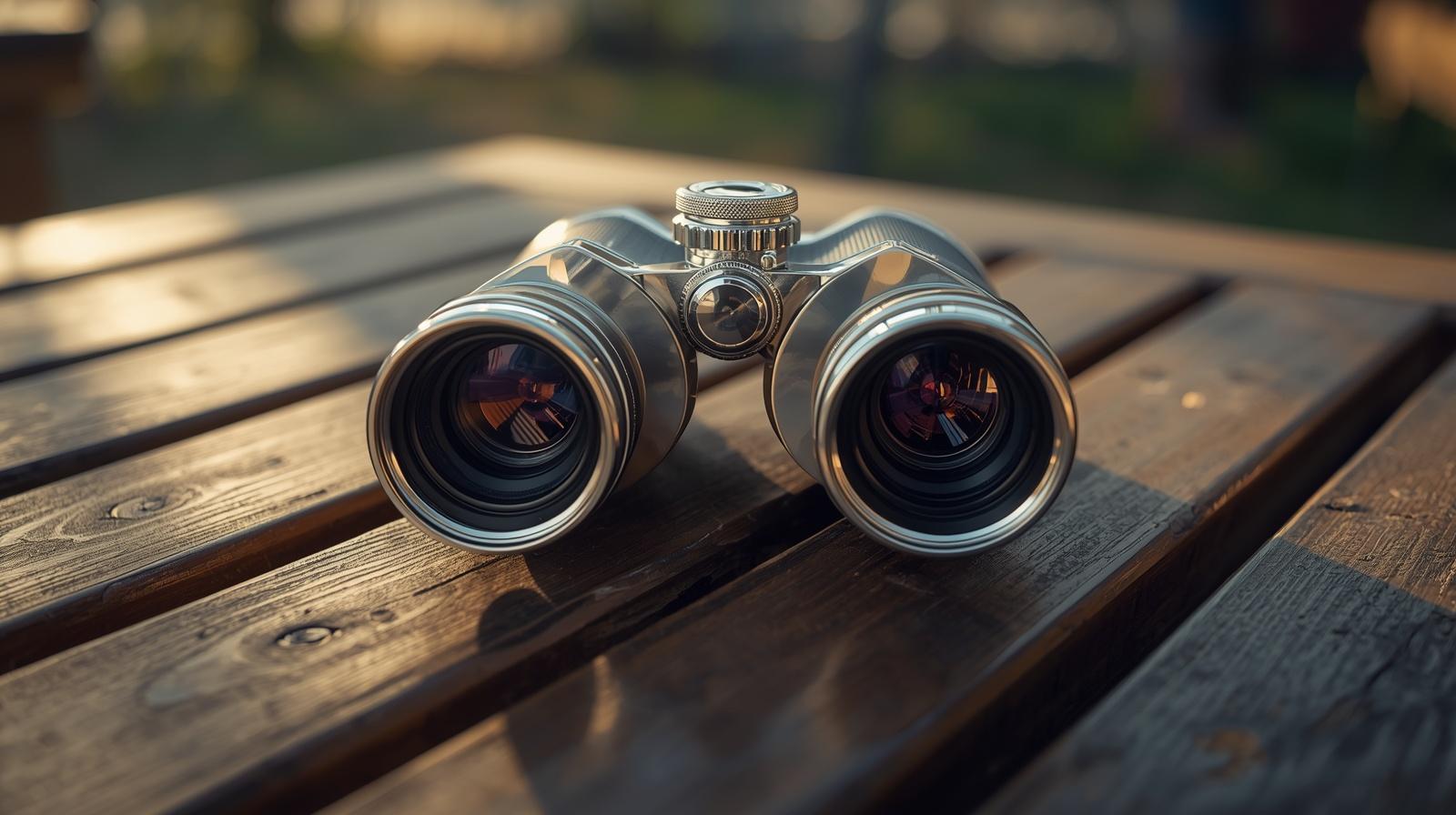
A Porro prism binocular uses an offset internal prism design. In simple words, the light path bends inside the binocular in a way that creates that classic wide-bodied shape.
This design may look less compact than roof prism binoculars, but it has a real optical benefit: the objective lenses are spaced farther apart. That wider spacing helps create a stronger sense of depth and a more natural 3D-style image.
This is one of the biggest porro prism binocular advantages that users notice quickly. When looking across a wooded area, a hillside, a lake edge, or a sports field, objects don’t feel flat. You can better judge distance between the foreground, middle ground, and background.
Roof prism binoculars can be excellent too, especially for compact travel and waterproof performance. But to get a roof prism model that performs really well, you often need better coatings, phase correction, and more expensive engineering. Porro prism binoculars can deliver impressive image quality at a lower price because the design itself is optically efficient.
Main Porro Prism Binocular Advantages at a Glance
| Advantage | Why It Matters | Best For |
|---|---|---|
| Better value for optical quality | Strong image quality without premium roof-prism pricing | Beginners, hobby users, budget buyers |
| Stronger depth perception | Wider objective spacing creates a more natural 3D view | Birding, hiking, wildlife watching |
| Bright image for the price | Efficient prism design helps light transmission | Dawn, dusk, shaded areas |
| Comfortable grip | Wider body can feel stable in both hands | Long viewing sessions |
| Easier casual viewing | Large focus wheels and forgiving handling | Backyard, sports, general outdoor use |
| Great for astronomy entry-level use | Larger Porro models often offer bright, wide views | Moon viewing, star fields |
Advantage 1: Better Optical Performance for the Money
One of the most important porro prism binocular advantages is value.
If you compare two binoculars in the same price range, a Porro prism binocular often gives you a brighter, sharper, more satisfying view than a low-cost roof prism model. This is not because roof prism binoculars are bad. It is because roof prism designs usually need more advanced coatings and tighter manufacturing to perform at the same level.
That matters if your budget is limited.
For example, someone buying their first serious binocular for backyard birds, travel scenery, or weekend hiking may not want to spend heavily. A good Porro prism binocular lets that person experience real optical quality without jumping straight into a premium price bracket.
This is where many buyers make a mistake. They see a slim roof prism binocular and assume it must be better because it looks modern. But when they actually compare the view, a similarly priced Porro model may look brighter, more spacious, and easier on the eyes.
That is why I usually recommend Porro binoculars to people who care more about the view than the design trend.
Advantage 2: More Natural Depth and 3D Viewing
This is the advantage that is hard to explain until you see it.
Porro prism binoculars often give a more three-dimensional image because the front lenses are farther apart. That wider spacing improves stereoscopic effect, especially at medium distances.
Imagine looking across a garden, a woodland edge, or a valley. With a good Porro binocular, branches, fence lines, rocks, and distant objects can appear more separated. You feel the layers of the scene better.
For birding, this can help when a small bird moves through thick branches. For wildlife watching, it can help you separate an animal-shaped object from the background. For sports, it can make the field feel more natural and less compressed.
If your main interest is birding, my detailed article on porro vs roof prism binoculars for birding explains this in a more bird-specific way.
Advantage 3: Brighter Views in Real Outdoor Conditions
Another major reason people like Porro binoculars is brightness.
A well-made Porro prism binocular can transmit light efficiently. In real life, this helps during early morning, late afternoon, cloudy weather, or shaded woodland viewing. These are the moments when cheap binoculars usually struggle.
This does not mean every Porro binocular is automatically bright. Lens coatings, glass quality, objective size, and build quality still matter. But at the same price level, Porro models often punch above their weight.
For example, a 10×50 Porro binocular can be very useful for distant viewing, open landscapes, astronomy, and low-light observation. The larger 50mm objective lenses collect more light than smaller 25mm or 32mm compact models.
This is one of those porro prism binocular advantages that matters more in the field than on a product page. A binocular may look fine in a store at noon, but you notice the real difference when the light starts fading.
Recommended Product: Nikon Aculon A211 10×50
If you want one practical Porro prism binocular to consider, the Nikon Aculon A211 10×50 is a strong option for general outdoor viewing, backyard observation, casual astronomy, and long-distance scenery.
It uses a traditional Porro prism design with 10x magnification and 50mm objective lenses. Nikon lists the Aculon A211 10×50 with multicoated lenses, Eco-Glass, and BaK4 Porro prisms, making it a sensible choice for users who want a bright, cost-effective binocular without jumping into expensive roof prism models.
I would not call it a perfect binocular for every person. It is not pocket-sized, and if you need something lightweight for travel, a compact roof prism binocular may be easier to carry. But for users who want brightness, reach, and strong value, it fits the main porro prism binocular advantages very well.
Advantage 4: Easier to Hold Steady
Porro binoculars are usually wider than roof prism binoculars. Some people see that as a disadvantage, but in the hand, it can actually help.
The wider body gives your hands a more natural position. You are not pinching two narrow barrels together. Instead, your hands spread slightly, your elbows settle more comfortably, and the binocular can feel more balanced.
This is especially useful with 8x and 10x binoculars. At 10x magnification, small hand movements become more visible. A stable grip can make the image feel calmer.
For long viewing sessions, this matters. Whether you are watching a coastline, checking distant ridges, observing a sports event, or scanning the night sky, comfort affects how long you actually use the binocular.
A binocular that looks sleek but feels shaky is not a better binocular. A slightly bulkier Porro model that stays steady in your hands may give you a better experience.
Advantage 5: Wider, More Relaxed Viewing Experience
Many Porro prism binoculars offer a relaxed viewing feel. The image can feel open and easy to settle into, especially in 7×35, 8×40, 8×42, and 10×50 configurations.
This is important for beginners.
A very narrow, dim, or fussy binocular can make users tired quickly. You spend more time adjusting your eyes than enjoying the view. A good Porro binocular often feels more forgiving. You lift it, focus, and the view makes sense.
For casual backyard use, this is perfect. You can keep the binocular near a window, on a porch table, or in your car for scenic stops. You don’t need to baby it like a luxury optic, and you don’t feel like you wasted money if you only use it a few times per week.
This practical comfort is one of the underrated porro prism binocular advantages.
Porro Prism vs Roof Prism: Where Porro Wins
| Feature | Porro Prism Binoculars | Roof Prism Binoculars |
|---|---|---|
| Body shape | Wider, classic stepped design | Slim, straight-barrel design |
| Value for money | Usually stronger at low to mid budget | Better models often cost more |
| Depth perception | Often better 3D effect | Flatter image feel in many models |
| Portability | Bulkier | More compact |
| Waterproofing | Varies by model | Often better in premium models |
| Low-light value | Strong for the price | Excellent only in higher-end models |
| Best use | Backyard, birding, astronomy, general outdoor use | Travel, hiking, compact everyday carry |
For a full comparison, see my supporting guide on porro prism vs roof prism, where I break down the design differences in a simpler side-by-side format.
Best Real-World Uses for Porro Prism Binoculars
Backyard Bird Watching
For backyard birding, Porro binoculars are excellent. You usually don’t need a tiny waterproof binocular if you are viewing from a patio, garden, or window. What you need is a bright, clear image and comfortable handling.
An 8×40 or 8×42 Porro binocular works very well here. It gives enough magnification without becoming too shaky.
Open-Field Wildlife Viewing
If you watch deer at field edges, scan tree lines, or observe distant movement across open land, a 10×50 Porro binocular can be very useful.
The larger objective lenses help in dimmer light, and the depth effect makes the scene feel more natural.
Casual Astronomy
Porro prism binoculars are popular for astronomy beginners because larger models like 10×50 can show the moon, bright star clusters, and wide sky views.
You don’t need a telescope to enjoy the night sky. A decent Porro binocular can be a simple first step.
Sports and Events
For stadiums, racing, outdoor events, and field sports, Porro binoculars give a comfortable view. They may not fit into a small pocket, but they are often easier to hold for longer periods.
Pros and Cons of Porro Prism Binoculars
Pros
- Strong image quality for the price
- Often brighter than cheap roof prism models
- Better depth perception
- Wider grip feels more stable during long viewing sessions
- Good for backyard use, casual birding, wildlife viewing, and astronomy
- Best for users who want good optics without overspending
Cons
- Bulkier than roof prism binoculars
- Less compact and harder to carry
- Some models may be less rugged
- Some models may be less waterproof than high-end roof prism binoculars
If you need a binocular for backpacking, wet weather, kayaking, or everyday travel, a compact roof prism binocular may be more practical.
Common Mistakes When Buying Porro Prism Binoculars
Choosing Too Much Magnification
Many beginners think higher magnification is always better. It is not.
A 20x binocular may sound powerful, but it can be shaky, narrow, and frustrating without a tripod. For handheld use, 8x or 10x is usually better.
Ignoring Weight
A large Porro binocular can be bright, but it may also become tiring. If you plan to carry it all day, check the weight before buying.
Buying Only by Price
Cheap Porro binoculars can be tempting, but extremely low-cost models may have poor coatings, weak alignment, or uncomfortable eyepieces. Look for known brands, BaK4 prisms, coated or multicoated lenses, and a comfortable focus wheel.
Forgetting Eye Relief
If you wear glasses, eye relief matters. A binocular with poor eye relief may cut off part of the view. Look for models that mention suitable eye relief or adjustable eyecups.
Buyer Tips: Who Should Choose Porro Prism Binoculars?
Choose Porro prism binoculars if you want the best view for your budget, you don’t mind a slightly larger body, and you care about brightness, depth, and comfort.
They are a smart choice for:
- Backyard wildlife watchers
- Beginner birders
- Casual astronomy users
- Sports viewers
- Scenic travelers who don’t need ultra-compact gear
- Budget buyers who still want good optics
Skip them if you need something very compact, fully waterproof, or easy to pack into a small travel bag. In that case, a roof prism binocular may fit your lifestyle better.
This is the honest answer: Porro binoculars are not “better” for everyone. But for many people, the porro prism binocular advantages are more useful than the slim body of a roof prism design.
Final Verdict: Are Porro Prism Binoculars Still Worth It?
Yes, Porro prism binoculars are absolutely still worth buying.
In fact, they may be the smarter choice if your goal is clear viewing rather than owning the most modern-looking binocular. The biggest porro prism binocular advantages are value, brightness, depth perception, stable handling, and a comfortable viewing experience.
They are not the best choice for every situation. Roof prism binoculars win when compact size, waterproofing, and rugged travel use are the top priorities. But if you want a binocular that gives you a rich, bright, enjoyable image without making you pay premium prices, Porro is still hard to beat.
For more buying help, explore the latest binocular guides on the Best Binocular blog tips page or visit the Best Binocular homepage to compare more outdoor optics guides.
FAQs About Porro Prism Binocular Advantages
What are the main porro prism binocular advantages?
The main porro prism binocular advantages are better value for money, strong depth perception, bright image quality, comfortable handling, and a more natural 3D viewing feel. They are especially useful for backyard birding, wildlife viewing, sports, and beginner astronomy.
Are Porro prism binoculars better than roof prism binoculars?
Porro prism binoculars can be better for image quality at a lower price. Roof prism binoculars are usually better for compact size, travel, waterproofing, and rugged use. The better choice depends on how and where you plan to use them.
Why do Porro prism binoculars look bigger?
They look bigger because the internal prism design offsets the objective lenses from the eyepieces. This wider shape is part of what creates better depth perception, but it also makes the binocular less compact.
Are Porro prism binoculars good for bird watching?
Yes, Porro prism binoculars are good for bird watching, especially in gardens, parks, woodland edges, and open fields. Their depth perception can help separate branches and background layers, making the view feel more natural.
Are Porro prism binoculars good for low light?
Many Porro prism binoculars perform well in low light, especially models with larger objective lenses such as 8×40, 8×42, 7×50, or 10×50. Lens coatings and glass quality still matter, but Porro models often offer strong brightness for the price.
What is the best magnification for Porro prism binoculars?
For most users, 8x is easier to hold steady and better for general viewing. 10x gives more reach but may show more hand shake. For astronomy or long-distance viewing, 10×50 is a popular choice.
Do Porro prism binoculars last long?
A good Porro prism binocular can last for many years if handled properly. Keep the lenses clean, avoid hard drops, store it in a dry place, and use the carry case when traveling.
Should beginners buy Porro prism binoculars?
Yes, beginners should seriously consider Porro prism binoculars because they often provide better optical quality for the money. They are forgiving, bright, comfortable, and ideal for learning what a good binocular view should look like.




