
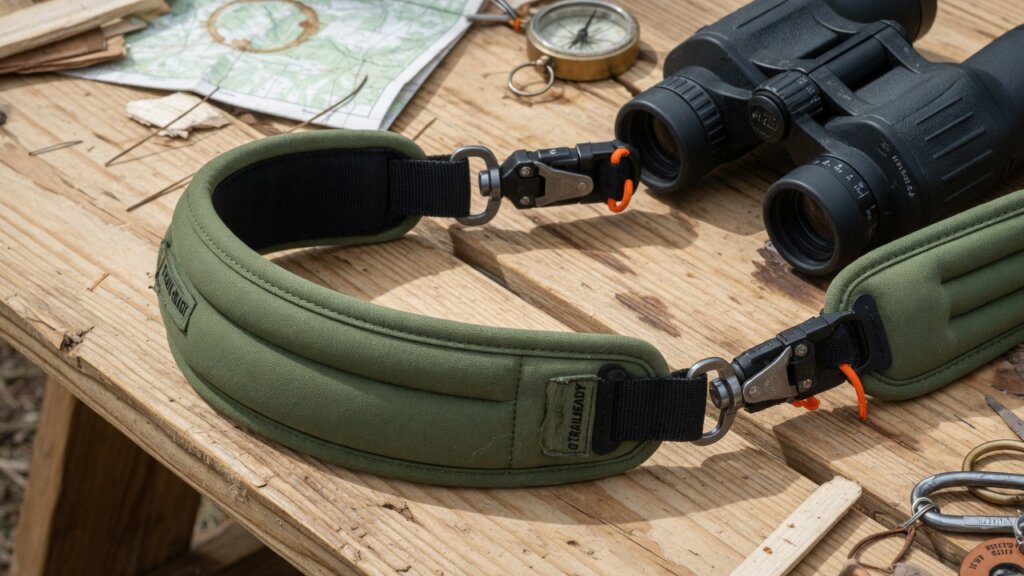
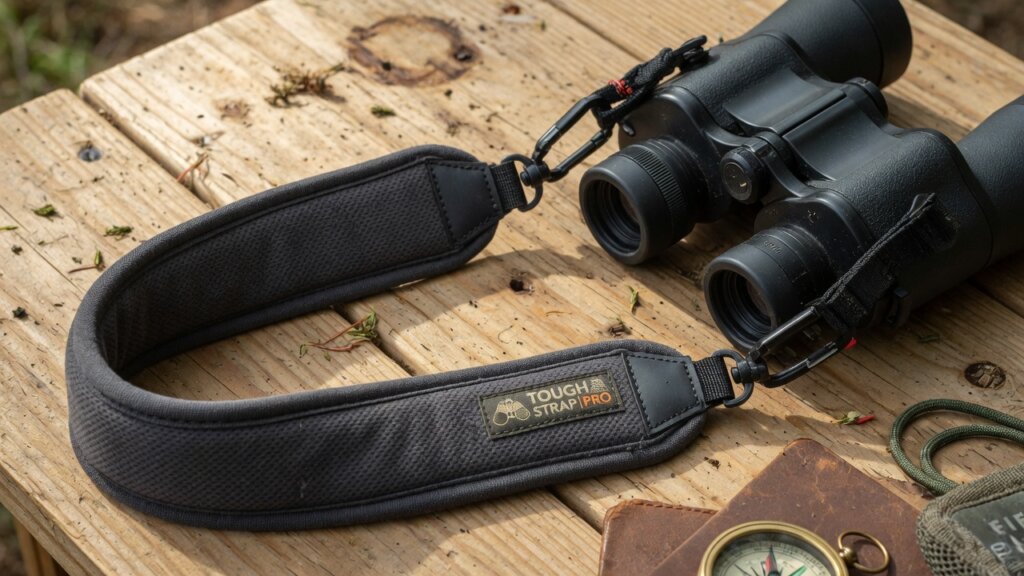
Why a Binocular Neck Strap Is a Key Comfort Upgrade
A binocular neck strap looks like a basic accessory until you spend two hours walking with binoculars bouncing against your chest.
That is when the stock strap starts feeling thin, itchy, too short, too slippery, or just badly balanced. Most binoculars come with a free strap in the box, but those straps are usually made to “complete the package,” not to make long birding walks, stadium viewing, sightseeing, or nature trips more comfortable.
A good binocular neck strap does three things well: it spreads weight across your neck, keeps the binoculars ready when you need them, and stops the constant swing-and-bump problem while you move.
For many users, this is the easiest comfort upgrade before buying a harness or chest pack. If you are building your carry setup from scratch, start with our main binocular strap page first, then come back here to decide if a neck strap is the right style for your use.
What Is a Binocular Neck Strap?
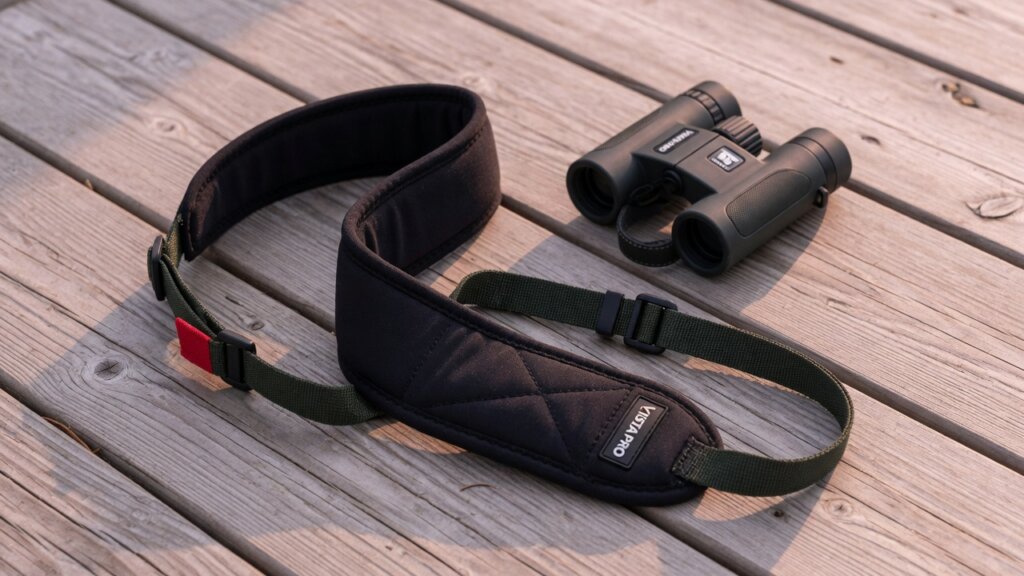
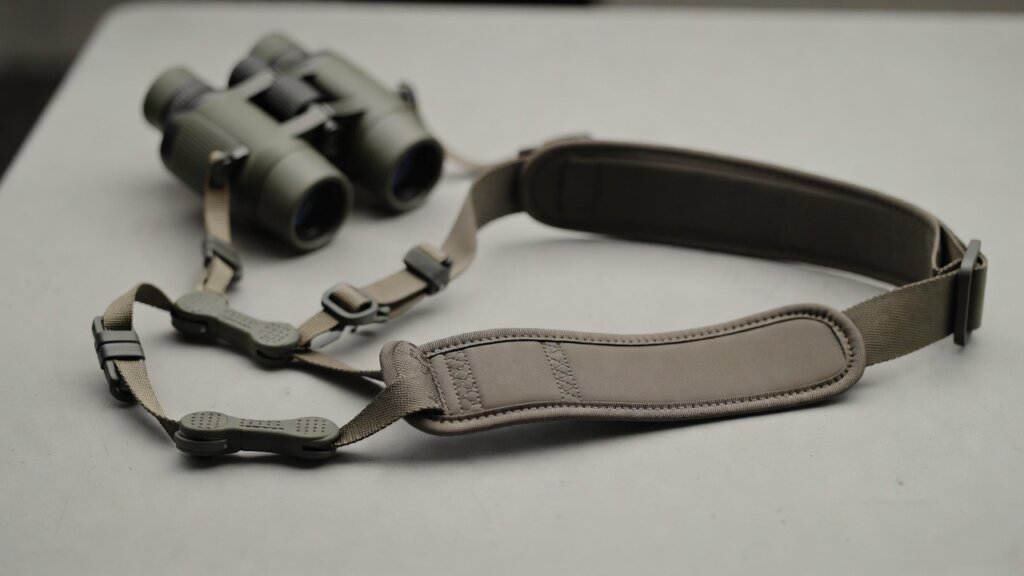
A binocular neck strap is a strap that attaches to both sides of your binoculars and lets them hang from your neck or upper chest. It is the classic carrying method for binoculars because it keeps them close, visible, and fast to grab.
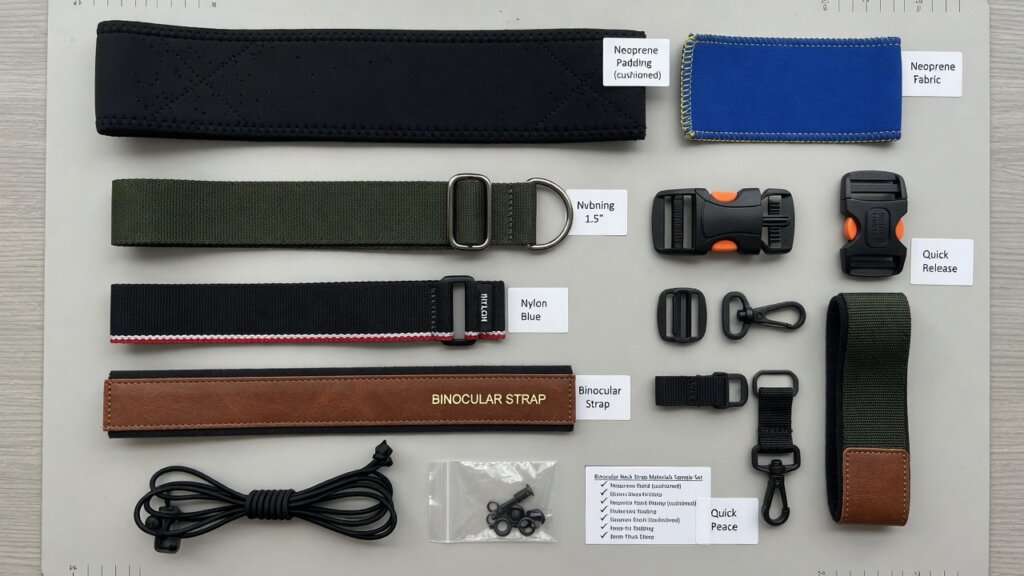
The best ones are not just “long pieces of fabric.” They usually include padded neck sections, adjustable webbing, strong connectors, and sometimes quick-release buckles.
A cheap strap can work for a lightweight 8×25 compact binocular. But once you move into 8×42, 10×42, 10×50, or heavier full-size binoculars, the difference between a basic strap and a comfortable binocular neck strap becomes very obvious.
Who Should Use a Binocular Neck Strap?
A neck strap makes the most sense when you want fast access and simple carrying. It is not the best option for every person, but it is perfect for a lot of real-world users.
Best for Bird Watching
Birders need binoculars ready within seconds. A neck strap keeps them right on the chest, so you are not digging through a bag when a bird lands for three seconds and disappears.
For short birding sessions, a soft binocular neck strap is often enough. For longer walks with heavy binoculars, a harness may feel better, but the neck strap still wins for speed and simplicity.
Best for Travel and Sightseeing
For travel, a neck strap is easy. You can walk through viewpoints, parks, city overlooks, and scenic spots without constantly taking binoculars in and out of a backpack.
The key is choosing a strap that does not scream “expensive gear.” A plain black or dark neoprene strap is usually better than a loud branded strap.
Best for Sports and Stadium Viewing
At sports events, you want binoculars ready but not in your hands the entire time. A binocular neck strap lets you drop them safely against your chest between plays, races, or performances.
For this use, avoid overly long straps. If the binoculars hang too low, they bounce when you stand up or move through rows.
Best for Casual Backyard Use
For backyard bird feeders, moon viewing, or quick outdoor use, a simple padded neck strap is more than enough. No need to overcomplicate it.
Binocular Neck Strap vs Harness vs Sling Strap
A neck strap is not the only way to carry binoculars. Here is the practical difference.
| Carry Option | Best For | Comfort Level | Access Speed | Main Downside |
|---|---|---|---|---|
| Binocular neck strap | Birding, travel, sports, casual use | Medium to high | Very fast | Can strain neck with heavy binoculars |
| Binocular harness | Long hikes, heavy binoculars, all-day use | Very high | Medium | More straps, less casual |
| Sling strap | Walking, travel, quick movement | High | Fast | Binoculars may shift to one side |
| Wrist strap | Compact binoculars only | Low to medium | Fast | Not safe for larger binoculars |
My take: if your binoculars are under 25 oz, a good binocular neck strap is usually enough. If they are heavier, or you carry them for several hours, you may want to compare harness options too.
What Makes a Good Binocular Neck Strap?
The right strap is not always the thickest one. Comfort comes from the full design, not just padding.
1. Neck Padding That Spreads Weight
The neck section should be wide enough to spread pressure. Thin straps cut into the neck, especially with 10×50 binoculars or metal-bodied optics.
Neoprene is popular because it has a soft stretch feel. It absorbs movement better than flat nylon. That is why many comfort-focused straps use neoprene or foam padding.
For more detail on this material, read our supporting article on the neoprene binocular strap. It explains where neoprene helps and where it can feel too warm.
2. Strong Attachment Loops
The weakest part of a binocular neck strap is usually not the padded section. It is the thin connector loop that attaches to the binocular lugs.
Look for tight stitching, strong nylon webbing, and connectors that fit your binocular body. Some binoculars have narrow strap lugs, so bulky connectors may not fit.
3. Adjustable Length
A good strap should let the binoculars rest around mid-chest. Too high, and the eyecups hit your chin. Too low, and the binoculars bounce against your stomach.
For most people, the sweet spot is high enough to grab quickly but low enough that the binoculars do not feel cramped.
4. Grip on the Back Side
Some straps slide around constantly, especially on smooth jackets. A slightly textured or non-slip underside helps keep the strap in place.
This matters more than people think. A slippery strap makes you adjust it every few minutes, which gets annoying fast.
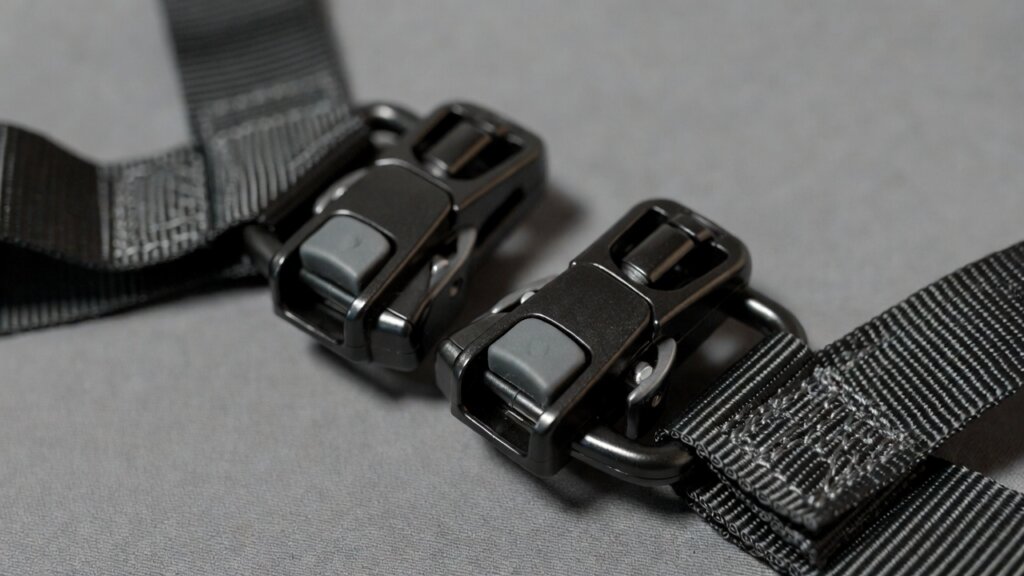
5. Quick Release Option
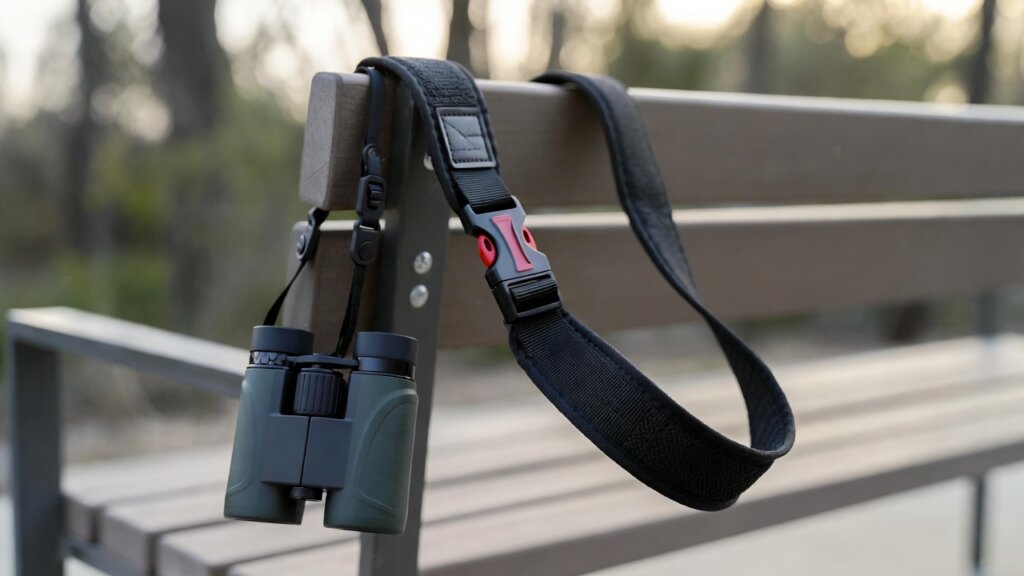
Quick-release buckles let you remove the binoculars from the strap without unthreading the whole setup. This is useful if you switch between a neck strap, tripod adapter, case, or harness.
If that matters to you, check our article on the quick release binocular strap before buying.
Pros
- Simple design with no extra straps or clips.
- Keeps binoculars ready for quick use.
- Affordable compared to full harness systems.
- Works with various binocular sizes.
Cons
- Can cause neck pressure with heavy binoculars.
- Binoculars may bounce while walking.
- Padding can feel warm and sweaty in hot weather.
Best Real-World Use Cases for a Binocular Neck Strap
Short Birding Walks
For a 30-minute or 1-hour birding walk, a padded binocular neck strap is usually the most convenient option. You get quick access without wearing a full harness.
Travel Days
When you are moving between viewpoints, buses, parks, or scenic stops, a neck strap keeps things simple. Just make sure your binoculars do not hang too low.
Car-to-Viewpoint Viewing
If you mostly use binoculars from parking areas, overlooks, beach edges, or short trails, you do not need a complex carry system. A neck strap is clean and practical.
Shared Family Use
A neck strap is easier for multiple people to use because it adjusts quickly. A harness needs more body-size adjustment, which can be annoying when people are sharing binoculars.
One Product Worth Considering: OP/TECH USA Super Classic Strap – Uni Loop
For a practical upgrade, the OP/TECH USA Super Classic Strap – Uni Loop is a strong pick for many binocular users.
A practical option to consider is the OP/TECH USA Super Classic Strap – Uni Loop. It uses a wide neoprene pad, quick-disconnect style attachment, adjustable neck/crossbody length, and support for cameras or binoculars up to 15 lb. OP/TECH also describes the Super Classic line as a neoprene strap made for heavy cameras or binoculars with comfort-stretch style construction.
Why I like it: it solves the two biggest neck strap problems at once — pressure and flexibility. The padding feels more forgiving than a flat stock strap, and the quick-release design makes it easier to remove the binoculars when packing, cleaning, or switching carry systems.
It is not the slimmest option. If you want something ultra-light for pocket binoculars, it may feel like overkill. But for 8×42, 10×42, and many full-size binoculars, it is a sensible comfort upgrade.
Common Mistakes When Buying a Binocular Neck Strap
Buying Only by Brand Name
A famous optics brand does not always make the most comfortable strap. Look at padding, width, stitching, and connectors first.
Ignoring Binocular Weight
A strap that feels fine with compact binoculars may feel terrible with a heavy 10×50 pair. Match the strap to the weight of your binoculars.
Choosing a Strap That Is Too Long
Long straps look relaxed, but they cause bounce. If you walk a lot, chest-height carry is better than stomach-height carry.
Forgetting About Jackets and Layers
A strap that feels perfect over a T-shirt may feel short over a winter jacket. Adjustable length matters if you use binoculars in different seasons.
Not Checking Lug Compatibility
Some binoculars have small strap slots. Thick connector loops may be hard to fit. Always check the attachment style before buying.
Buyer Tips Before You Choose
- If your binoculars are light, choose a slim padded strap. You do not need bulky padding for small compact binoculars.
- If your binoculars are full-size, choose a wider strap with soft padding. The difference becomes noticeable after 20 minutes.
- If you travel often, choose a plain strap with secure connectors. Comfort matters, but low-profile design also helps.
- If you use a tripod, case, or harness sometimes, choose a quick-release binocular neck strap. It saves time and keeps the setup flexible.
- If you sweat a lot or use binoculars in hot weather, avoid overly thick padding. A breathable or narrower neck pad may feel better.
How a Binocular Neck Strap Changes the User Experience
A good binocular neck strap does not make binoculars sharper, brighter, or more powerful.
But it does make you use them more.
That is the underrated part. If binoculars are uncomfortable to carry, they stay in the bag. If they stay in the bag, you miss the moment.
A comfortable strap keeps binoculars ready without making them feel like a burden. For birding, that means fewer missed sightings. For travel, it means you actually use your optics at viewpoints. For sports, it means you stop juggling binoculars, tickets, drinks, and bags.
This is why I see the neck strap as a “use-more” accessory, not just a comfort accessory.
Binocular Neck Strap Maintenance
A strap does not need much care, but it should not be ignored.
Check the stitching every few months. Look closely near the connector loops because that area takes the most stress.
If the strap gets dirty, wipe it with a damp cloth and mild soap. Let it air dry fully before storing it. Do not store a wet strap in a closed case.
Also check plastic buckles. If they crack, loosen, or feel brittle, replace the strap. It is not worth risking your binoculars over a worn connector.
FAQs About Binocular Neck Straps
What is the best binocular neck strap for comfort?
The best binocular neck strap for comfort is usually a padded neoprene or foam-padded strap with a wide neck section and adjustable side webbing. For full-size binoculars, avoid thin stock straps because they create pressure on the neck during longer use.
Is a binocular neck strap better than a harness?
A binocular neck strap is better for quick access, casual use, travel, and short birding walks. A harness is better for heavy binoculars, long hikes, and all-day carrying because it spreads weight across the shoulders and chest.
Can I use a camera neck strap for binoculars?
Yes, some camera straps can work with binoculars if the attachment loops fit securely. However, always check lug compatibility and weight support before using a camera strap as a binocular neck strap.
Why does my binocular neck strap hurt?
Your strap may be too thin, too narrow, too short, or poorly padded. Heavy binoculars can also cause neck fatigue even with a decent strap. A wider padded strap or harness can reduce pressure.
Should binoculars hang high or low on a neck strap?
Binoculars should usually hang around mid-chest. If they hang too low, they bounce while walking. If they hang too high, they can feel cramped and awkward to raise to your eyes.
Are quick-release binocular neck straps worth it?
Yes, quick-release straps are worth it if you switch between different carry systems, pack your binoculars often, or use accessories like cases and tripod adapters. They make setup changes faster and cleaner.
Final Thoughts: Is a Binocular Neck Strap Worth Upgrading?
Yes — especially if you are still using the thin strap that came in the binocular box.
A better binocular neck strap makes your binoculars easier to carry, faster to use, and less annoying during real outdoor sessions. It is not the most exciting accessory, but it is one of the upgrades you feel immediately.
For lightweight binoculars, choose something slim and soft. For full-size binoculars, go with wider padding and stronger connectors. For flexible setups, choose quick release.
To compare this carry style with other options, visit our main binocular strap resource. You can also explore our focused articles on neoprene binocular strap comfort and quick release binocular strap setups.
For more practical binocular buying and field-use advice, check the blog tips page or start from the BestBinocular.net home page.




