
What Makes Binoculars Good for Bird Watching Under $200?
There’s a big difference between binoculars that are merely under $200 and binoculars that are actually good for birding.
Bird watching is demanding in a way casual sightseeing isn’t. You’re trying to pick out tiny field marks in mixed light, follow fast movement through branches, lock focus before the bird disappears, and do it all without your hands turning the view into a shaky mess. That’s why the best binoculars under $200 for bird watching usually land in one very practical zone: 8×42 roof prism binoculars. Cornell’s affordable-binocular review centers on 8×42 as a popular, versatile birding size, and Audubon notes that many birders prefer 7x or 8x because they stay bright and offer a wider field of view that makes it easier to find and follow birds.
If you’re shopping in this budget range, the goal is not perfection. It’s getting the features that matter most in the field and skipping the stuff that sounds impressive on a product page but does very little when you’re scanning reeds at sunrise or checking a feeder from the patio.
And honestly, that’s good news. You do not need premium glass to enjoy birding. Even Cornell’s budget-tier roundup points out that today’s lower-priced binocular market includes plenty of models with bright, crisp images, comfortable handling, and generous fields of view.
Why bird watching demands a different kind of budget binocular
A cheap binocular can work for sports, hiking, or keeping in the car. Birding asks more from it.
With birds, the target is often small, partly hidden, and moving unpredictably. You need enough brightness for early-morning shade, enough field of view to pick up movement quickly, and enough close focus to watch birds at feeders or in nearby shrubs. That is exactly why 8×42 remains the safest recommendation for most birders: it balances brightness, steadiness, and usable field of view better than higher magnification or ultra-compact designs. Audubon explicitly highlights that 42 mm objectives are a useful ceiling because larger glasses get heavier, while very small objectives often give up too much low-light detail.
In plain English, a birding binocular should help you find the bird faster, keep it in view longer, and see enough detail to make the ID.
That’s the real test.
What matters most in the best binoculars under $200 for bird watching
1. 8×42 is usually the sweet spot
If you’re tempted by 10x because “more magnification must be better,” pause there.
For bird watching, more zoom is often a trap. A 10x view magnifies hand shake, narrows the apparent window, and makes it harder to reacquire a moving bird once you lose it. That matters a lot in woodland birding, migration mornings, or any moment when a warbler gives you three seconds and disappears. Audubon’s guide is blunt on the main principle: many birders prefer 7x or 8x because they’re bright and wide enough to make locating and following birds easier.
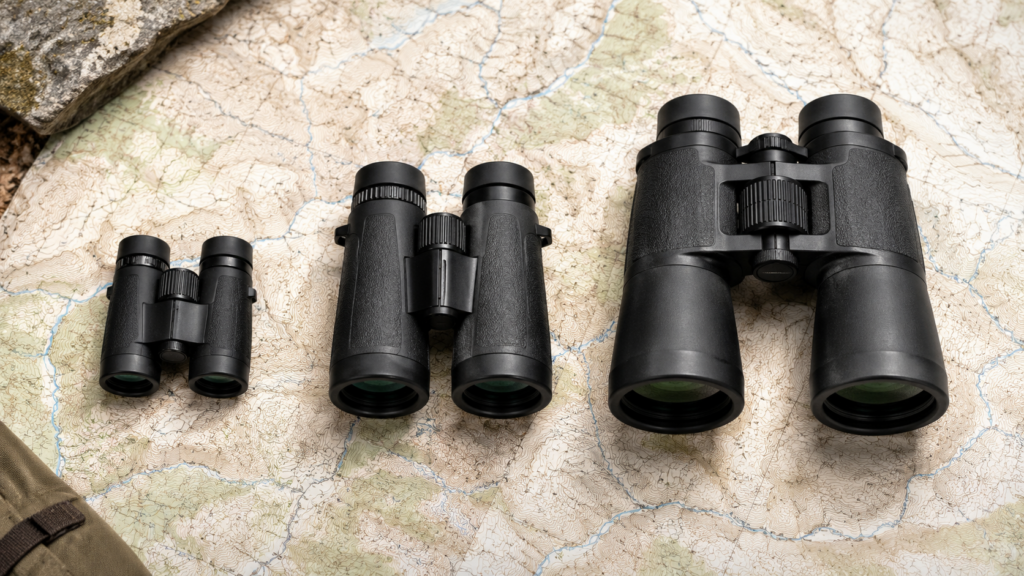
| Size | Best for | Trade-off |
|---|---|---|
| 8×42 | Most birders, most habitats | Slightly bulkier than compact models |
| 10×42 | Open country, shorelines, long-distance glassing | More shake, narrower feel, harder for beginners |
| 8×32 | Travel, lighter day hikes, casual birding | Less brightness in dim woods or at dawn |
For a supporting article in this silo, that’s the core takeaway: the best binoculars under $200 for bird watching are usually not the most powerful ones—they’re the most usable ones.
2. Close focus matters more than many people realize
Backyard birders often overlook this.
If you watch feeders, flowering shrubs, or birds near a trail edge, a short close-focus distance makes the whole experience more enjoyable. It lets you stay sharp on nearby movement instead of backing up or fighting the focus wheel. This matters with hummingbird setups, garden birding, and those surprise moments when a bird lands far closer than expected.
3. Field of view is not just a spec-sheet number
A wider field of view gives you more breathing room.
It helps when you first raise the binoculars and need to find the bird. It helps when the bird hops branch to branch. It helps when you’re following movement over water or across a hedgerow. Cornell’s review repeatedly treats field of view as part of the practical usability equation, not just a number for comparison.
4. Weight changes how long you actually use them
A binocular can be optically decent and still be annoying enough that you leave it at home.
That is especially true for beginners. If a pair feels nose-heavy, awkward in one hand, or tiring after 30 minutes, your outings get shorter. And the binocular that stays in the closet is never the best buy.
My top pick: Celestron Nature DX 8×42
If you want one straightforward answer, this is the one I’d point most budget birders toward first: Celestron Nature DX 8×42.
Why? Because it nails the birding basics without pretending to be something it isn’t.
Celestron lists the Nature DX 8×42 with 8x magnification, a 388-foot field of view at 1,000 yards, 6.5-foot close focus, 17.5 mm eye relief, 22.2 oz weight, fully multi-coated optics, phase-coated BaK-4 prisms, and a waterproof, nitrogen-filled build. That combination makes it especially useful for entry-level and intermediate birding rather than generic outdoor use.
Celestron also positions this model as a strong choice for beginning and intermediate birders because its wide field of view helps you locate birds faster and follow them more easily once they start moving.
What I like about that package is how sensible it feels for real birding:
- It’s not so powerful that beginners fight shake all day.
- It has enough brightness for morning walks and wooded paths.
- The close focus is genuinely useful for feeders, gardens, and nearby perches.
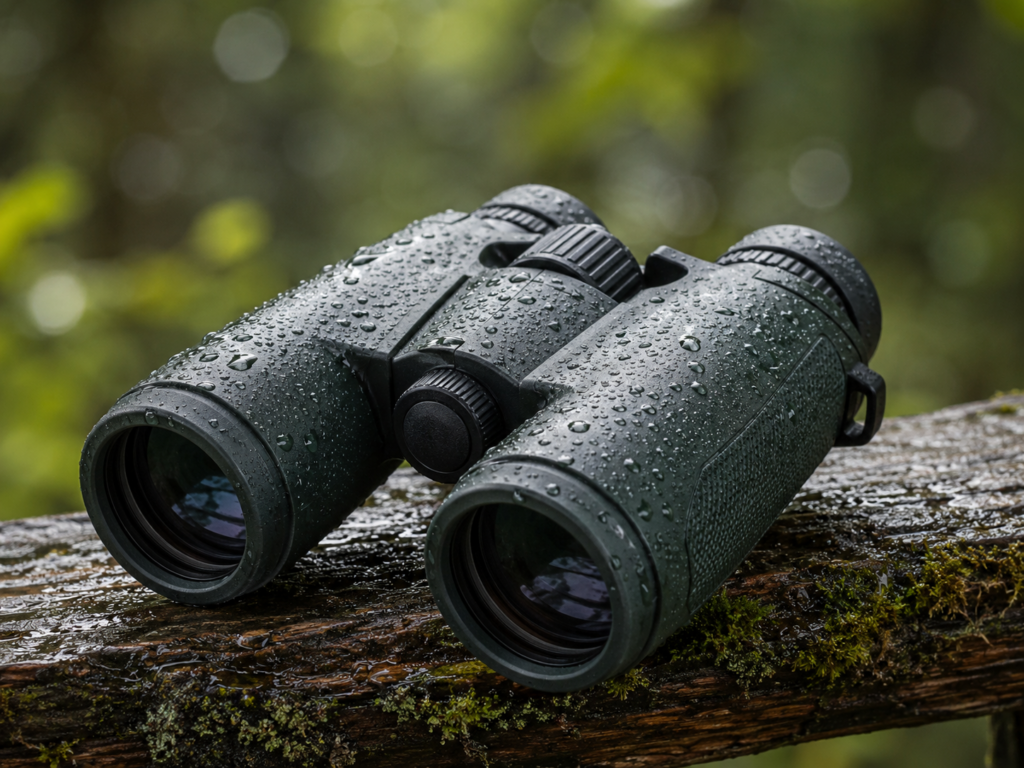
- The waterproof build means you don’t baby it every time the weather turns.
Pros
- Strong birding-friendly 8×42 format
- Wide, easy view for following movement
- Very useful close focus for backyard birding
- Waterproof and nitrogen filled
- Still under the $200 line
Cons
- Not as bright or refined as better ED glass models
- Bigger than a compact travel binocular
- You’ll still notice the difference versus more expensive optics in tough light
That last point matters. This is not a miracle. In heavy shade, rain, or late-evening birding, premium glass still pulls ahead. But in the sub-$200 category, you’re looking for the pair that makes the fewest frustrating compromises. This one does that well.
How this plays out in real birding situations
Backyard feeder watching
This is where budget birding binoculars can shine.
You’re usually working in decent light, moderate distance, and repeat viewing. A binocular like the Nature DX 8×42 makes sense here because it combines a wide view with a very usable close focus. Cornell’s review even points out that budget binoculars are especially effective in scenarios like watching feeder birds at medium to close range in stronger light.
Woodland trails
Woodland birding is where shaky 10x binoculars get exposed fast.
Birds are half-hidden, the light is uneven, and you’re often looking up at odd angles. A forgiving 8×42 helps more than extra magnification ever will. You want a view that settles quickly and lets you stay with movement through clutter.
Wetlands and open-country birding
This is the one place where people start second-guessing 8×42.
Yes, higher magnification can help at distance. But under $200, I’d still rather have a cleaner, easier, brighter 8×42 than a more frustrating 10×42 for general birding. Unless your outings are mostly open-country glassing, the versatile option still wins.
Travel birding
Compact binoculars are more portable, no question.
But portability is not the same as satisfaction. If birding is the main event, not just an occasional add-on, a full-size 8×42 is still the better tool. For readers who care more about packability, this is exactly where it makes sense to compare with our guide to best compact binoculars under $200.
Buyer tips that save you from a disappointing purchase
Don’t chase magnification first
For most people shopping the best binoculars under $200 for bird watching, ease of use beats extra zoom.
Prioritize birding-friendly specs
Look for:
- 8×42 configuration
- waterproof/fogproof build
- decent eye relief if you wear glasses
- close focus that works for feeder birds
- a field of view that feels open, not tunnel-like
Think about where you bird most
Feeder setup? Woodland walks? Wetlands? Travel? Your main habitat should shape the buy more than the marketing copy.
Be honest about how long you carry them
A “slightly brighter” binocular that feels annoying around your neck for two hours is not a better purchase.
Common mistakes people make in this price range
Mistake 1: buying a hunting-style spec without thinking about birding behavior
Birders and hunters sometimes overlap in optics preferences, but not always. Hunting setups may lean harder into low-light glassing or longer-distance use. If that’s your crossover use, check our comparison-friendly guide to best binoculars under $200 for hunting.
Mistake 2: going too compact
Pocket-friendly binoculars are fun until the light drops or the ID gets tricky.
Mistake 3: overvaluing brand hype
At this price, smart spec balance matters more than flashy claims.
Mistake 4: ignoring comfort
Bad focus feel, awkward grip, stiff eyecups, and poor balance ruin more birding days than people expect.
Best binoculars under $200 for bird watching vs other budget options
If you’re building your buying decision across the silo, here’s the simple breakdown:
| You are mostly… | Better choice |
|---|---|
| Birding in mixed habitats | 8×42 birding binocular |
| Hunting or glassing farther in open country | Hunting-focused option |
| Traveling light or hiking with minimal gear | Compact binocular |
| Shopping the whole category first | Start with the pillar page |
So before you buy, it’s worth reading the full roundup on best binoculars under $200 to see how birding fits into the wider category. Then circle back here if your main goal is actually identifying birds, not just magnifying distant objects.
If you are still comparing options, return to the home page to explore more binocular guides, or read our latest binocular articles for practical buying advice, comparisons, and field-use tips.
Final verdict
The best binoculars under $200 for bird watching are usually the ones that make birding feel easier, not more “powerful.”
That means a bright, steady, wide-view 8×42, not a shaky spec-sheet monster.
For most people, Celestron Nature DX 8×42 is the strongest all-around choice in this budget because it stays focused on what birders actually need: usable field of view, practical close focus, waterproof build, and a price that still fits under the line.Its official specs make it one of the clearest budget birding picks to check first, especially when you find it comfortably within the under-$200 range.
If your goal is better birding—not just owning binoculars—that’s the kind of buy that makes sense.
FAQs
What magnification is best for bird watching under $200?
For most people, 8x is the safest choice. Audubon notes that many birders prefer 7x or 8x because those powers stay bright and offer a wider field of view that helps with locating and following birds.
Are 10x binoculars bad for bird watching?
Not bad—just less forgiving. They can work well in open habitats, but they usually show more hand shake and feel less easy for beginners or woodland birding.
Is 8×42 better than 8×32 for birding?
Usually, yes. If birding is your main use, 8×42 generally gives you a brighter, more comfortable view, especially in shade or low light. Audubon specifically warns that smaller objective lenses can sacrifice detail in poor light.
Do I need ED glass for bird watching under $200?
No. It helps, but it is not essential. In this budget, overall usability matters more than chasing one premium feature at the expense of everything else.
What are the best binoculars under $200 for beginner bird watchers?
A beginner should usually start with a straightforward 8×42 roof prism binocular, and the Celestron Nature DX 8×42 is an especially sensible place to start because of its birding-friendly field of view, close focus, waterproof build, and sub-$200 price.




