
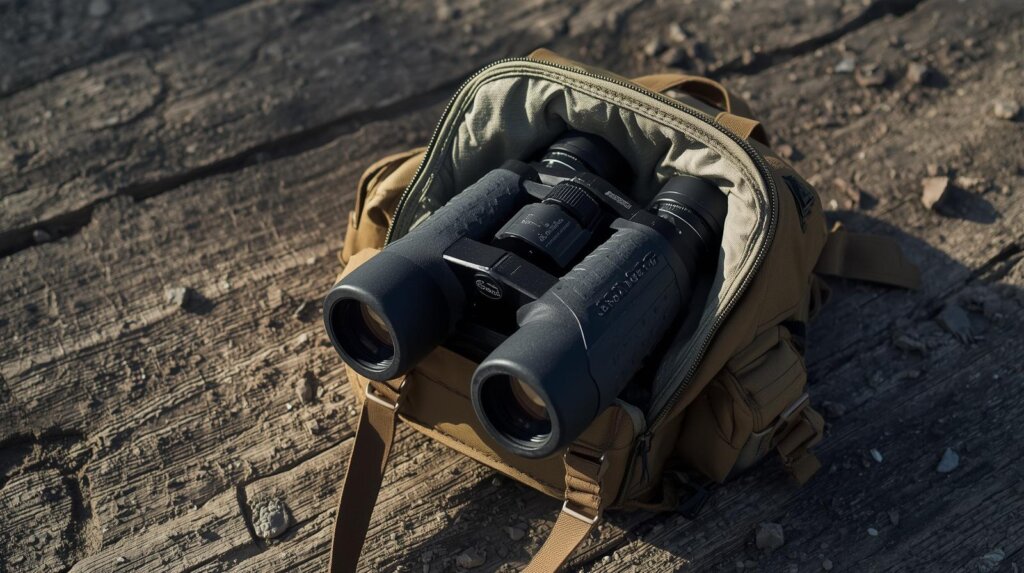
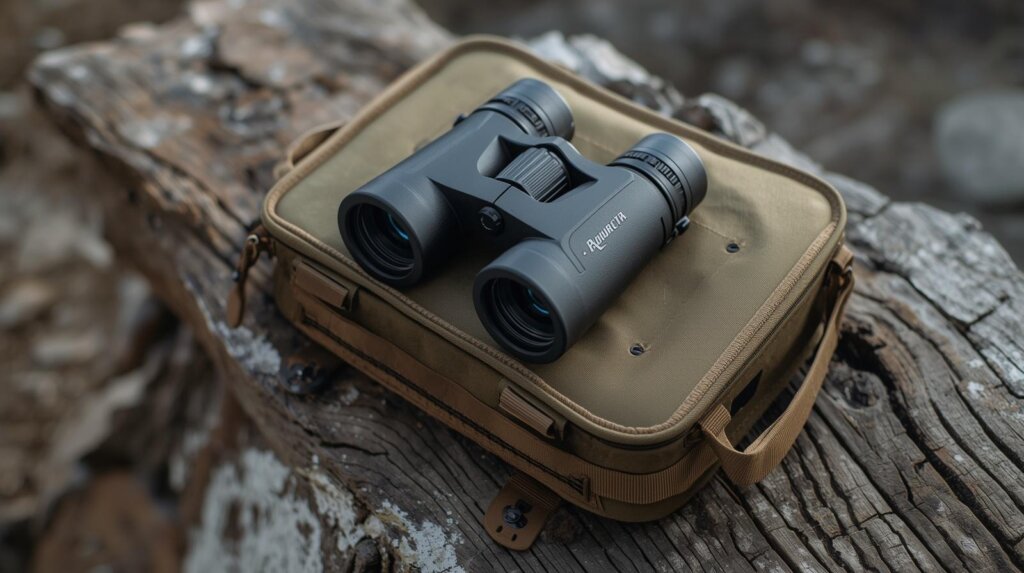
Why Heavy Binoculars Need a Proper Harness
Heavy binoculars are amazing when you are glassing at distance, watching wildlife from a ridge, scanning open fields, or using large 12x, 15x, or 56mm binoculars for long sessions. The problem is simple: big binoculars get annoying fast when they hang from a basic neck strap.
That is where the best binocular harness for heavy binoculars actually earns its place.
A good harness is not just a fancy strap. It spreads weight across your shoulders and chest, keeps your binoculars from bouncing, protects the lenses, and lets you grab your optics without digging through a backpack every few minutes. For heavier binoculars, that difference is huge.
If your binoculars feel great for the first ten minutes but start pulling on your neck after an hour, you do not need “tougher shoulders.” You need a better carry system.
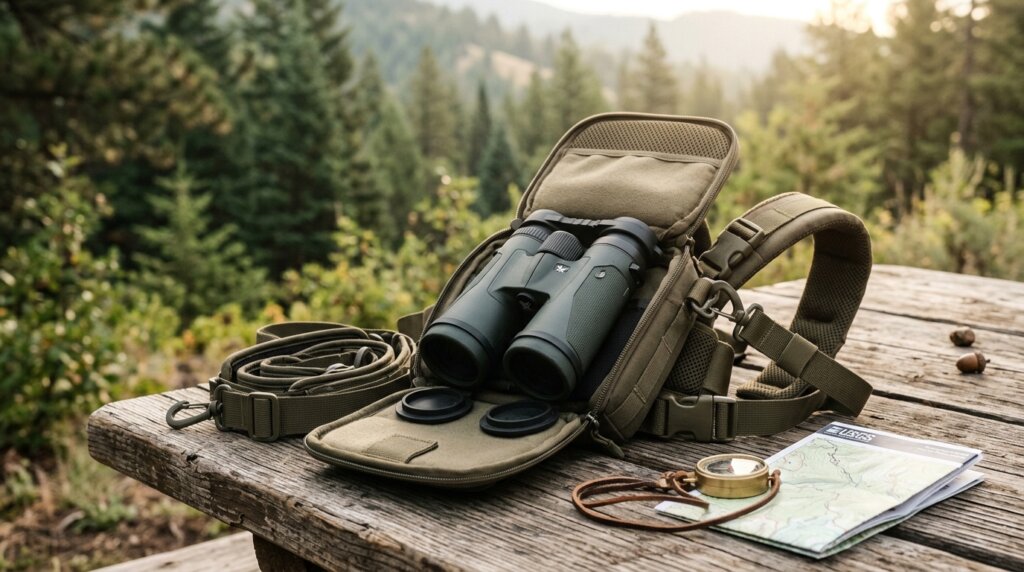
Why Heavy Binoculars Need a Different Harness
Not every binocular harness is built for heavy optics. A lightweight elastic harness may work fine for compact 8×32 binoculars, but once you move into larger 10×50, 12×50, 15×56, or range-style binoculars, weak straps become obvious.
Heavy binoculars create three common problems:
| Problem | What It Feels Like | What You Need |
|---|---|---|
| Neck strain | Pulling, soreness, pressure after walking | Wide shoulder support |
| Bouncing | Binoculars slap your chest while moving | Secure chest pack or tight harness |
| Lens exposure | Dust, scratches, moisture, accidental bumps | Enclosed or padded protection |
| Slow access | You keep removing and storing optics | One-hand opening or quick draw |
| Bad balance | Harness shifts when bending or climbing | Adjustable sternum and shoulder fit |
The best binocular harness for heavy binoculars should solve all of these, not just “hold binoculars.”
That is why chest-pack style harnesses usually beat simple strap-only harnesses for heavier optics. They feel more stable, protect your investment better, and reduce the swinging that makes heavy binoculars tiring.
Quick Verdict: What Type Works Best?
For heavy binoculars, I would choose an enclosed chest pack harness over a basic open-strap harness.
Why? Because heavier binoculars are usually more expensive, bulkier, and more annoying when they swing around. An enclosed binocular harness gives you weight support and protection at the same time.
A basic harness spreads weight, but it does not protect the body, lenses, eyecups, or bridge area from bumps and debris. A chest pack does.
For most users, the sweet spot is:
Padded shoulder harness + enclosed bino pouch + adjustable straps + quiet opening system + enough depth for large binoculars.
That setup gives you comfort without turning your chest into a bulky storage wall.
Best Product Pick: Marsupial Gear Enclosed Binocular Pack
If I had to recommend one highly relevant option for heavy binoculars, it would be the Marsupial Gear Enclosed Binocular Pack.
This harness makes sense because it is built more like a protective chest pack than a simple strap. Marsupial Gear lists the pack with a complete containment design, magnetic open/close function, fleece liner, stretch side pockets, rear mesh pocket, front zippered pocket, MOLLE attachment, padded mesh harness, and removable safety tethers. The listed weight ranges from 14 oz to 15.5 oz depending on size.
Several outdoor gear reviewers have praised the Marsupial Gear Enclosed Binocular Pack for its full containment design, easy access, one-handed operation, secure open/closed lid system, and strong optics protection.
Why It Fits Heavy Binoculars Well
The big win is stability. Heavy binoculars need a harness that keeps them close to your body. The Marsupial-style enclosed pack keeps the binoculars centered instead of letting them swing from straps.
The fleece liner also matters. With heavier binoculars, you are more likely to notice rubbing, noise, and hard contact inside cheaper cases. A softer interior helps keep the setup quiet and cleaner.
Pros
| Pros | Why It Matters |
|---|---|
| Enclosed design | Better protection for large, expensive optics |
| Padded mesh harness | Helps reduce shoulder fatigue |
| Magnetic access | Faster than zippers in the field |
| Safety tethers | Adds security when removing binoculars |
| Extra pockets | Useful for lens cloth, small accessories, or caps |
Cons
| Cons | Why It Matters |
|---|---|
| Bulkier than a simple harness | Not ideal if you want a super-minimal setup |
| Costs more than basic straps | Better for serious use, not casual backyard viewing |
| Needs correct sizing | Heavy binoculars must fit without being forced |
My honest take: if your binoculars are heavy enough to annoy you on a neck strap, do not cheap out on the harness. The harness becomes part of the optic system.
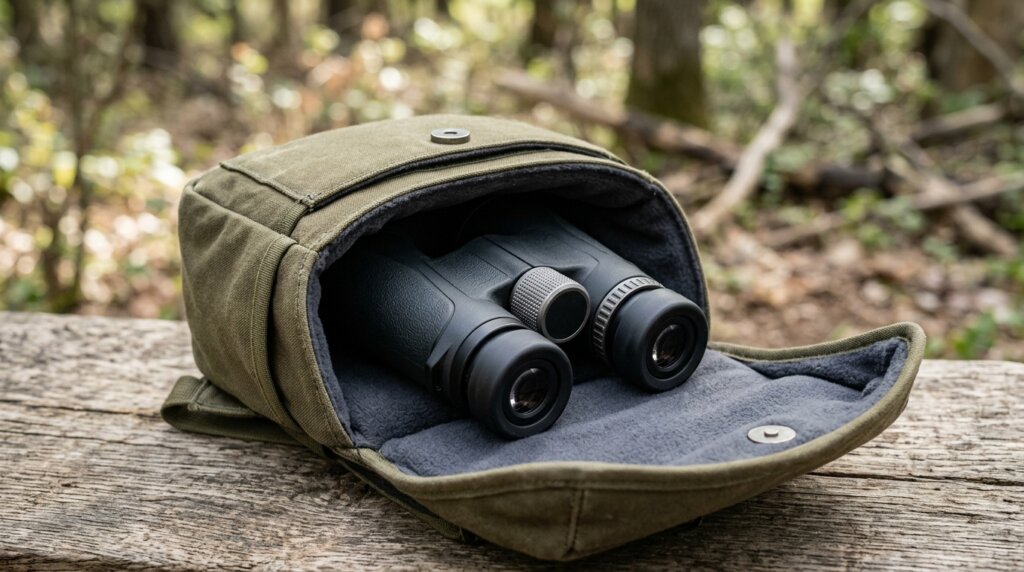
What Makes the Best Binocular Harness for Heavy Binoculars?
A heavy binocular harness has to do more than look rugged. These are the features that actually matter after a few hours outside.
1. Wide, Comfortable Shoulder Straps
Thin straps dig into your shoulders. Elastic straps can stretch too much. For heavier binoculars, look for wider straps with some structure.
A comfortable binocular harness should spread the load across your upper back and shoulders. If the pressure is only on one narrow strip, you will feel it fast.
For long sessions, you may also want to read our guide on a comfortable binocular harness for long use because heavy optics become much easier to carry when the harness is built for all-day comfort.
2. Chest Stability
The best binocular harness for heavy binoculars should keep the optics tight to your chest without crushing you.
If the binoculars bounce when you walk, climb, bend, or move through uneven ground, the harness is not doing its job. Bounce is more than annoying. It can make heavy binoculars feel even heavier.
A chest pack design usually wins here because it holds the binocular body in place.
3. Proper Pouch Depth
This is where many buyers mess up.
They buy a harness based on general size labels like “medium” or “large” without checking whether their actual binocular model fits. Heavy binoculars often have taller barrels, bigger objective lenses, or longer bridges.
A good fit means:
- The binoculars slide in without force
- The lid closes naturally
- The eyecups are not crushed
- The focus wheel is not constantly rubbing
- You can remove the binoculars with one hand
If the harness is too tight, you will stop using it. Simple as that.
4. Lens Protection
Heavy binoculars are often used in rougher environments: trails, fields, mountains, wet grass, dusty paths, and long travel days. A basic strap leaves the lenses exposed.
An enclosed binocular harness protects against dust, light moisture, brush contact, and accidental knocks. It also reduces the need to constantly manage lens caps while moving outdoors.
For more gear-focused protection ideas, you can explore our binocular care and field-use tips on the our blog page.
5. Quiet Access
This matters more than people think.
A loud zipper, stiff buckle, or scratchy fabric gets irritating when you are repeatedly pulling binoculars out and putting them away. Magnetic lids, soft liners, and smooth pull tabs make the experience cleaner.
You want a harness that opens without a wrestling match.
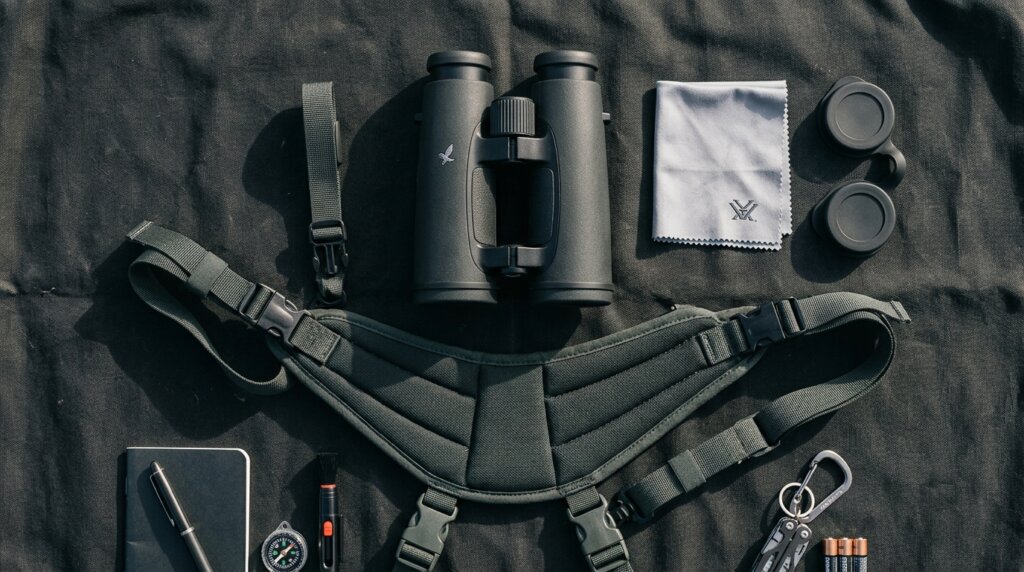
Chest Pack vs Strap Harness for Heavy Binoculars
Here is the real comparison.
| Feature | Chest Pack Harness | Strap-Only Harness |
|---|---|---|
| Comfort with heavy binoculars | Better for long carry | Decent for short use |
| Lens protection | Strong | Weak |
| Bounce control | Very good | Depends on strap tension |
| Weather protection | Better | Minimal |
| Speed of access | Good if designed well | Very fast |
| Bulk | More noticeable | Minimal |
| Best for | Heavy binoculars, rough use, long sessions | Lightweight optics, casual use |
For compact binoculars, I can understand choosing a simple strap harness. But for big optics, I would rather deal with a little extra chest bulk than carry heavy binoculars swinging around my neck.
That is the practical difference.
Who Should Buy a Heavy-Duty Binocular Harness?
The best binocular harness for heavy binoculars is not only for one type of user. It helps anyone who carries bigger optics for more than a few minutes.
Wildlife Watchers
Large binoculars are great for viewing animals from a safe distance, but carrying them all day can get old quickly. A chest harness keeps them ready without neck strain.
Birders Using Larger Glass
Most birders prefer lighter optics, but some use bigger binoculars for low-light viewing or longer-distance observation. A stable harness helps when moving between spots.
Hikers and Outdoor Travelers
If your binoculars are part of your outdoor kit, a harness is easier than pulling them from your backpack every time the view opens up.
Sports and Event Viewers
Heavy binoculars can be useful for stadiums, racing, and outdoor events, but a neck strap becomes irritating fast. A padded harness keeps things balanced.
Long-Range Observation Users
For open landscapes, coastlines, ridges, and scenic overlooks, heavier binoculars often make sense. A harness keeps them usable instead of burdensome.
Common Mistakes When Buying a Harness for Heavy Binoculars
Buying Too Small
This is the most common mistake. If your binoculars barely fit, the harness will annoy you every time you use it.
Check pouch dimensions before buying. Do not guess.
Choosing the Cheapest Strap
An affordable binocular harness can be a smart buy, but cheap and supportive are not always the same thing. If your binoculars are large and expensive, match them with a harness that can actually carry them well.
Ignoring Shoulder Comfort
Some harnesses look good in product photos but feel rough after an hour. Padding, strap width, and back-panel design matter more than flashy storage pockets.
Buying Too Much Bulk
Yes, heavy binoculars need support. No, you do not need a chest pack the size of a lunchbox unless you carry extra accessories.
The best setup feels secure but not overbuilt.
Forgetting About Clothing Layers
A harness that fits over a T-shirt may feel tight over a hoodie, jacket, or rain shell. Choose one with enough adjustment range.
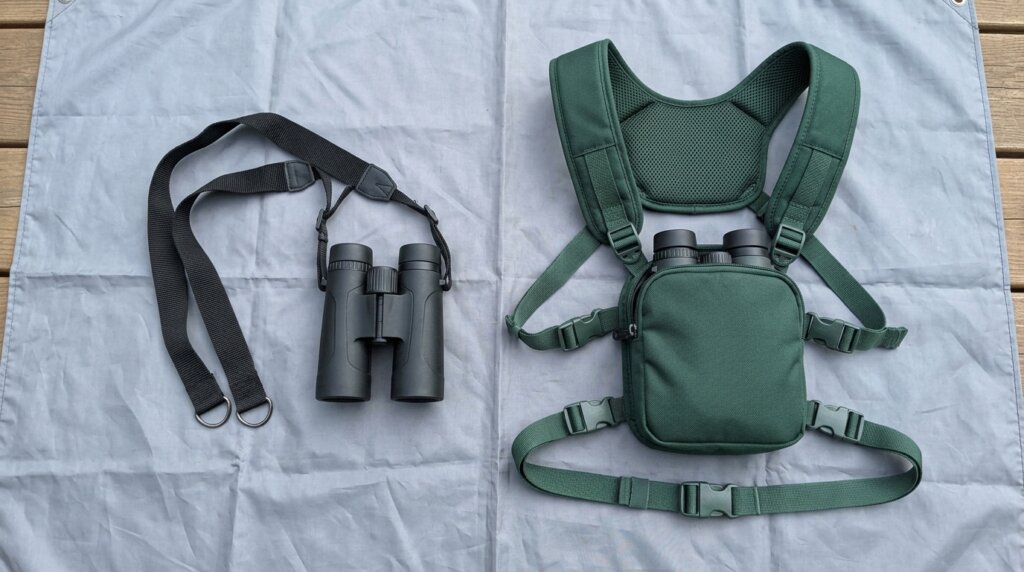
How to Know If Your Current Harness Is Not Enough
You probably need a better harness if:
- Your neck hurts after short use
- Your binoculars bounce while walking
- You keep holding the binoculars with one hand to stop movement
- The strap twists often
- The binoculars feel exposed
- You avoid carrying them because they feel like a burden
- Your harness feels unstable with jackets or layers
That last point is underrated. Heavy binoculars should feel like part of your kit, not something you are constantly adjusting.
Best Harness Features by Use Case
| Use Case | Best Harness Style | Key Feature |
|---|---|---|
| Long hikes | Padded chest harness | Weight distribution |
| Wet or dusty conditions | Enclosed chest pack | Better protection |
| Quick casual viewing | Strap harness | Lightweight carry |
| Large 15x binoculars | Deep chest pouch | Secure fit |
| Travel use | Low-profile harness | Less bulk |
| All-day outdoor use | Enclosed padded harness | Comfort + protection |
For a full breakdown of harness types and buying options, you can also visit our main best binocular harness guide. That page is better if you are still comparing different harness styles before picking one for heavy binoculars.
What You Are Really Paying For
When people shop for the best binocular harness for heavy binoculars, they usually think they are paying for straps.
They are not.
They are paying for comfort, speed, protection, and less frustration.
A good harness makes you use your binoculars more often because they are always ready. A bad harness makes you leave them in the car, backpack, or closet because carrying them feels like work.
That is why the right harness can make heavy binoculars feel more practical. It does not make them lighter on paper, but it makes them feel easier to live with.
And that is the whole point.
Final Recommendation
For most people using heavy binoculars, I would skip the basic neck strap and go straight to a padded enclosed chest harness.
The best binocular harness for heavy binoculars should keep your optics close, protected, quiet, and easy to grab. If it only spreads weight but does not control bounce or protect the lenses, it is only solving half the problem.
The Marsupial Gear Enclosed Binocular Pack is the strongest single recommendation here because it offers the right mix of support, containment, access, and field-friendly design. It is not the cheapest choice, but for heavier optics, it makes sense.
For lighter setups, a simpler or more budget-friendly harness may be enough. But once your binoculars feel heavy around your neck, the upgrade is worth it.

FAQs About the Best Binocular Harness for Heavy Binoculars
What is the best binocular harness for heavy binoculars?
The best binocular harness for heavy binoculars is usually an enclosed padded chest harness. It spreads weight across your shoulders, reduces bouncing, protects the lenses, and keeps larger binoculars ready for quick use.
Is a chest harness better than a neck strap for heavy binoculars?
Yes, a chest harness is usually much better than a neck strap for heavy binoculars. A neck strap puts pressure on one area, while a harness spreads the load and keeps the binoculars more stable.
Can a cheap binocular harness hold heavy binoculars?
Some budget harnesses can hold heavy binoculars, but many lack padding, pouch depth, and bounce control. For large or expensive binoculars, a stronger enclosed harness is usually the smarter buy.
Do heavy binoculars need an enclosed harness?
They do not always need one, but an enclosed harness is highly recommended. Heavy binoculars are more likely to bump, swing, and collect dust when carried on a basic strap.
How tight should a binocular harness be?
A binocular harness should sit close to your chest without restricting breathing or shoulder movement. If the binoculars bounce when you walk, tighten the straps slightly. If the harness pulls or pinches, loosen and rebalance it.
What size harness do I need for large binoculars?
Check the internal pouch dimensions before buying. Large binoculars need enough depth and height so the lid closes naturally without forcing the eyecups, focus wheel, or objective barrels.
Is a binocular harness worth it for occasional use?
If your binoculars are heavy, yes. Even occasional use becomes more comfortable with a harness, especially during walks, outdoor events, travel, or long viewing sessions.




