
Why 10×42 Binoculars Under $200 Are a Smart Sweet Spot
A lot of people land on 10×42 because it sounds like the “serious” option. More magnification. Bigger reach. Better detail. And sometimes, yes, that is exactly what you want.
But here’s the part many roundup posts skip: not every 10×42 binocular under $200 feels good in the hand, focuses cleanly in the field, or holds up when the weather turns. Some look decent on a spec sheet, then frustrate you the first time you try to track a moving bird, glass a shaded treeline, or scan an open ridge without your image wobbling all over the place.
That is why the best 10×42 binoculars under $200 are not just about magnification. They are about balance. You want enough reach to make distant details worth the extra power, but not so much shake, narrow view, or cheap-feeling focus that the whole thing becomes annoying after ten minutes.
For many buyers, this size hits a sweet spot. It works for wildlife watching, hunting, hiking, edge-of-dark birding, and even general outdoor use when you want more reach than an 8×42 gives you. It is also one of the smartest stepping stones if you are moving up from cheap department-store glass and finally want something you can actually trust.
Why 10×42 Is Such a Popular Choice
There is a reason so many experienced users keep coming back to this format.
The 10x magnification gives you noticeably more reach than 8x. If you are glassing a distant field, trying to identify deer movement near a treeline, or picking out a perched bird farther than you expected, 10x helps. It pulls details closer without forcing you into a bulky 12×50 setup.
The 42mm objective lens matters too. This is where the format stays practical. You still get respectable light gathering for early morning and late evening use, but the binocular does not become a brick around your neck. That is important because an optic you hate carrying is an optic you stop using.
Still, 10×42 is not automatically better for everyone. If your hands are shaky, or most of your viewing happens in dense woods at close to mid-range, an 8×42 can feel calmer and easier. But for buyers who want one binocular that leans a little farther into distance work without becoming oversized, the best 10×42 binoculars under $200 make a lot of sense.
What Actually Separates a Good Budget 10×42 from a Bad One
This is where smart buyers save themselves money.
1. A Clear Image Matters More Than a Fancy Feature List
A cheap binocular can brag about coatings, prism type, waterproofing, and a dozen marketing phrases, then still give you a flat, dull image with weak edge sharpness. What you really notice in the field is whether the center looks crisp, whether contrast holds in mixed light, and whether details stay readable without you constantly refocusing.
That is why I put more weight on usable clarity than feature stuffing. A clean, bright image with predictable focus beats a spec-heavy binocular that looks hazy past the center.
2. Field of View Can Make or Break the Experience
A narrow field of view is one of the fastest ways to make 10x frustrating.
On paper, higher magnification sounds like a win. In practice, if the field is too tight, it becomes harder to find birds, track movement, or scan naturally. You spend more time hunting for the subject than actually watching it.
For birders and general wildlife users, this matters a lot. For hunters or open-country glassing, it still matters more than most buyers think.
3. Eye Relief Is Not a Minor Detail
If you wear glasses, poor eye relief becomes annoying immediately. You lose part of the image, the view feels cramped, and the binocular never quite settles into a comfortable viewing position.
Even non-glasses wearers benefit from decent eye relief because it usually makes long sessions less fatiguing.
4. Focus Feel Tells You More Than Most Reviews Do
Some binoculars sound fine in a product description but have mushy, inconsistent focus wheels. Others feel stiff when cold or overshoot the sweet spot. A good focus wheel should feel controlled, smooth, and easy to dial in quickly when a subject moves.
That sounds small. It is not. In real use, it changes everything.
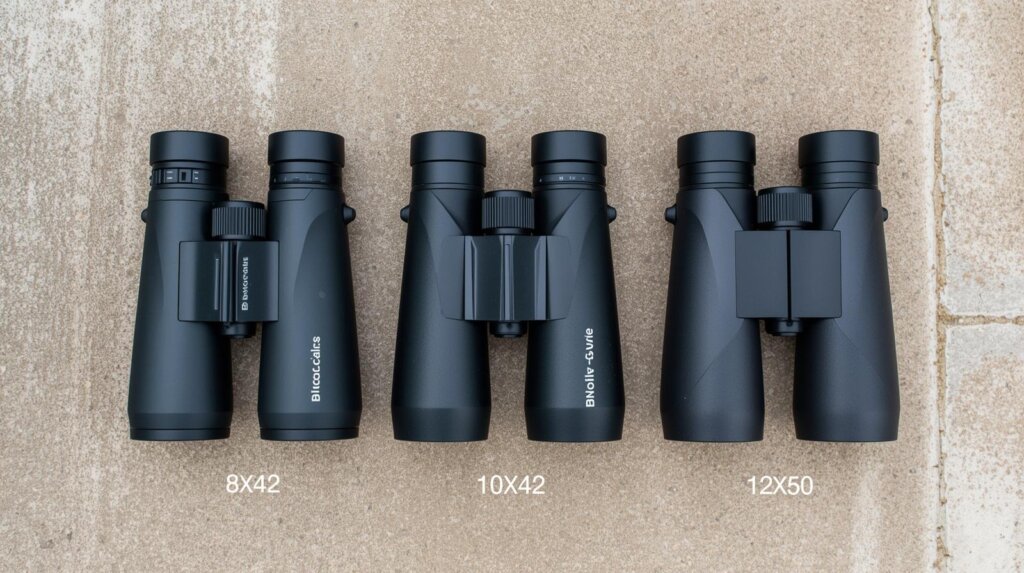
Quick Comparison: Is 10×42 the Right Format for You?
| Format | Best For | Strengths | Trade-Offs |
|---|---|---|---|
| 8×42 | Woodland birding, casual wildlife watching, shaky hands | Wider view, easier to hold steady, often brighter-feeling | Less reach at distance |
| 10×42 | Mixed use, open-country scanning, hunting, general all-round reach | Better distance detail, still portable, versatile | More image shake than 8x |
| 12×50 | Long-range glassing from stable positions | More magnification and low-light presence | Heavier, harder to hold steady, less forgiving |
For a lot of buyers, 10×42 is the “I want one binocular that can do most things well enough” choice. That is exactly why this subcategory matters inside a broader best binoculars under $200 roundup.
My Top Pick for Most Buyers
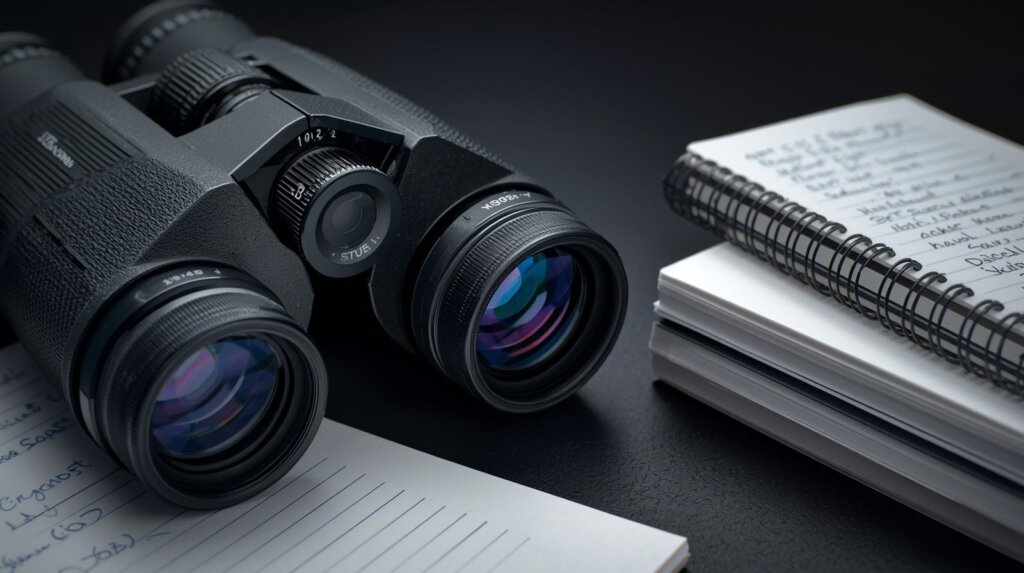
If you want one straightforward pick, the Nikon PROSTAFF P3 10×42 is a strong place to start in this category.
Why this one? Because it does not try to win with hype. It wins by being sensible. The view is practical, the size is manageable, and it gives you the kind of specs that matter in real use instead of just sounding good in a product listing. The PROSTAFF P3 10×42 gives you a wide field of view, a comfortable lightweight build, close focus that works well for nearby subjects, and waterproof/fogproof construction for outdoor use.
Why I’d choose it
It fits that sweet middle ground many buyers are really looking for. It is not trying to be an ultra-premium optic. It is trying to be the binocular you actually take outside, use often, and do not regret buying.
For birding at the edge of a field, casual hunting trips, road travel, wet-weather hiking, and general wildlife observation, that matters more than sounding “tactical” or “pro.”
Pros
- Wide enough view to feel less cramped than many cheap 10x options
- Light enough for long walks without becoming a neck burden
- Waterproof and fogproof, so it is not just for fair-weather use
- Close focus is practical for mixed-distance viewing
- Usually priced in a zone that still leaves room in the budget for a better strap or harness
Cons
- Like most budget 10×42 options, it still shows normal handheld shake if your grip is unsteady
- It is not the choice if you want premium edge-to-edge sharpness or elite low-light performance
- Buyers expecting “alpha glass” for this budget will need a reality check
If your goal is to buy once, stay under budget, and skip the usual cheap-binocular regrets, this is the kind of pick that makes sense.
Real-World Use Cases: Where 10×42 Under $200 Shines
Bird Watching in Open Spaces
If you mostly watch birds in parks, open scrub, reservoirs, farmland, or coastal edges, 10×42 makes sense. You get more reach for distant perches, shoreline activity, and mid-range identification.
Where it gets tricky is dense woodland. In tight spaces, a 10x view can feel narrow and less forgiving. That does not make it bad. It just means you need to know your environment. Open spaces? Great fit. Thick forest? Maybe not your easiest glass.
Hunting and Wildlife Observation
This is one of the strongest cases for the best 10×42 binoculars under $200. For deer, hogs, and general game spotting, 10x gives you more confidence at longer distances than an entry-level 8x usually does.
And with a 42mm objective, you still have usable dawn and dusk performance without carrying something oversized. That balance is a big reason hunters keep landing here.
Hiking and Travel
A budget 10×42 works well when you want one binocular for road trips, mountain overlooks, national parks, and general outdoors use. It gives the experience more punch. You notice details you would otherwise miss.
The catch? Don’t go too heavy. Once a binocular feels like dead weight, it stops being part of the trip and becomes something you left in the car.
10×42 vs Waterproof Models: Which One Should You Prioritize?
If you hike in unpredictable weather, hunt in wet brush, or travel where humidity and sudden rain are normal, water resistance is not optional. It is part of long-term value.
That is why it helps to read this alongside our guide to best waterproof binoculars under $200. A good 10×42 is already a versatile format, but once you combine that with waterproof and fogproof construction, you get something far more dependable in real outdoor conditions.
In other words, magnification gets attention. Weather sealing earns loyalty.
Common Mistakes Buyers Make in This Category
Buying 10x Just Because It Sounds Better
A lot of first-time buyers assume 10x is automatically the “upgraded” choice. Sometimes it is. Sometimes it just means more shake, a narrower feel, and more frustration.
If most of your viewing is close to mid-range or you struggle to hold optics steady, 8×42 may actually give you the better experience.
Ignoring Weight and Carry Comfort
This is one of the least glamorous factors and one of the most important. A binocular can be optically decent and still become a bad buy if it feels annoying after an hour.
Neck comfort, grip texture, balance, and how easily you can raise it one-handed all matter more in real life than most spec sheets suggest.
Falling for Overbuilt Marketing Language
“Military-grade.” “Ultra-HD.” “Professional tactical performance.” Budget binocular listings are full of stuff like this. I usually ignore it.
What matters is whether the binocular gives you a stable, clean, easy-to-use view. Not whether the copywriter had a dramatic day.
Expecting Premium Low-Light Performance Under $200
You can absolutely get useful dawn and dusk performance in this price range. But there is a difference between “good enough for real use” and “premium low-light glass.” Know that difference before buying and you will be much happier with your purchase.
Buyer Tips That Save Money and Regret
Start with how you will actually use the binocular, not the most exciting number on the box.
If your priority is birding in open country, wildlife at distance, or hunting, 10×42 is a strong format. If you mainly want a relaxed, easy, all-purpose optic for woods and casual use, step back and compare it against 8×42 honestly.
Also, think beyond the binocular itself. A good harness, cleaner optics cloth, and lens protection sometimes improve the ownership experience more than chasing a slightly different spec.
For more buying help, you can compare this guide with our best waterproof binoculars under $200 article or return to the bestbinocular.net home page to explore more budget-friendly binocular advice.
If you are still comparing options, check our latest binocular guides for more real-world buying advice, field tips, and budget-friendly recommendations.
Final Thoughts
The best 10×42 binoculars under $200 are not the ones with the loudest product page. They are the ones that feel right when the moment matters: a deer stepping out at first light, a hawk perched farther than you thought, a ridge view that suddenly becomes more alive.
That is why I like this category so much. When you get it right, it feels like real value, not just a cheap compromise.
If you want one binocular that leans toward distance work, still stays portable, and does not blow your budget, 10×42 is one of the smartest places to shop. And if you want the safest all-around pick for most people, the Nikon PROSTAFF P3 10×42 is the one I would start with.
FAQs
Are 10×42 binoculars good for bird watching?
Yes, especially in open habitats where birds are often farther away. They give you more reach than 8×42, which helps with distant perches and shoreline viewing. In dense woods, though, some users still prefer 8×42 because it feels steadier and wider.
Is 10×42 too shaky for handheld use?
Not for most people, but it is less forgiving than 8x. If your hands are unsteady, or you spend a lot of time glassing for long periods, you will notice more image shake. Good grip, decent posture, and realistic expectations help a lot.
Are the best 10×42 binoculars under $200 good enough for hunting?
Yes, for many hunters they are one of the smartest budget choices. You get useful reach, workable low-light performance, and a size that is still practical to carry. Just don’t expect elite edge sharpness or premium twilight performance at this budget.
What matters more: magnification or field of view?
For many buyers, field of view matters more than they think. A slightly wider, easier-to-use binocular often feels better in the field than a tighter view with more magnification. This is especially true for birding and tracking movement.
Should I choose 10×42 or 8×42 under $200?
Choose 10×42 if you want more reach and regularly look at distant subjects. Choose 8×42 if you want a steadier image, easier subject tracking, and a more relaxed viewing experience.




