
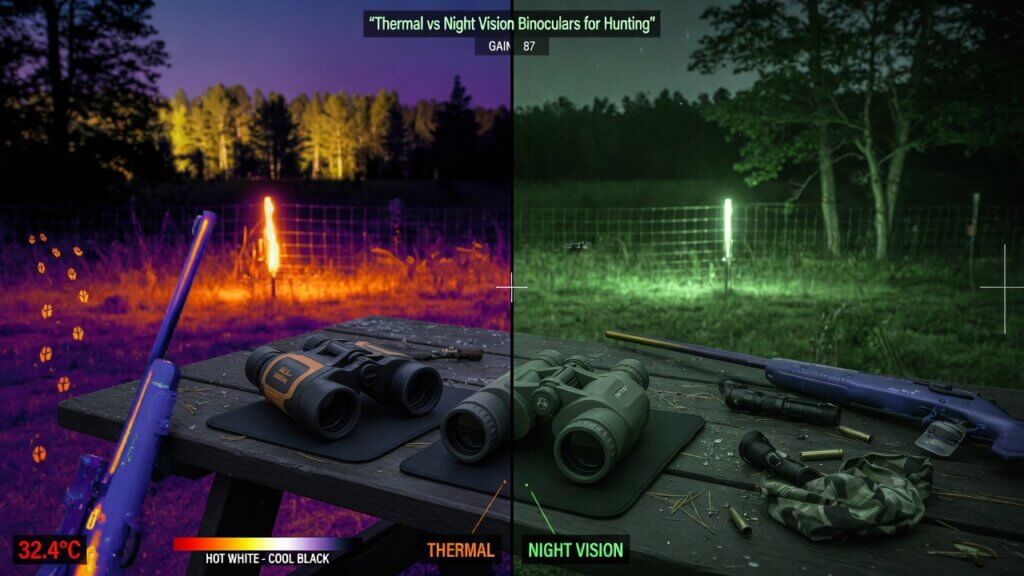
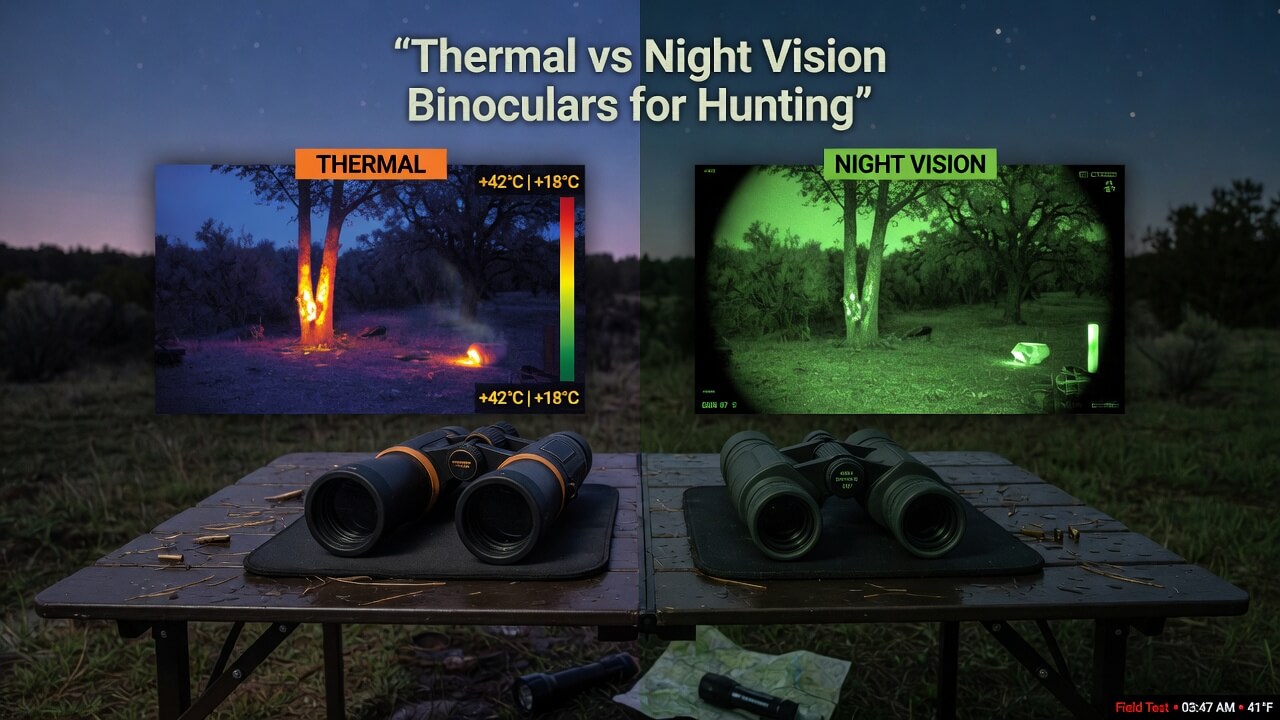
Thermal vs Night Vision Binoculars for Hunting: Which One Is Better?
Choosing between thermal vs night vision binoculars for hunting sounds simple until you are standing in a dark field, glassing a tree line, and trying to decide whether that faint shape is game, brush, or just your imagination.
Both technologies help hunters see in the dark, but they do it in completely different ways. Thermal binoculars detect heat. Night vision binoculars amplify available light or use infrared illumination to show detail. That difference changes everything: detection range, image detail, price, battery life, legality, and how useful the binoculars feel in real hunting conditions.
This guide is not about saying one is always better. That would be lazy advice. The real answer depends on where you hunt, what you hunt, how far you scan, and whether your main goal is finding animals or identifying them clearly.
If you are building your night hunting setup, this comparison will help you decide whether thermal or night vision binoculars deserve your money first.
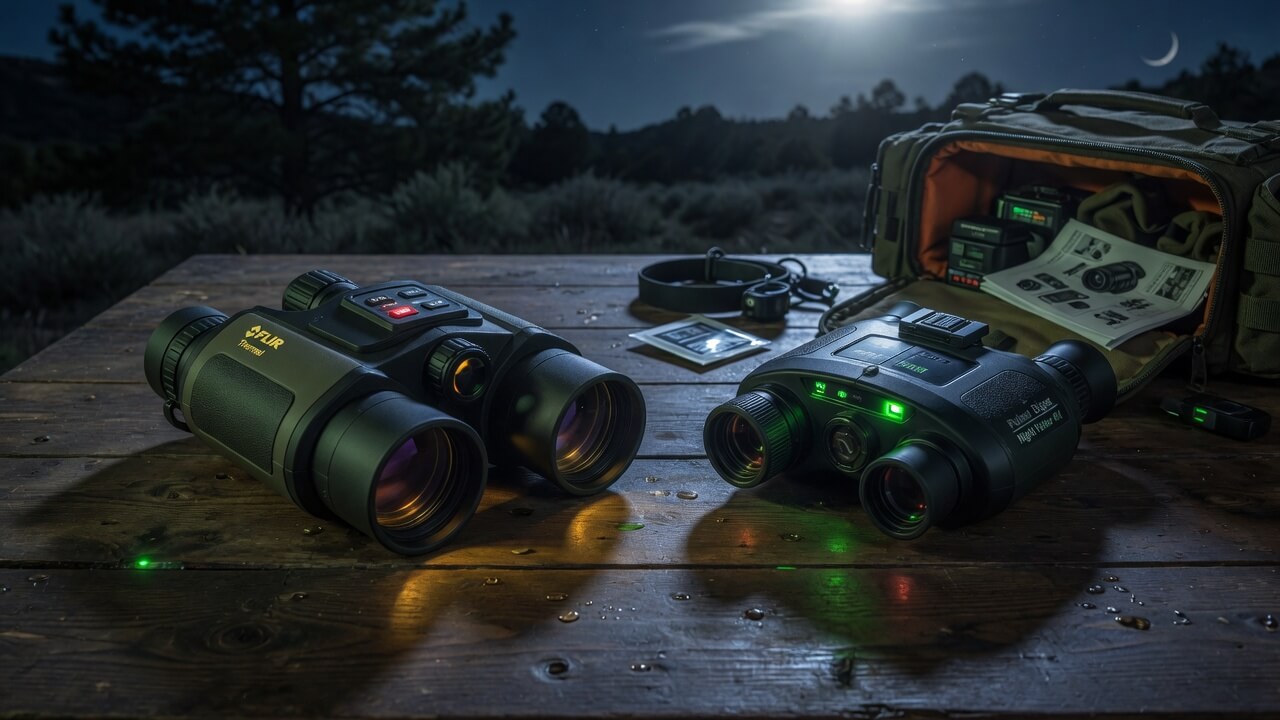
Quick Answer: Thermal Finds Faster, Night Vision Shows More Detail
For most hunters, the biggest difference is this:
Thermal binoculars are better for detecting heat signatures quickly. Night vision binoculars are better for recognizing terrain, shapes, fences, trees, and real-world detail.
That means thermal is excellent when you need to scan large fields, spot hidden movement, or detect warm bodies through grass, brush edges, or darkness. Night vision is better when you want a more natural view of the scene and need to understand what is around the target.
In simple terms:
| Hunting Need | Better Choice |
|---|---|
| Finding hidden animals fast | Thermal binoculars |
| Seeing trails, fences, trees, and terrain | Night vision binoculars |
| Long scanning over open fields | Thermal binoculars |
| Budget-friendly night hunting | Digital night vision binoculars |
| Identifying details before making decisions | Night vision binoculars |
| Dense brush detection | Thermal binoculars |
| Recording clear night footage | Digital night vision binoculars |
| Hunting with a lower budget | Night vision binoculars |
For hunters comparing thermal vs night vision binoculars for hunting, this is the most practical way to think about it: thermal is your detection tool, while night vision is your confirmation and navigation tool.
How Thermal Binoculars Work for Hunting
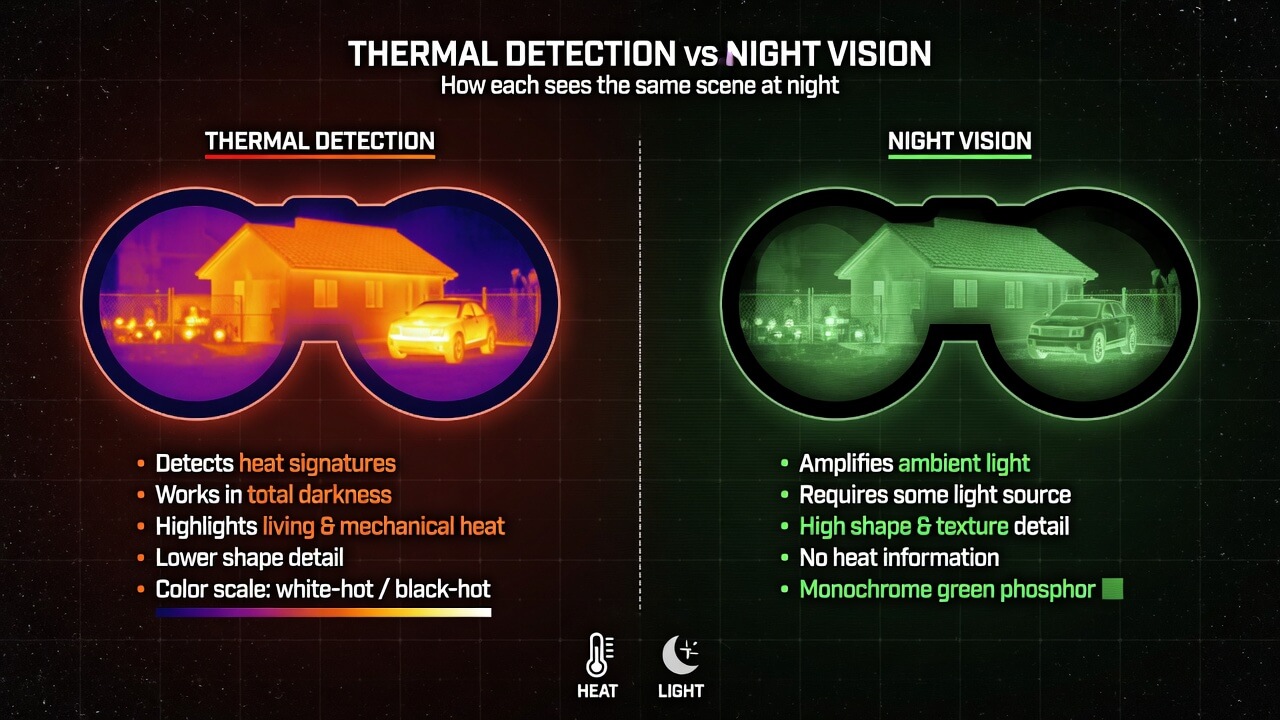
Thermal binoculars detect heat radiation. They do not need moonlight, starlight, or an infrared beam. If an object is warmer or colder than its surroundings, a thermal unit can usually show it as a visible contrast.
That is why thermal feels almost unfair when scanning fields. A warm animal can stand out even when your naked eye sees nothing.
But there is a tradeoff.
Thermal does not show normal visual detail the way your eyes do. You may see a glowing shape, but you may not clearly see fur texture, antlers, facial detail, branches, fence wire, or a clean outline of the terrain. Better thermal sensors improve this, but even premium models still feel different from true optical viewing.
Pros of Thermal Binoculars
Thermal binoculars are excellent when you need fast detection. You can sweep a field and notice heat signatures within seconds. This is useful for hog hunting, predator control, coyote setups, and open-land scanning.
They also work in complete darkness. No IR light is required. That matters if you do not want your position revealed by an infrared illuminator.
Another advantage is detection through light cover. Thermal cannot magically see through solid walls or thick timber, but it can often pick up heat around grass, brush edges, and partial cover better than night vision.
Cons of Thermal Binoculars
The biggest downside is price. Good thermal binoculars cost much more than most digital night vision binoculars.
The second issue is identification. Thermal helps you find something, but you still need to identify it responsibly. A heat blob at distance can be misleading, especially in mixed terrain.
Thermal can also struggle in hot environments where the ground, rocks, and vegetation hold heat. On summer nights, contrast may feel less dramatic than it does on cold evenings.
How Night Vision Binoculars Work for Hunting
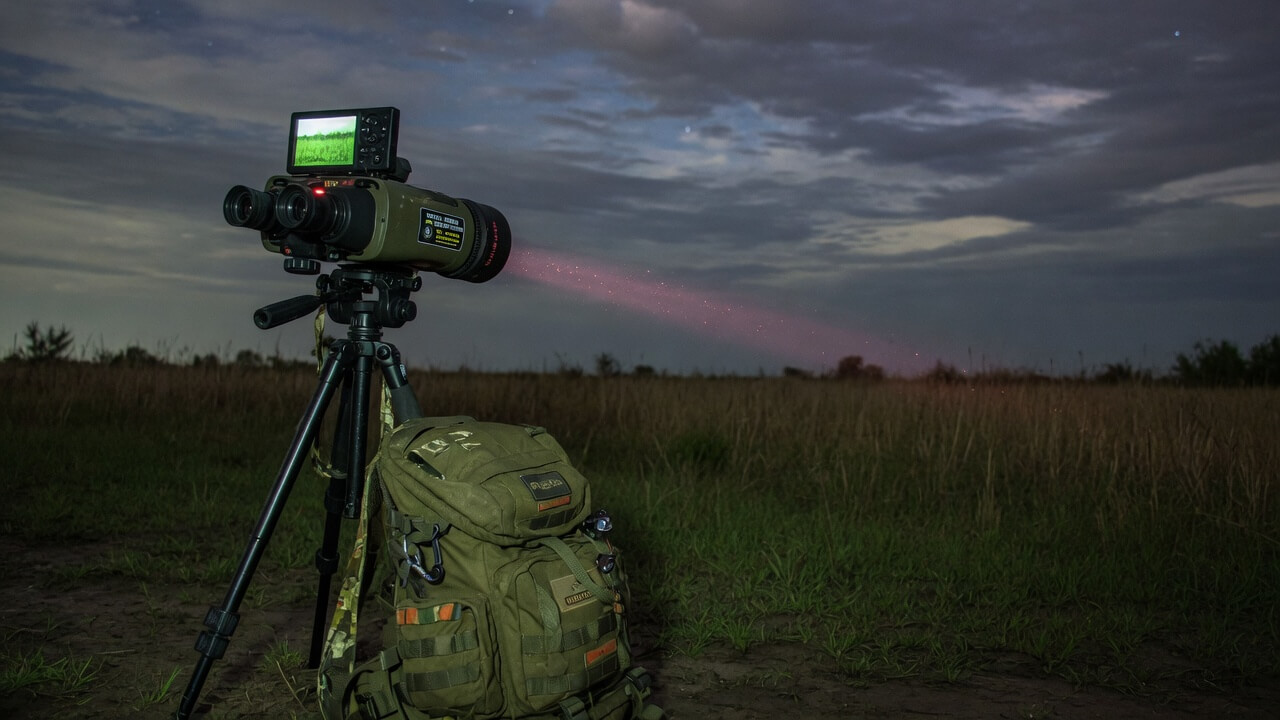
Night vision binoculars create a visible image in darkness. Digital night vision usually uses a sensor, screen, and infrared illuminator. Traditional night vision intensifies existing light, while digital units often rely more heavily on IR.
For hunting, digital night vision binoculars are popular because they are more affordable, easier to record with, and widely available.
If you want a full breakdown of this category, the main silo guide on digital night vision binoculars for hunting is the best next page to read because it focuses specifically on night hunting use cases, not just general optics.
Pros of Night Vision Binoculars
Night vision gives you a more familiar view of the landscape. You can see field edges, trees, tracks, gates, feeder areas, fences, and ground features much better than with thermal.
This matters more than beginners realize. Hunting at night is not only about spotting animals. You also need to move safely, judge distance, avoid obstacles, and understand what is behind the target area.
Night vision binoculars also tend to be cheaper. If you are building your first night hunting kit, digital night vision gives you more usable features for less money.
Another benefit is video recording. Many digital night vision binoculars include photo and video capture, which is useful for scouting, reviewing movement patterns, or creating hunting content.
Cons of Night Vision Binoculars
Night vision usually needs some light or infrared illumination. On very dark nights, cheaper units can feel grainy or narrow unless the IR illuminator is strong.
IR light can also reflect off fog, dust, rain, or nearby branches. In those conditions, the image can wash out.
Night vision is also weaker for detecting hidden animals. If an animal is still, partly behind brush, or blending into the background, you may scan right past it.
Thermal vs Night Vision Binoculars for Hunting: Real Field Comparison
The best way to compare thermal vs night vision binoculars for hunting is by real situations, not brochure specs.
Scenario 1: Open Field Hog Hunting
In an open field, thermal has the clear advantage for detection. Hogs give off strong heat signatures, and a thermal binocular can help you locate movement faster.
Night vision still has value after detection. Once you know where to look, night vision can help you understand the field layout, check direction, and judge obstacles.
Best choice: Thermal for scanning, night vision for confirmation.
Scenario 2: Coyote Hunting on Field Edges
Coyotes are tricky because they move fast and often appear at the edge of visibility. Thermal helps you notice movement earlier, especially if the animal is crossing a cold field or standing near brush.
Night vision is better when you need to watch approach routes, identify fence gaps, or read terrain.
Best choice: Thermal if your budget allows. Digital night vision if you hunt closer ranges.
Scenario 3: Thick Woods or Brush
Thermal can help detect heat through small openings, but thick woods create a messy thermal picture. Branches, trunks, uneven heat, and limited lanes can make scanning difficult.
Night vision gives more detail, but it still cannot solve heavy cover. In woods, magnification and field of view become more important than raw range claims.
Best choice: Neither is perfect. Thermal helps detect, night vision helps navigate.
Scenario 4: Budget Night Hunting Setup
If your budget is limited, night vision usually makes more sense. You can get a usable digital night vision binocular for far less than a high-quality thermal unit.
For hunters comparing thermal vs night vision binoculars for hunting on price alone, night vision is usually the smarter first purchase.
For cheaper options, read best budget night vision binoculars for hunting before buying, because budget models can look impressive online but disappoint badly in real darkness.
Detection vs Identification: The Mistake Many Buyers Make
A lot of hunters buy optics based on one question: “How far can it see?”
That is the wrong question.
The better question is: How far can I detect, recognize, and confidently identify what I am looking at?
Thermal may detect a heat signature at impressive distance, but detection is not the same as identification. Night vision may show more shape and detail, but it may fail to notice a hidden animal quickly.
Here is the practical breakdown:
| Viewing Stage | Meaning | Thermal Performance | Night Vision Performance |
|---|---|---|---|
| Detection | Something is there | Excellent | Good to average |
| Recognition | It looks like an animal | Good | Good |
| Identification | You know what it is | Depends on sensor and range | Better visual detail |
| Navigation | Moving safely in darkness | Limited terrain detail | Stronger |
| Recording footage | Capturing usable video | Model-dependent | Often better for detail |
This is why experienced night hunters often use both technologies when possible. Thermal scans first. Night vision confirms the scene.
But if you only want one device, your hunting style decides the winner.
When Thermal Binoculars Are Worth the Money
Thermal binoculars make sense if you hunt large open areas, need fast scanning, or regularly hunt hogs and predators.
They are also worth considering if you already own night vision and want to upgrade your detection ability. Thermal adds a new layer of awareness. You will spot things you would have missed with night vision alone.
Thermal is especially valuable when animals are not moving much. A still animal can vanish in shadows through night vision, but heat makes it stand out.
However, do not buy thermal just because it sounds more advanced. If you hunt small properties, need clear detail, or have a tight budget, thermal may be overkill.
When Night Vision Binoculars Are the Better Buy
Night vision binoculars are the better buy if you want practical night visibility without spending thermal-level money.
They are also better if you care about seeing the environment clearly. For walking to a blind, checking trails, watching feeder areas, or recording footage, digital night vision feels more natural.
If you hunt past 150–300 yards often, look at long range night vision binoculars for hunting because long-distance performance depends heavily on magnification, IR strength, sensor quality, and image stability.
Night vision is also easier for beginners. The image makes more sense immediately. Thermal takes more interpretation.
Product Mention: A Practical Night Vision Pick
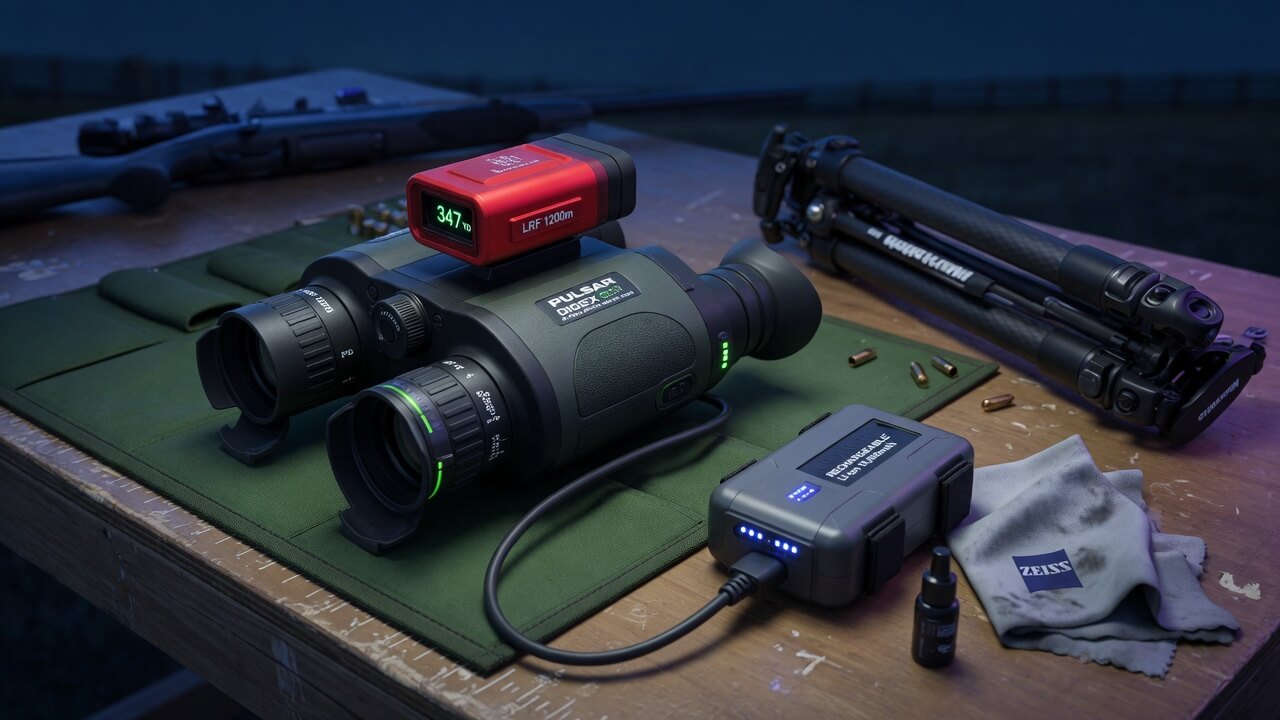
If you are leaning toward digital night vision instead of thermal, the ATN BinoX 4K 4-16x is one of the more relevant options for hunters who want a binocular-style device with modern features. It offers 4-16x magnification, a 40mm objective lens, an IR illuminator, a laser rangefinder, and 1080p video recording, making it useful for scanning, distance checking, and recording night hunts. ATN lists the BinoX 4K with a 4K M265 sensor and a 220 ft field of view at 1,000 yards.
This type of digital night vision binocular makes sense for hunters who want one device for night viewing, recording, and range estimation. It is not a thermal replacement, but for the money, it fits the practical hunting-tool category better than many gimmicky budget units.
Buyer Psychology: Why Hunters Regret the Wrong Choice
Most buyer regret comes from mismatched expectations.
Some hunters buy night vision and expect it to detect animals like thermal. Then they feel disappointed when animals blend into brush.
Others buy thermal and expect a clear, detailed, camera-like view. Then they realize thermal shows heat shapes, not natural detail.
Before buying, ask yourself:
| Question | Choose Thermal If… | Choose Night Vision If… |
|---|---|---|
| What frustrates you most? | Not finding animals | Not seeing details clearly |
| Where do you hunt? | Open fields, farms, predator setups | Trails, blinds, feeders, mixed terrain |
| What is your budget? | Higher budget available | Moderate or tight budget |
| Do you record hunts? | Recording is secondary | Recording matters |
| Do you move around at night? | Mostly stationary scanning | Walking and navigating often |
When comparing thermal vs night vision binoculars for hunting, do not chase the most exciting technology. Choose the one that solves your actual field problem.
Common Mistakes to Avoid
Mistake 1: Buying Based on Maximum Range Claims
Range claims are often based on ideal conditions. Real hunting includes humidity, brush, heat, fog, rain, and movement. Always think in terms of usable range, not advertised range.
Mistake 2: Ignoring Field of View
A narrow view makes scanning tiring. For hunting, especially predator and hog hunting, a wider field of view often feels more useful than extreme magnification.
Mistake 3: Forgetting Battery Life
Thermal and digital night vision both rely on power. Cold weather can drain batteries faster. Carry spares or a power bank if your device supports it.
Mistake 4: Using Too Much Magnification
High magnification sounds attractive, but it makes scanning harder. Start wider, find movement, then zoom if needed.
Mistake 5: Assuming Legal Rules Are the Same Everywhere
Night hunting laws, thermal use, artificial light, IR illuminators, and species rules vary by location. Always check your local hunting regulations before using either technology.
Final Verdict: Which Should You Choose?
If your main goal is to find animals faster, choose thermal binoculars.
If your main goal is to see the environment clearly, identify terrain, record footage, and stay within a realistic budget, choose digital night vision binoculars.
For most beginners entering the night hunting world, digital night vision is a sensible starting point because it teaches how animals move at night while still giving useful visual detail. Thermal is the better upgrade once you know your land, your distances, and your real hunting style.
So the honest answer to thermal vs night vision binoculars for hunting is this:
Thermal is better for detection. Night vision is better for detail. The best hunters understand that difference before they spend money.
FAQs About Thermal vs Night Vision Binoculars for Hunting
Are thermal binoculars better than night vision binoculars for hunting?
Thermal binoculars are better for detecting animals quickly, especially in open fields or complete darkness. Night vision binoculars are better for seeing natural detail, terrain, fences, and surroundings.
Can night vision binoculars see heat?
No. Night vision binoculars do not detect heat. They amplify light or use infrared illumination to create a visible image. Thermal binoculars detect heat signatures.
Is thermal worth it for hog hunting?
Yes, thermal is highly useful for hog hunting because hogs produce strong heat signatures and often move in groups across open land. Thermal helps locate them faster than night vision.
Is night vision better for beginners?
Usually, yes. Digital night vision binoculars are more affordable and easier to understand because the image looks closer to a normal nighttime scene.
Can thermal binoculars see through brush?
Thermal can sometimes detect heat through light grass or small gaps in brush, but it cannot see through thick trees, walls, or solid cover.
Do I need both thermal and night vision for hunting?
You do not need both, but the combination is powerful. Thermal helps you find animals, while night vision helps you confirm details and understand the environment.
What is better for long range hunting at night?
Thermal is usually better for long-range detection, but quality night vision can be better for visual identification at moderate distances. For deeper night-range setups, check the guide on long range night vision binoculars for hunting.
Where should I go next?
For more optics help, visit the blog page for practical buying advice, or start from the bestbinocular.net home page to explore more hunting binocular guides.




