
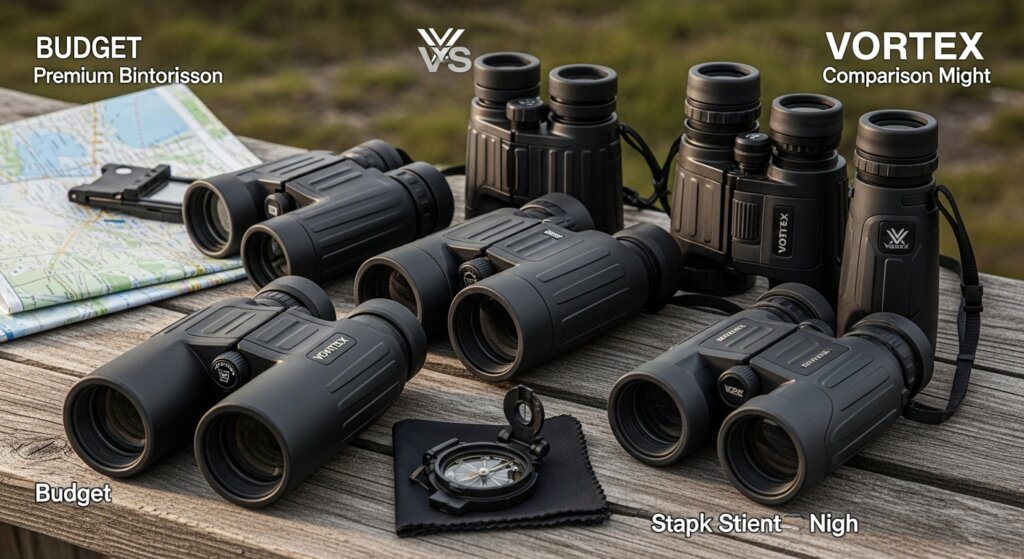
A Vortex binoculars comparison chart is useful only if it helps you make a real buying decision. Specs alone do not tell the whole story. A 10×42 binocular can look perfect on paper and still feel wrong in your hands. A premium model can be impressive, but if you only use binoculars twice a month, that extra money may not return much value.
Vortex makes binoculars for different users: hunters, bird watchers, hikers, travelers, backyard wildlife watchers, and serious long-distance glassers. That is why comparing Crossfire HD, Diamondback HD, Viper HD, Razor HD, and Razor UHD side by side makes sense. Each line has a purpose. The mistake is buying the wrong line for the way you actually use binoculars.
This Vortex binoculars comparison chart keeps things practical. No empty praise. No “all models are amazing” nonsense. Just clear comparisons, real-world use cases, and a simple recommendation for the buyer who wants the best value without overthinking it.

Quick Vortex Binoculars Comparison Chart
| Vortex Model | Best For | Field of View | Weight | Main Strength | Main Weakness |
|---|---|---|---|---|---|
| Triumph HD 10×42 | First-time buyers | Moderate | Light/medium | Affordable starter option | Basic optical performance |
| Crossfire HD 10×42 | Casual users | 325 ft @ 1,000 yds | 23.0 oz | Budget-friendly and rugged | Not ideal in difficult light |
| Diamondback HD 10×42 | Best all-around value | 330 ft @ 1,000 yds | 21.3 oz | Strong balance of clarity, weight, and price | Not premium-level edge detail |
| Viper HD 10×42 | Serious hunting and birding | 341 ft @ 1,000 yds | 24.9 oz | Better brightness and contrast | Higher price |
| Razor HD 10×42 | Premium field use | 362 ft @ 1,000 yds | 24.8 oz | Wide, refined, premium view | Expensive for casual users |
| Razor UHD 10×50 | Long-distance glassing | 341 ft @ 1,000 yds | 36.5 oz | Excellent detail and low-light strength | Heavy and costly |
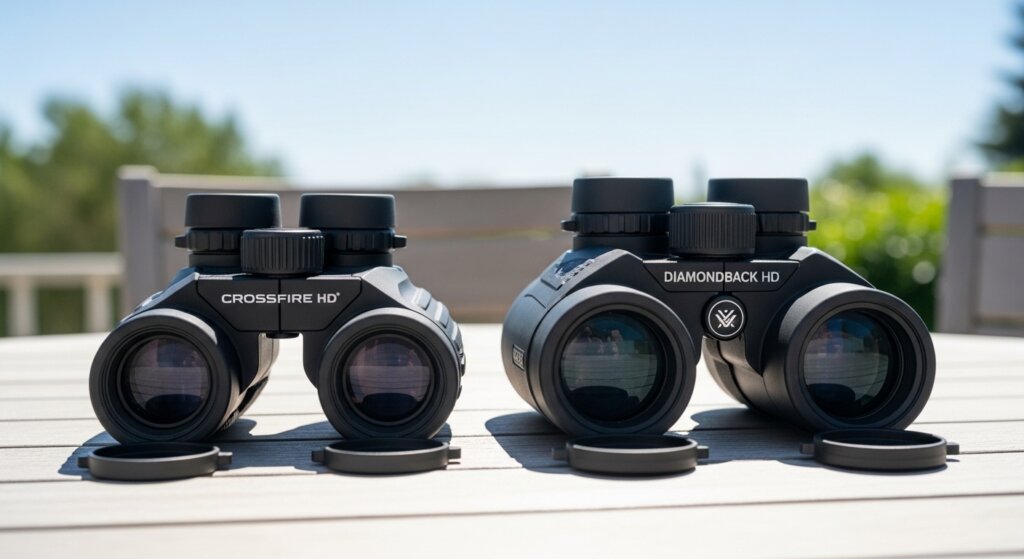
On paper, the Diamondback HD 10×42 has a slight advantage over the Crossfire HD 10×42, with a wider 330-foot field of view and lighter 21.3 oz body compared with Crossfire HD’s 325-foot field of view and 23.0 oz weight.
The Short Answer: Best Vortex Binocular by Buyer Type
If you want the simplest answer, here it is:
| Buyer Type | Best Vortex Pick |
|---|---|
| Best value for most people | Diamondback HD 10×42 |
| Best budget pick | Crossfire HD 10×42 |
| Best serious upgrade | Viper HD 10×42 |
| Best premium hunting pick | Razor HD 10×42 |
| Best long-distance premium pick | Razor UHD 10×50 |
| Best for bird watching comfort | Viper HD 8×42 or Diamondback HD 8×42 |
| Best for beginners | Triumph HD or Crossfire HD |
The Vortex Diamondback HD 10×42 is the safest recommendation for most buyers. It gives you enough magnification for distance, enough brightness for normal outdoor use, and a body that feels manageable instead of bulky. It is not the best Vortex binocular overall, but it is the best balance of price and performance.
For the full buying breakdown, read Best Vortex Binoculars before you lock in your final choice.
Vortex Crossfire HD vs Diamondback HD
This is the first comparison most budget buyers should make.
The Crossfire HD is the cheaper line. It is a decent choice for casual hunting, camping, backyard viewing, or keeping a backup pair in the truck. It gives you usable performance without a painful price tag.
The Diamondback HD feels like the smarter long-term buy. It is lighter than the Crossfire HD 10×42, has a slightly wider field of view, and gives a more refined viewing experience. In real use, that matters. The image feels cleaner, and the binocular feels less like an entry-level compromise.
Buy Crossfire HD If:
- You are buying your first pair of binoculars
- You only use binoculars occasionally
- Your budget is tight
- You need a backup pair for the truck, cabin, or gear bag
- You mostly glass in normal daylight
Buy Diamondback HD If:
- You want one pair for several years
- You hunt, hike, or watch wildlife regularly
- You care about better image quality
- You want better value than the cheapest option
- You do not want to upgrade again soon
The blunt advice? If the price gap is manageable, go Diamondback HD. Crossfire HD is fine, but Diamondback HD is the one most people will be happier with after the first month.
Vortex Diamondback HD vs Viper HD
This comparison is where people start asking, “Do I really need to spend more?”
Sometimes, yes. Often, no.
The Diamondback HD is the better value choice. It works well for hunters, hikers, travelers, and casual wildlife watchers. If you want one reliable pair and do not spend hours glassing every weekend, Diamondback HD is enough.
The Viper HD is for people who actually use binoculars hard. It gives better contrast, better low-light confidence, and a more polished viewing experience. You will notice the difference most at sunrise, sunset, in shaded timber, or when trying to pick details out of messy backgrounds.
Viper HD 10×42 offers 17mm eye relief and a 341-foot field of view at 1,000 yards, while Diamondback HD 10×42 offers 15mm eye relief and a 330-foot field of view. That does not sound dramatic, but in the field, the Viper HD feels more relaxed and more capable during longer sessions.
Buy Diamondback HD If:
- You want the best value
- You use binoculars casually or moderately
- You want good performance without premium pricing
- You are not extremely picky about low-light detail
Buy Viper HD If:
- You hunt often
- You watch birds seriously
- You glass early or late in the day
- You want better contrast and comfort
- You are willing to pay for a real optical upgrade
For hunting-specific buying advice, read best vortex binoculars for hunting because terrain changes the recommendation more than most buyers realize.
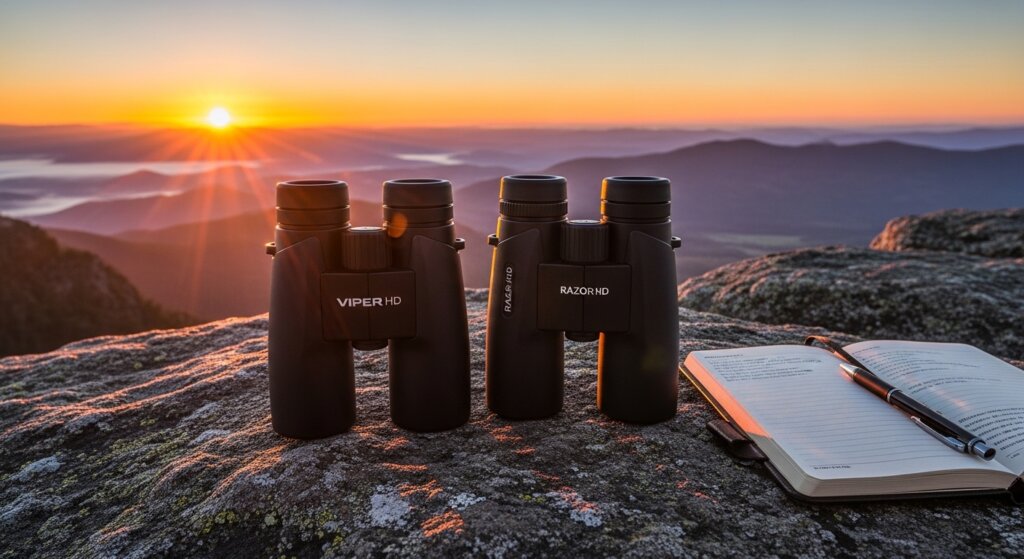
Vortex Viper HD vs Razor HD
Now we move into serious money.
The Viper HD is the practical high-performance pick. The Razor HD is the premium field pick. Both can work for serious outdoor users, but they are not aimed at the same buyer.
The Razor HD 10×42 gives you a wider 362-foot field of view at 1,000 yards, compared with the Viper HD 10×42 at 341 feet. The Razor HD also keeps weight almost the same at 24.8 oz compared with the Viper HD at 24.9 oz, which is impressive for a premium jump.
That wider view makes scanning easier. If you are glassing hillsides, open fields, or moving wildlife, the Razor HD feels more spacious. You do not feel boxed in.
Buy Viper HD If:
- You want strong performance without premium pricing
- You hunt or bird regularly
- You care about quality but still want value
- You do not need the widest premium view
Buy Razor HD If:
- You spend long hours behind binoculars
- You want a more refined image
- You hunt open country
- You want premium glass without going ultra-heavy
- You are buying once and keeping it long-term
Here is the honest middle ground: Viper HD is the better buy for most serious users. Razor HD is better, but the buyer has to care enough to justify the cost.
Razor HD vs Razor UHD
This is not a normal buyer comparison. Most people should not start here.
The Razor HD is premium and still practical. The Razor UHD is for people who want top-tier Vortex glass and accept the tradeoffs.
The Razor UHD 10×50 has 50mm objective lenses, 18mm eye relief, a 341-foot field of view, and a heavy 36.5 oz body. That extra size can help with low-light viewing and fine detail, but you pay for it in weight and price.
If you hike all day, Razor HD 10×42 is easier to live with. If you glass from a tripod, a ridge, a vehicle, or a fixed position, Razor UHD 10×50 starts making more sense.
Buy Razor HD If:
- You want premium performance in a manageable size
- You hike, hunt, or carry gear for hours
- You want better glass without extra bulk
- You value field practicality
Buy Razor UHD If:
- You glass long distances
- You use a tripod often
- You hunt open country
- You care deeply about detail and brightness
- You are comfortable carrying more weight
Do not buy Razor UHD just to say you bought the best. Buy it because your use case demands it.
Best Vortex Binoculars by Use Case
For Hunting
Most hunters should choose Diamondback HD 10×42 or Viper HD 10×42. Diamondback HD is the value pick. Viper HD is better if you hunt hard, glass early, or need stronger low-light performance.
Western hunters and open-country glassers should consider Razor HD 10×42. If tripod glassing is part of your routine, Razor UHD 10×50 is worth a look.
For Bird Watching
Bird watchers should not automatically pick 10x. An 8×42 binocular often feels better because the image is steadier and the field of view is wider.
The Viper HD 8×42 lists a wide 409-foot field of view at 1,000 yards and 18mm eye relief, which makes it especially attractive for birding comfort and quick subject tracking.
For more birding-specific help, read best vortex binoculars for bird watching.
For Travel and Hiking
Diamondback HD 10×42 is a strong travel pick if you want full-size performance. However, if weight and packing space matter most, look at smaller configurations before buying.
For Backyard Wildlife
You do not need Razor UHD for backyard viewing. Diamondback HD is plenty for most people. Crossfire HD also works if budget matters more than image refinement.
For Long-Distance Glassing
Razor HD and Razor UHD are the better choices. If you use a tripod and glass for long periods, Razor UHD has a stronger case. If you carry binoculars around your neck all day, Razor HD is more practical.
Best Overall Recommendation: Diamondback HD 10×42
If this Vortex binoculars comparison chart has one clear winner for most people, it is the Vortex Diamondback HD 10×42.
It sits in the sweet spot. It is not cheap enough to feel disposable, and it is not expensive enough to feel risky. It is light, useful, rugged, and sharp enough for real outdoor work.
This is the model I would recommend to the buyer who says, “I want good Vortex binoculars, but I do not want to make this complicated.”
Buyer Tips Before You Choose
Do Not Buy Only by Magnification
More magnification is not always better. A shaky 12x image can show less useful detail than a steady 10x image. For most people, 10×42 is the best all-around size.
Pay Attention to Field of View
A wider field of view makes it easier to scan landscapes, follow movement, and find subjects quickly. This matters a lot for bird watching and hunting.
Watch the Weight
Binoculars get heavier the longer you carry them. If you hike or hunt on foot, do not ignore weight. A few extra ounces can start to feel annoying after hours outside.
Consider Eye Relief
If you wear glasses, eye relief matters. Models with more generous eye relief usually feel easier to use without losing the full sight picture.
Do Not Overbuy
Premium glass is nice, but not everyone needs it. If you mostly use binoculars casually, Diamondback HD may be the smartest ceiling.
Common Mistakes in Vortex Binocular Comparisons
The first mistake is treating every 10×42 binocular as equal. Crossfire HD 10×42 and Razor HD 10×42 may share the same magnification and objective size, but they are not the same viewing experience.
The second mistake is ignoring how often you use binoculars. A weekend birder may benefit from Viper HD. A person who checks backyard trees twice a month probably does not need that jump.
The third mistake is choosing the biggest binocular because it feels more powerful. Larger lenses can help, but they also add weight. If you leave them at home, they are useless.
The fourth mistake is skipping warranty value. Vortex’s VIP Warranty states that damaged or defective Vortex products can be repaired or replaced at no charge, although it does not cover loss, theft, deliberate damage, or cosmetic damage that does not affect performance.
Final Vortex Binoculars Comparison Verdict
A good Vortex binoculars comparison chart should make your choice simpler, not more confusing.
Here is the final call:
- Choose Crossfire HD if you need a low-cost starter pair.
- Choose Diamondback HD if you want the best value for most outdoor use.
- Choose Viper HD if you hunt, bird, or glass often enough to notice better optics.
- Choose Razor HD if you want premium performance without unnecessary bulk.
- Choose Razor UHD if you need high-end glass for long-distance viewing and can handle the weight.
For most buyers, the answer is still Diamondback HD 10×42. It is the model that makes the fewest compromises for the widest range of people.
For more Vortex binocular reviews, outdoor optics comparisons, and practical buying guides, explore our latest binocular guides before choosing your next pair.
FAQs About the Vortex Binoculars Comparison Chart
What is the best Vortex binocular overall?
The best Vortex binocular overall for most people is the Diamondback HD 10×42. It offers the best balance of price, clarity, weight, durability, and real-world usefulness for hunting, wildlife viewing, hiking, and general outdoor use.
Is Vortex Diamondback HD better than Crossfire HD?
Yes, Diamondback HD is generally better than Crossfire HD. It feels more refined, offers strong all-around performance, and is a better long-term buy for regular outdoor users. Crossfire HD is better if your budget is very tight.
Is Vortex Viper HD worth the upgrade?
Vortex Viper HD is worth the upgrade if you use binoculars often. It gives better brightness, contrast, and comfort than Diamondback HD, especially in early morning, late evening, shaded woods, and longer glassing sessions.
Should I buy Razor HD or Razor UHD?
Buy Razor HD if you want premium performance in a practical 10×42 size. Buy Razor UHD if you glass long distances, use a tripod, and want higher-end optical detail. Razor UHD is heavier and more expensive, so it is not for casual users.
What Vortex binocular size is best?
For most people, 10×42 is the best all-around Vortex binocular size. Choose 8×42 for bird watching and steadier handheld viewing. Choose 10×50 or larger only if you need more low-light strength and do not mind extra weight.
Which Vortex binocular is best for hunting?
Diamondback HD 10×42 is the best value hunting pick. Viper HD 10×42 is better for serious hunters. Razor HD 10×42 and Razor UHD 10×50 are better for premium open-country glassing.
Which Vortex binocular is best for bird watching?
For bird watching, Viper HD 8×42 is a strong choice because it offers a wide, steady view. Diamondback HD 8×42 is a better value option for casual and intermediate birders.
Are expensive Vortex binoculars worth it?
Expensive Vortex binoculars are worth it if you use them often and need better clarity, contrast, low-light performance, and viewing comfort. Casual users will usually get better value from Diamondback HD or Crossfire HD.




