
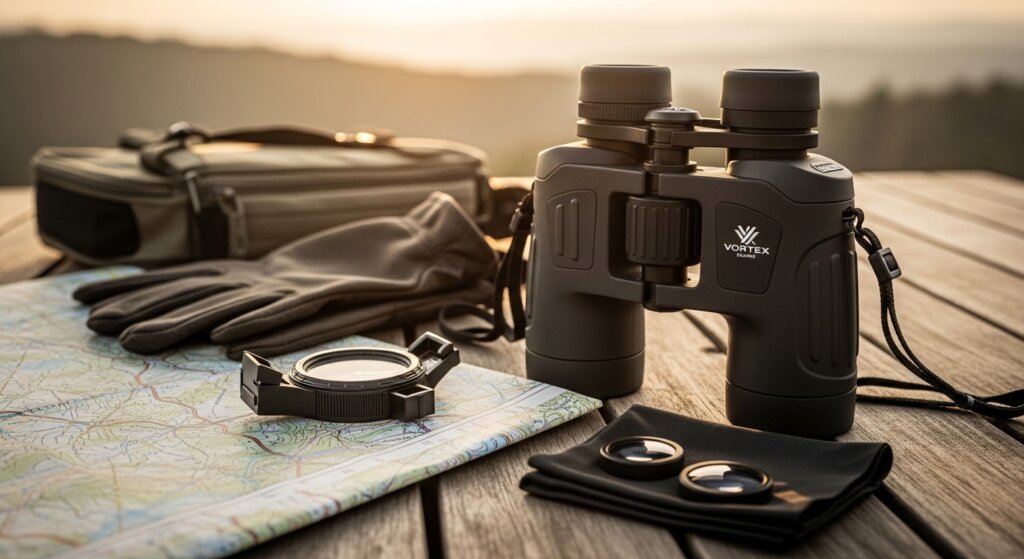
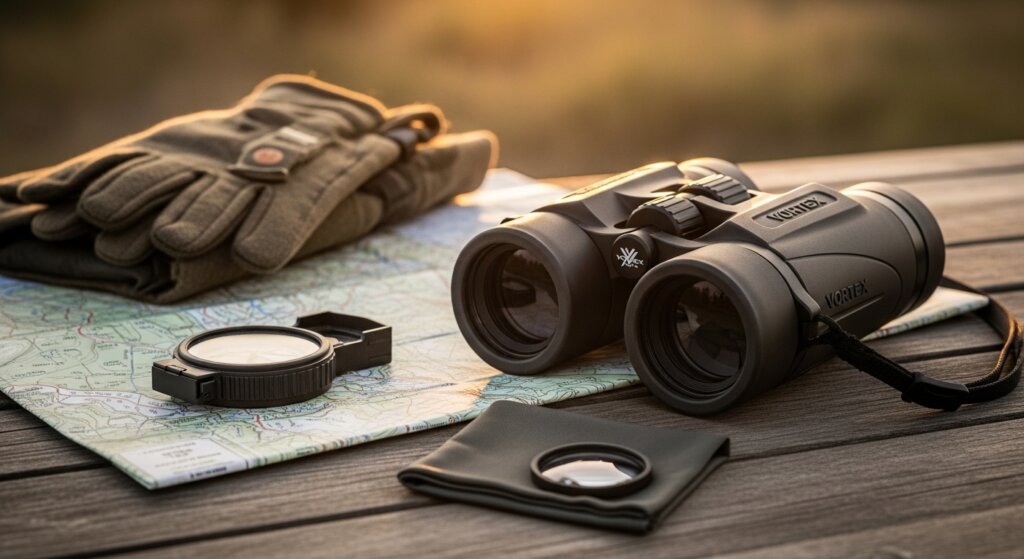
Choosing the best Vortex binoculars for hunting is not about buying the most expensive glass in the lineup. That is how people waste money. A whitetail hunter sitting in thick timber, an elk hunter glassing open basins, and a turkey hunter scanning field edges all need different things from binoculars.
For hunting, binoculars are not just “nice to have” gear. They help you judge movement, separate animals from brush, scan terrain without walking into it, and make better decisions before you raise a rifle or bow. Bad glass makes you tired. Good glass saves your eyes. Great glass can save your hunt.
The safest all-around pick for most hunters is the Vortex Diamondback HD 10×42. It gives you useful magnification, manageable weight, rugged construction, and enough clarity for real hunting conditions without jumping into premium pricing. If you hunt hard in low light or spend hours glassing, the Vortex Viper HD 10×42 is the stronger upgrade. For open-country hunters who want premium performance, the Razor HD 10×42 deserves serious attention.
Quick Picks: Best Vortex Binoculars for Hunting
| Hunting Use | Best Vortex Pick | Why It Works |
|---|---|---|
| Best overall hunting binocular | Vortex Diamondback HD 10×42 | Best balance of price, clarity, weight, and field use |
| Best serious hunting upgrade | Vortex Viper HD 10×42 | Better brightness, contrast, and comfort |
| Best premium hunting binocular | Vortex Razor HD 10×42 | Wide field of view and refined image quality |
| Best long-distance glassing pick | Vortex Razor UHD 10×50 | Strong detail and low-light power, but heavy |
| Best budget hunting binocular | Vortex Crossfire HD 10×42 | Affordable and rugged for casual hunters |
| Best beginner hunting pick | Vortex Triumph HD 10×42 | Simple, practical entry-level option |
If you want the full brand-wide breakdown, compare this article with Best Vortex Binoculars before you buy. That pillar guide covers hunting, birding, travel, and general outdoor use in one place.
What Hunters Should Actually Look For in Vortex Binoculars
A hunting binocular has to do more than look sharp in daylight. Most animals move when the light is inconvenient. Dawn. Dusk. Tree shadows. Cloudy ridges. Brush lines. That is where weak binoculars start showing their limits.
For most hunting, 10×42 is the best size. You get enough reach for distance without making the image too shaky. The 42mm objective lenses gather enough light for normal early and late hunting conditions, while still keeping the binocular reasonably portable.
An 8×42 can also make sense in thick woods because it gives a steadier image and usually feels easier to control. But if you hunt open fields, hillsides, or western terrain, 10x is usually more useful.
Avoid buying 12x or 15x binoculars unless you already know you need them. Higher magnification sounds exciting, but handheld shake gets annoying fast. For long-distance glassing, use a tripod.
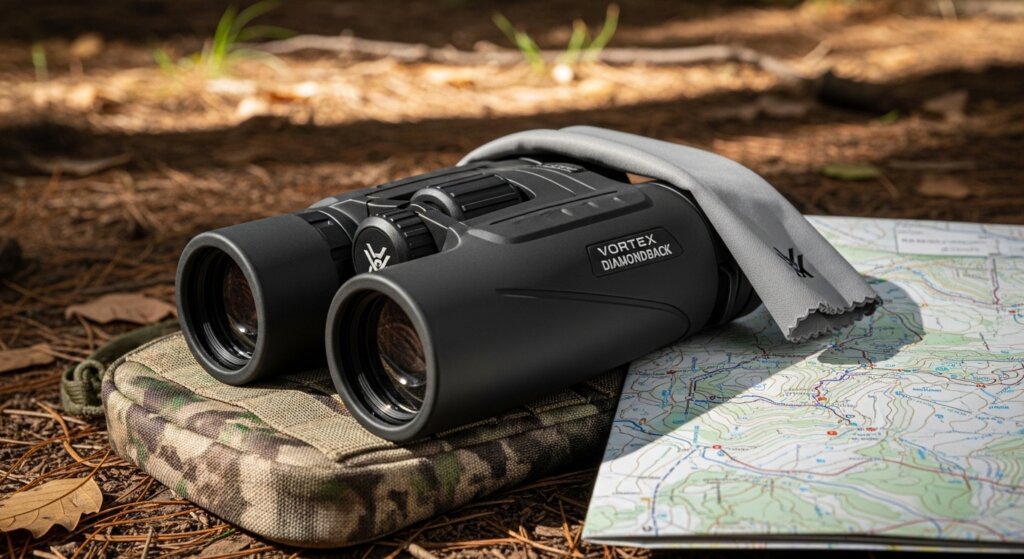
Best Overall: Vortex Diamondback HD 10×42
The Vortex Diamondback HD 10×42 is the best Vortex hunting binocular for most people because it avoids the two common mistakes: going too cheap or spending too much.
Vortex lists the Diamondback HD 10×42 with 10x magnification, 42mm objective lenses, 15mm eye relief, a 330-foot field of view at 1,000 yards, 5-foot close focus, and 21.3 oz weight. That weight matters. A lighter full-size hunting binocular is easier to carry all morning without feeling like a brick on your chest.
In real hunting use, the Diamondback HD works well for whitetail stands, turkey fields, scouting trips, mule deer glassing, and general wildlife observation. It is not premium glass, and pretending otherwise would be dishonest. But it is good enough that many hunters will never feel under-equipped.
Where It Performs Best
The Diamondback HD 10×42 shines in normal hunting situations. Sitting in a tree stand and checking movement along a field edge? Good. Scouting a ridge from a logging road? Good. Watching a clearing before last light? Still useful.
Where it starts to lose ground is in the hardest light. At the edge of darkness, the Viper HD and Razor HD feel more confident. But if your budget is realistic, Diamondback HD is the smarter buy for most hunters.
Pros
- Strong value for hunters
- Lightweight for a full-size 10×42
- Good clarity for the price
- Rugged enough for field use
- Works for whitetail, turkey, elk scouting, and general hunting
- Easy to recommend as a first serious hunting binocular
Cons
- Not as bright as Viper HD or Razor HD
- Eye relief may not suit every eyeglass wearer
- Not the best pick for extreme long-distance glassing
- Edge sharpness is good, not premium
Best Serious Upgrade: Vortex Viper HD 10×42
The Vortex Viper HD 10×42 is for hunters who spend enough time behind glass to notice the difference. If you hunt once or twice a year, Diamondback HD is probably enough. If you are out every season, scouting before opener, watching fields in dim light, and judging movement through brush, Viper HD makes more sense.
Vortex lists the Viper HD 10×42 with 10x magnification, 42mm objective lenses, 17mm eye relief, a 341-foot field of view at 1,000 yards, 6-foot close focus, and 24.9 oz weight. Compared with Diamondback HD, you get more eye relief, a wider field of view, and a more refined image, though you also carry a little more weight.
The real upgrade is not just sharpness. It is how the binocular handles poor light and messy backgrounds. Brush, shadows, brown grass, dark timber, and cloudy mornings are where better optics earn their keep.
Where It Performs Best
Viper HD is a smart choice for deer hunters who sit until legal light fades, elk hunters who scan timber pockets, and turkey hunters watching long field edges. It also works well for hunters who wear glasses because the 17mm eye relief is more forgiving than the Diamondback HD 10×42.
This is the model I would buy if hunting was a regular part of my year and I wanted one reliable binocular without jumping into Razor money.
Pros
- Better low-light confidence than Diamondback HD
- Comfortable 17mm eye relief
- Strong field of view for a 10×42
- Excellent serious hunting upgrade
- Good balance of quality and field practicality
Cons
- More expensive than Diamondback HD
- Casual hunters may not need the upgrade
- Slightly heavier
- Still not as refined as Razor HD
Best Premium Hunting Pick: Vortex Razor HD 10×42
The Vortex Razor HD 10×42 is for hunters who already know they care about better glass. This is not a starter binocular. It is a premium field optic for people who spend long hours scanning country and want a cleaner, wider, more relaxed view.
Vortex lists the Razor HD 10×42 with 10x magnification, 42mm objective lenses, 16.5mm eye relief, a wide 362-foot field of view at 1,000 yards, 6-foot close focus, and 24.8 oz weight. That wide field of view is one of its biggest advantages for hunting because it makes scanning ridgelines and open terrain feel easier.
Here is the interesting part: Razor HD is almost the same weight as the Viper HD 10×42, but it gives you a more premium view. For hunters who hike, carry gear, and still want premium optics, that matters.
Where It Performs Best
Razor HD fits western hunting, open-country deer hunting, elk scouting, antelope country, and long sits where eye fatigue becomes real. The image feels more relaxed, especially when you are glassing for long periods.
It is expensive, yes. But unlike some ultra-premium binoculars, Razor HD still feels practical enough to carry.
Pros
- Premium image quality
- Wide field of view for scanning terrain
- Practical weight for serious hunters
- Better comfort during long glassing sessions
- Strong choice for western and open-country hunting
Cons
- Expensive
- Overkill for casual hunters
- Not as powerful in low light as larger 50mm options
- Budget buyers should not force this purchase
Best for Long-Distance Glassing: Vortex Razor UHD 10×50
The Vortex Razor UHD 10×50 is a serious glassing tool. It is not the binocular I would recommend to every hunter, and that is exactly the point. It is bigger, heavier, and more expensive. But if your hunting style demands long-distance observation, it can make sense.
Vortex lists the Razor UHD 10×50 with 10x magnification, 50mm objective lenses, 18mm eye relief, a 341-foot field of view at 1,000 yards, 6.6-foot close focus, and 36.5 oz weight. That 36.5 oz weight is the biggest tradeoff.
The larger 50mm objective lenses can help when light is fading, but the extra weight makes it less attractive for hunters who walk all day. This is better for tripod glassing, open-country scouting, and hunters who spend more time observing than moving.
Pros
- Strong low-light ability
- Excellent for open-country glassing
- Comfortable 18mm eye relief
- Premium detail and image quality
- Useful with tripod support
Cons
- Heavy
- Expensive
- Not ideal for mobile hunting
- Too much binocular for most casual hunters
Best Budget Hunting Pick: Vortex Crossfire HD 10×42
The Vortex Crossfire HD 10×42 is the budget hunting choice. It is not as refined as Diamondback HD, but it gives beginners and casual hunters a usable full-size binocular at a more approachable price.
Vortex lists the Crossfire HD 10×42 with 10x magnification, 42mm objective lenses, 15mm eye relief, a 325-foot field of view at 1,000 yards, 6-foot close focus, and 23 oz weight.
This model is best for hunters who are just starting out or need a backup pair. It works in normal daylight and fair conditions. It is not the pair I would trust for the hardest low-light glassing, but it is far better than buying no-name binoculars with inflated claims.
If your budget is tight, compare it with vortex binoculars under $200 before you spend more.
Pros
- Affordable
- Rugged enough for basic hunting
- Good beginner option
- Useful as a backup pair
- Full-size 10×42 configuration
Cons
- Less bright than Diamondback HD and Viper HD
- Not ideal for serious low-light hunting
- Image feels more basic
- Frequent hunters may outgrow it quickly
Vortex Hunting Binocular Comparison Table
| Model | Best Hunting Scenario | Best Strength | Main Tradeoff |
|---|---|---|---|
| Crossfire HD 10×42 | Beginner hunting, backup use | Low price | Basic low-light performance |
| Diamondback HD 10×42 | All-around hunting | Best value | Not premium-level detail |
| Viper HD 10×42 | Serious deer, turkey, and elk hunting | Better brightness and comfort | Higher price |
| Razor HD 10×42 | Western and open-country hunting | Wide, premium view | Expensive |
| Razor UHD 10×50 | Tripod glassing and long-distance work | Detail and low-light strength | Heavy body |
Best Vortex Binoculars for Different Hunting Styles
Whitetail Hunting
For whitetail hunting, especially from stands or blinds, the Diamondback HD 10×42 is the best value. It gives enough reach to check field edges and brush lines without becoming too heavy.
If you hunt pressured deer in low light, step up to Viper HD 10×42.
Elk Hunting
Elk hunting often means bigger country, longer glassing, and more time scanning hillsides. Viper HD 10×42 is a strong middle-ground pick. Razor HD 10×42 is better if you glass for hours and want less eye strain.
Turkey Hunting
For turkey hunting, quick scanning matters. A 10×42 works well in fields, but an 8×42 can feel steadier in tighter woods. If you already have shaky hands, do not chase extra magnification.
Western Spot-and-Stalk Hunting
Razor HD 10×42 is the most practical premium choice. Razor UHD 10×50 is better if you use a tripod and glass from fixed points.
Budget Hunting Setup
Crossfire HD 10×42 or Triumph HD 10×42 will get you started. But if you can stretch the budget, Diamondback HD is the better long-term move.
Common Mistakes Hunters Make When Buying Binoculars
Buying Too Much Magnification
Many hunters think 12x must be better than 10x. Not always. Higher magnification also makes hand shake worse. A steady 10x image often shows more useful detail than a shaky 12x image.
Ignoring Weight
A heavy binocular feels fine at home. After hiking uphill with a pack, weapon, water, layers, and other gear, it becomes annoying. For mobile hunters, weight matters.
Going Too Cheap
Cheap binoculars can cost you opportunities. If the image is dim, blurry, or uncomfortable, you stop using them. That defeats the purpose.
Overbuying Premium Glass
Premium binoculars are great, but not every hunter needs Razor UHD. If you hunt local woods a few weekends a year, Diamondback HD is probably the smarter buy.
Forgetting Eye Relief
If you wear glasses, check eye relief carefully. Viper HD and Razor UHD offer more forgiving eye relief than some lower models, which can make long sessions more comfortable.
Best Overall Recommendation
The best Vortex hunting binocular for most people is the Vortex Diamondback HD 10×42.
It is the boring answer only if you do not understand hunting gear. In reality, it is the practical answer. It gives enough optical performance for real hunting, keeps weight manageable, and costs less than the premium models most hunters do not truly need.
If you hunt often and want a noticeable upgrade, buy the Viper HD 10×42. If you hunt open country and spend serious time glassing, buy the Razor HD 10×42. If you glass long distances from a tripod and weight is less important, consider the Razor UHD 10×50.
FAQs About the Best Vortex Binoculars for Hunting
What are the best Vortex binoculars for hunting?
The best Vortex binoculars for hunting for most people are the Vortex Diamondback HD 10×42. They offer the best mix of useful magnification, manageable weight, rugged build quality, and field performance without premium pricing.
Are Vortex Diamondback HD 10×42 binoculars good for hunting?
Yes, Vortex Diamondback HD 10×42 binoculars are good for hunting. They work well for deer hunting, turkey hunting, scouting, hiking, and general wildlife observation. They are not premium glass, but they are the best value for many hunters.
Are Vortex Viper HD binoculars worth it for hunting?
Vortex Viper HD binoculars are worth it if you hunt often or glass in low light. They offer better brightness, contrast, eye relief, and comfort than Diamondback HD, especially during early morning and late evening hunts.
What magnification is best for hunting binoculars?
For most hunting, 10×42 is the best all-around size. It gives enough reach for distance while staying usable handheld. Choose 8×42 for thick woods or steadier viewing. Choose larger binoculars only if you glass long distances or use a tripod.
Are Razor HD binoculars better than Viper HD for hunting?
Yes, Razor HD binoculars are better than Viper HD in overall image refinement and field of view. However, Viper HD is a better value for many serious hunters. Razor HD makes more sense for premium buyers and open-country glassing.
Should hunters buy 10×42 or 10×50 binoculars?
Most hunters should buy 10×42 binoculars because they balance performance and carry weight well. Choose 10×50 only if you need stronger low-light viewing and do not mind extra size and weight.
Are budget Vortex binoculars good enough for hunting?
Budget Vortex binoculars like Crossfire HD can be good enough for casual hunting and beginners. However, hunters who spend more time in the field should consider Diamondback HD or Viper HD for better image quality and low-light performance.
Final Verdict
The best Vortex binoculars for hunting depend on how and where you hunt, but the main recommendation is easy.
Buy Vortex Diamondback HD 10×42 if you want the best value. Buy Viper HD 10×42 if you hunt more seriously and want better low-light performance. Buy Razor HD 10×42 if you want premium hunting glass without unnecessary bulk. Choose Razor UHD 10×50 only if long-distance glassing is a major part of your hunting style.
Do not buy binoculars for the hunter you imagine yourself becoming. Buy for the way you actually hunt.
For more field tips and practical buying advice, visit blog tips. For more binocular reviews, outdoor optics comparisons, and complete buying guides, start from bestbinocular.net.




