
Porro vs Roof Prism Binoculars for Birding: Which One Helps You Spot Birds Better?
Choosing between porro vs roof prism binoculars for birding sounds like a technical optics debate, but in the field it becomes much simpler: which pair helps you find the bird faster, hold the view longer, and enjoy the detail without fighting the binoculars?
That is the real test.
A birder standing near a wetland at 6:30 a.m. does not care about prism diagrams. They care whether the binoculars brighten a shaded reed bed, focus quickly on movement, feel steady in the hand, and survive mist, dust, and the occasional bump against a gate post.
So, let’s compare porro vs roof prism binoculars for birding in the way birders actually experience them: early morning walks, woodland shade, backyard feeders, long trails, coastal hides, and budget-conscious buying decisions.
Quick Answer: Roof Prism Is Better for Most Birders, Porro Is Better for Value
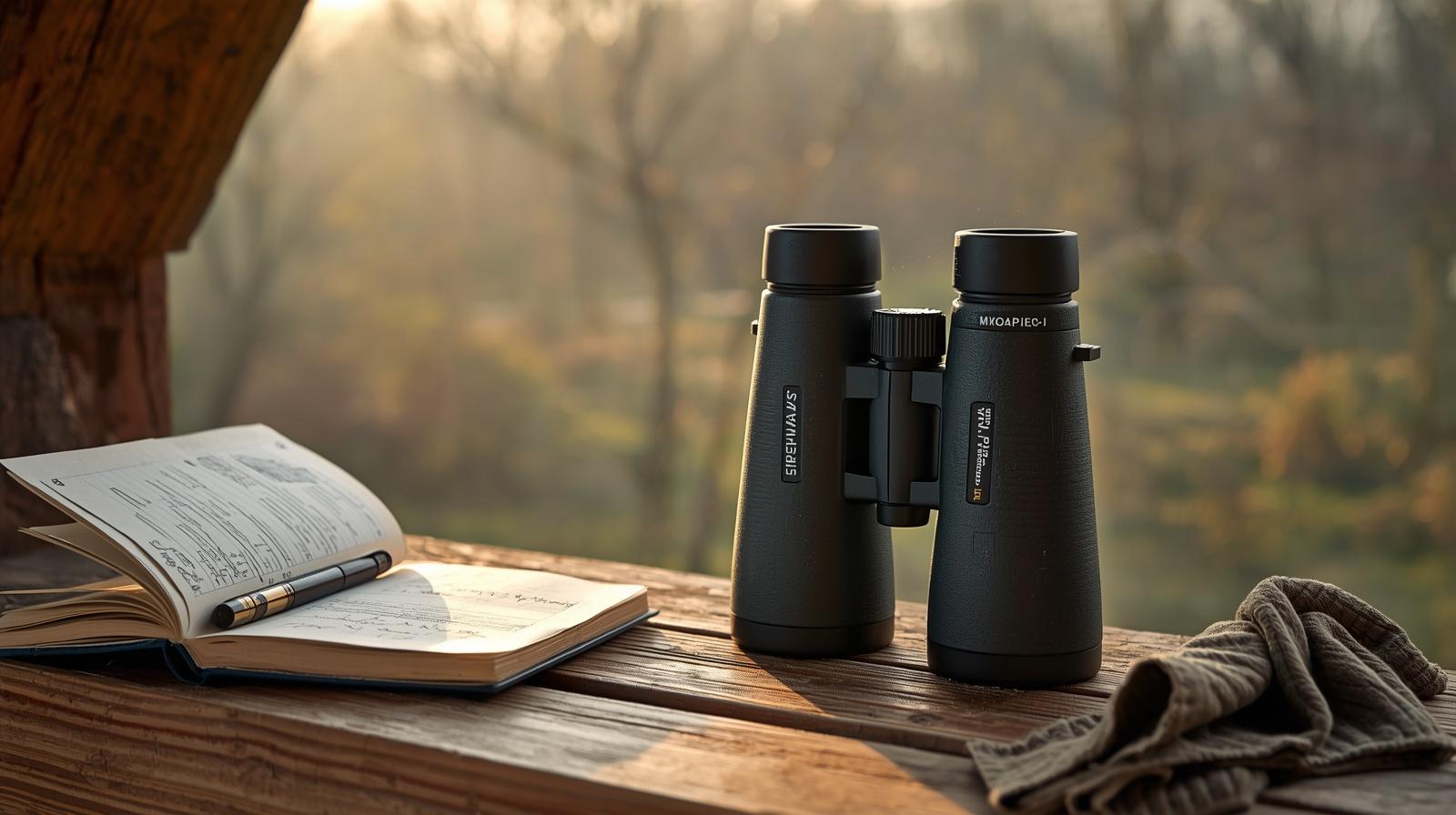
For most modern birders, roof prism binoculars are the safer everyday choice. They are slimmer, easier to carry, usually more weather-resistant, and better suited for walking trails, travel birding, and mixed outdoor use.
But that does not mean porro prism binoculars are outdated.
A good porro prism binocular can still give you a wide, bright, natural-looking image for less money. If you mostly bird from your garden, a local park bench, a car window, or a fixed hide, porro binoculars can be excellent value.
Here is the honest field answer:
| Birder Type | Better Choice | Why |
|---|---|---|
| Beginner on a tight budget | Porro prism | More optical performance for the money |
| Birding while hiking | Roof prism | Slimmer, lighter, easier to carry |
| Backyard birdwatching | Porro or roof | Both work well depending on comfort |
| Wetland/coastal birding | Roof prism | Better waterproofing and fog resistance |
| Woodland birding | Roof prism | Faster handling and closer focusing |
| Casual weekend birding | Roof prism | More convenient overall |
| Stationary hide birding | Porro prism | Great depth and brightness at lower cost |
If your budget allows it, a good 8×42 roof prism binocular is the best all-rounder. Audubon notes that many birders prefer 7x or 8x binoculars because they are bright and offer a wider field of view, making birds easier to locate and follow in flight.
What Makes Porro and Roof Prism Binoculars Different?
The prism system controls how light travels inside the binoculars. That design affects the shape, size, handling, durability, and sometimes the image quality.
Porro Prism Binoculars
Porro prism binoculars have the classic zig-zag shape. The objective lenses sit wider apart than the eyepieces. This gives them that traditional binocular look.
Their biggest strength is value. Because the optical design is simpler to manufacture, porro binoculars often deliver bright, sharp views at a lower price.
That is why many older birders still respect them. A budget porro can sometimes look surprisingly good next to a cheaper roof prism model.
Roof Prism Binoculars
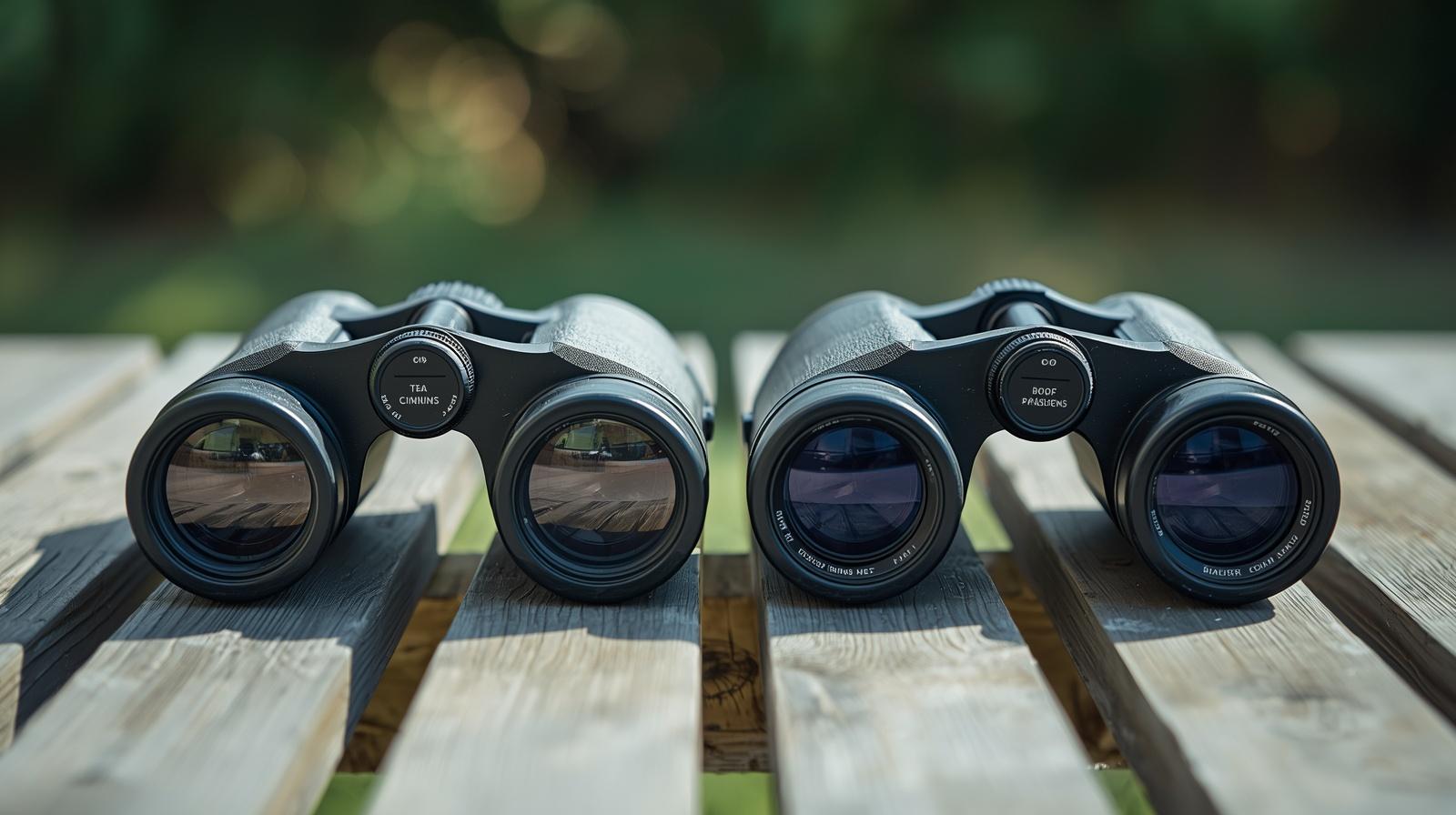
Roof prism binoculars have a straight-barrel design. The eyepieces and objective lenses line up in a slim body.
They are more compact, easier to hold one-handed, and usually better sealed against rain and fog. But good roof prism binoculars need better coatings and more precise manufacturing, so cheap roof models can disappoint.
For porro vs roof prism binoculars for birding, this is the main trade-off: porro gives value and optical depth; roof gives portability, durability, and faster real-world handling.
For a deeper technical comparison, you can read the full pillar guide on porro prism vs roof prism binoculars before choosing your birding model.
Why Roof Prism Binoculars Usually Win for Birding
Birding is not always calm and predictable.
One second you are scanning a tree line. The next second something moves behind leaves, and you have two or three seconds to lift the binoculars, focus, and identify it.
That is where roof prism binoculars feel more natural.
They are easier to carry around your neck, easier to tuck into a harness, and easier to use while walking. Their slim shape matters more than people think. After two hours on a trail, bulky binoculars become annoying.
Roof prism binoculars also tend to have better modern waterproofing. This matters if you bird near marshes, rivers, coastlines, or humid woodland. Even if you never bird in heavy rain, condensation can still ruin a morning.
Roof Prism Pros for Birding
| Pros | Real-World Benefit |
|---|---|
| Slim body | Easier to carry on long walks |
| Better sealing in many models | Useful for rain, fog, wet grass, and coastal air |
| Faster handling | Better for moving birds |
| Better close focus in many birding models | Helpful for nearby branches and feeders |
| More compact design | Easier for travel and hiking |
Roof Prism Cons for Birding
| Cons | What It Means |
|---|---|
| More expensive for good quality | Cheap roof models can look dull |
| Needs better coatings | Poor coatings reduce contrast |
| Less 3D feel than many porros | Image can feel flatter in some models |
The biggest mistake is buying the cheapest roof prism binocular just because it looks modern. A low-quality roof binocular may be compact, but if the image is dim, narrow, or soft at the edges, you will not enjoy using it.
When Porro Prism Binoculars Make More Sense
Porro binoculars still deserve a place in birding, especially for beginners.
If your budget is limited, porro binoculars often give you a brighter and wider view than roof prism binoculars at the same price. That can make birding more enjoyable because you are not constantly struggling to locate movement.
Porro binoculars also create a stronger sense of depth. When watching birds across layered branches, that depth can make the scene feel more natural. It is not magic, but it is noticeable.
For garden birding, balcony birding, car-based birdwatching, and casual weekend use, porro binoculars can be a smart buy.
Porro Prism Pros for Birding
| Pros | Real-World Benefit |
|---|---|
| Strong value | Better view for less money |
| Wide body can feel stable | Nice for seated birding |
| Good depth perception | Helpful in layered woodland scenes |
| Often bright at lower prices | Useful at dawn or dusk |
Porro Prism Cons for Birding
| Cons | What It Means |
|---|---|
| Bulkier shape | Less comfortable for hiking |
| Often less waterproof | Risky in wet birding locations |
| Close focus may be longer | Not ideal for nearby birds |
| Less convenient for travel | Takes more bag space |
This is why the question porro vs roof prism binoculars for birding should not be answered only by image quality. Comfort and convenience decide whether you actually carry the binoculars every time.
If you are also comparing optics for other outdoor uses, the guide on porro vs roof prism binoculars for hunting will help you understand how durability, low-light use, and long-distance scanning change the buying decision.

Field of View: The Detail Beginners Often Ignore
For birding, field of view is huge.
A wide field of view helps you find birds faster. It also makes it easier to track movement. This matters when a bird flies across a clearing, hops through branches, or disappears into reeds.
Porro binoculars often offer a nice wide view at lower prices. But many quality roof prism binoculars now offer excellent field of view too.
For most birders, 8×42 is the sweet spot. It gives enough magnification for detail while staying steady and bright. 10×42 can be useful for open fields, shorebirds, and distant raptors, but it is harder to hold steady.
In woodland, I would rather use a good 8×42 than a shaky 10×42. More magnification does not help if the bird is bouncing around in your view.
Close Focus: A Big Win for Roof Prism Birding Binoculars
Close focus is often overlooked until you need it.
Imagine you are watching a small bird land on a nearby fence, a feeder, or a branch just a few meters away. If your binoculars cannot focus close enough, you miss the detail.
Many modern roof prism binoculars are designed with birders in mind, so they often have better close focus distances than older or cheaper porro designs.
This is especially useful for:
- Backyard feeders
- Woodland trails
- Garden birding
- Butterfly watching
- Nature walks with mixed wildlife observation
For porro vs roof prism binoculars for birding, close focus is one of the quiet reasons roof prism binoculars feel better in daily use.
Brightness and Low-Light Birding
Birds are often most active early in the morning and late in the afternoon. That means brightness matters.
Porro prism binoculars can perform very well in low light, especially at budget prices. Their simpler prism path can produce a bright image without needing expensive phase-correction coatings.
Roof prism binoculars can also be excellent in low light, but quality matters more. Cheap roof binoculars may look darker or flatter than expected.
For birding, do not judge brightness by objective size alone. A poor 10×50 can look worse than a good 8×42. Coatings, glass quality, prism quality, and alignment all matter.
Nikon’s ACULON A211 8×42 is one example of a porro prism binocular using BaK4 porro prisms and multicoated lenses, aimed at delivering usable views in varied lighting conditions.
Handling: The Part You Feel After 30 Minutes
This is where roof prism binoculars pull ahead.
A slim roof prism body is easier to grip, especially with one hand. If you are carrying a camera, field guide, phone, walking stick, or water bottle, that matters.
Porro binoculars can feel stable because of their wider shape, but they are bulkier. Some people love that classic grip. Others find it awkward after a while.
My practical take: if you bird mostly while standing still, porro is comfortable enough. If you walk and scan often, roof prism is easier to live with.
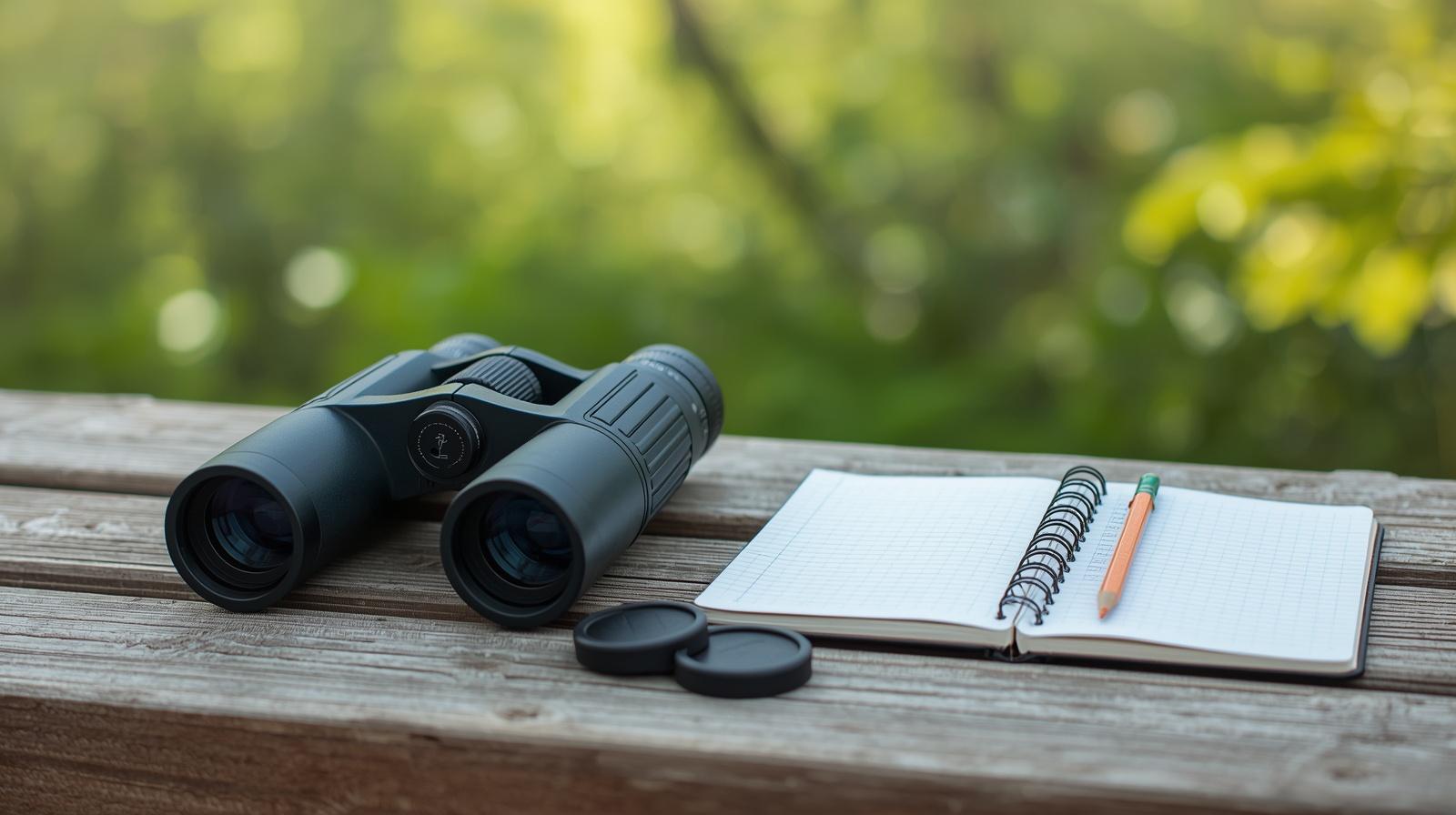
Best Product Pick: Nikon PROSTAFF P3 8×42
If I had to recommend one practical, widely relevant option for beginners and casual birders comparing porro vs roof prism binoculars for birding, I would choose the Nikon PROSTAFF P3 8×42.
It is a roof prism binocular, which makes it easier to carry and more convenient for real birding walks. The 8×42 format gives a steady view, good brightness, and enough reach for most backyard, woodland, wetland, and park birding.
Nikon lists the PROSTAFF P3 8×42 as a roof prism binocular with 8x magnification, 42mm objectives, waterproofing down to 3.3 ft, and nitrogen-filled fogproof construction. Nikon’s global product page also identifies the PROSTAFF P3 line as suitable for birdwatching and nature watching.
Why it makes sense:
- It is not overpowered.
- It is not too bulky.
- It is weather-ready for normal birding.
- It comes from a known optics brand.
- It fits the “buy once, use often” mindset better than many ultra-cheap models.
Would I choose it over every porro binocular? Not always. If your budget is very tight and you mostly bird from one spot, a good porro still makes sense. But for most people buying one pair for everyday birding, a roof prism 8×42 like this is the cleaner choice.
Buyer Tips: How to Choose Without Regret
1. Choose 8×42 Before You Get Fancy
Most birders do not need extreme magnification. Start with 8×42 unless you have a clear reason not to.
8x is easier to hold steady.
42mm gathers enough light.
The view is usually wide enough for tracking movement.
2. Do Not Buy Zoom Binoculars for Birding
Zoom binoculars sound flexible, but they usually sacrifice brightness, sharpness, and ease of use. For birding, fixed magnification is almost always better. B&H’s birding guide also notes that zoom binoculars are generally not endorsed for birding and references Cornell’s advice to avoid them.
3. Check Close Focus
For birding, I like a close focus under 10 feet if possible. It makes the binoculars more useful around feeders, gardens, and woodland paths.
4. Prioritize Comfort Over Tiny Spec Differences
A binocular that looks perfect on paper may feel wrong in your hands. Eye relief, focus wheel smoothness, grip shape, and weight matter.
5. Do Not Assume Porro Means Bad or Roof Means Good
This is not the best way to choose binoculars.
A good porro can beat a bad roof.
A good roof can beat a bulky porro in real use.
The better choice depends on your birding style.
For a more focused debate around porro value, read are porro prism binoculars better before spending more on a roof prism model.
Common Mistakes Birders Make
The first mistake is buying 10x binoculars because “more zoom must be better.” In real birding, shaky magnification can make identification harder, not easier.
The second mistake is ignoring weight. Heavy binoculars feel fine in the shop. On a two-hour walk, they can feel heavy and uncomfortable..
The third mistake is buying pocket binoculars as a main birding pair. Compact models are convenient, but they usually lose brightness and comfort compared with 8×42 binoculars.
The fourth mistake is choosing based only on brand. Brand helps, but the exact model matters more.
The fifth mistake is forgetting weather. Birding happens in damp grass, misty mornings, sudden drizzle, and dusty trails. If you bird outside often, waterproofing is not a luxury.
Real-World Use Cases: Which One Should You Buy?
Backyard Birding
Porro binoculars work beautifully here. You are not walking miles, so bulk matters less. If you watch feeders, trees, and garden fences from a fixed position, porro gives strong value.
Best choice: Porro if budget is tight, roof if you want comfort and close focus.
Woodland Birding
Roof prism binoculars are usually better. Woodland birding is fast, close, and shaded. You need quick handling, good focus control, and a comfortable grip.
Best choice: Roof prism 8×42.
Wetland and Coastal Birding
Roof prism wins. Salt air, mist, mud, and sudden weather changes make waterproofing important.
Best choice: Waterproof roof prism 8×42 or 10×42.
Travel Birding
Roof prism binoculars are easier to pack and carry. A slim body fits better in bags and harnesses.
Best choice: Roof prism, preferably lightweight.
Budget Birding
Porro binoculars can give you the best view for the money. Just accept the bulk and check whether the model has enough eye relief and acceptable close focus.
Best choice: Porro prism 8×42 if price is the main concern.
Final Verdict: Porro vs Roof Prism Binoculars for Birding
So, who wins?
For most birders, roof prism binoculars are the better everyday choice. They are compact, durable, easier to carry, and more practical for active birding.
But porro prism binoculars still win on value. If your budget is limited and you do not mind the larger body, porro can deliver a bright, enjoyable view without forcing you into premium pricing.
My simple recommendation:
Choose roof prism binoculars if you walk, travel, hike, bird in wet conditions, or want one reliable pair for everything.
Choose porro prism binoculars if you want the best optical value, mostly bird from fixed locations, or are buying your first affordable birding binocular.
The best binocular is not the one with the most impressive spec sheet. It is the one you actually carry, lift quickly, focus naturally, and enjoy using every time a bird moves.
For more practical birding and optics advice, visit the Best Binocular home page or explore more binocular blog tips to build your setup with less guesswork.
FAQs About Porro vs Roof Prism Binoculars for Birding
Are porro prism binoculars good for birding?
Yes, porro prism binoculars can be very good for birding, especially if you want strong image quality at a lower price. They are best for backyard birding, park birding, and stationary viewing. Their main downside is bulk.
Are roof prism binoculars better for birdwatching?
Roof prism binoculars are better for most active birdwatchers because they are slimmer, easier to carry, and often better sealed against water and fog. They are especially useful for hiking, travel, wetlands, and woodland birding.
What magnification is best for birding?
For most birders, 8x is the best magnification. It gives a steady image, wide field of view, and good brightness. 10x can help for distant birds, but it is harder to hold steady.
Should beginners choose porro or roof prism binoculars?
Beginners on a tight budget should consider porro prism binoculars because they often offer better value. Beginners who can spend a little more should choose roof prism 8×42 binoculars for comfort, portability, and long-term use.
Are 10×42 binoculars better than 8×42 for birding?
Not always. 10×42 binoculars give more magnification, but 8×42 binoculars are steadier and usually easier for finding and tracking birds. For woodland, backyard, and general birding, 8×42 is usually the safer choice.
Why are roof prism binoculars more expensive?
Roof prism binoculars need more precise manufacturing and advanced coatings to perform well. That is why cheap roof prism models can be disappointing, while better ones are compact, sharp, and durable.
What is the best all-around binocular size for birding?
The best all-around size is 8×42. It balances brightness, field of view, steadiness, and portability better than most other formats.




