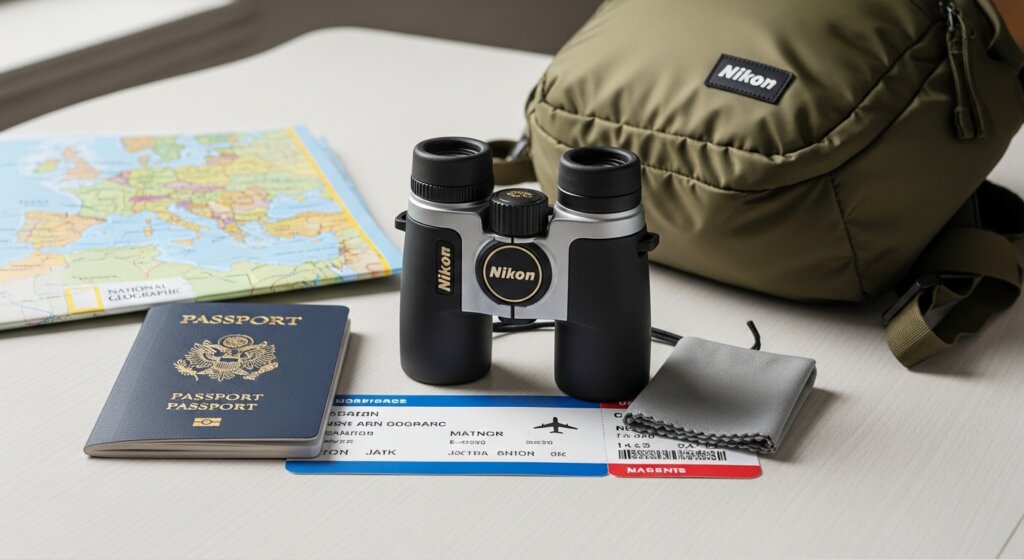
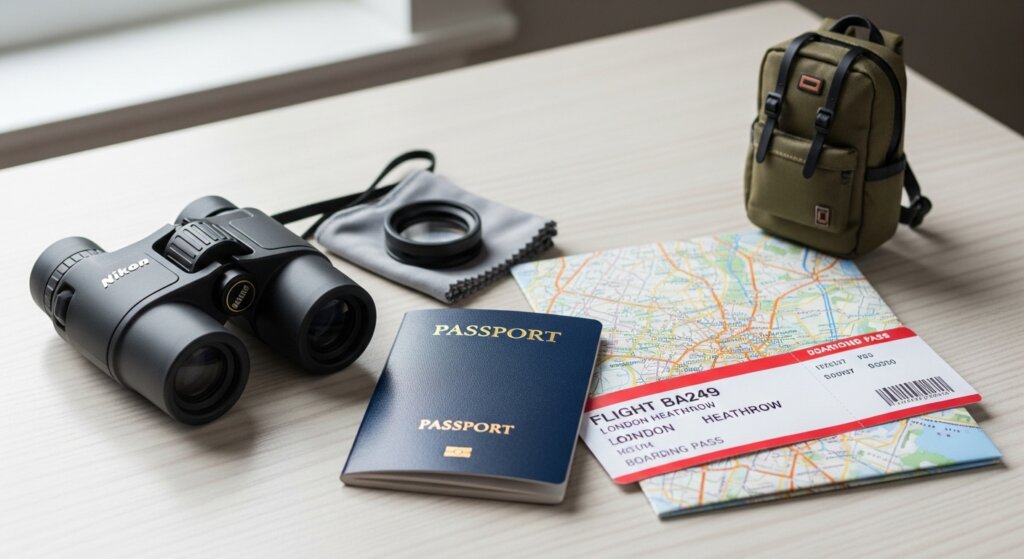
Travel binoculars are easy to buy badly.
People see “10x magnification,” assume bigger is better, and end up with a shaky, narrow-view pair that stays in the hotel drawer. Or they buy a chunky full-size binocular because someone online said it has “brighter optics,” then complain when it eats half the space in a daypack.
For most travelers, the smarter move is simple: compact Nikon binoculars for travel should be small enough to carry every day, steady enough to use without a tripod, and tough enough to survive airport bags, boat spray, dusty overlooks, and random weather.
That is the real test for any travel binocular.
Not whether the binocular looks impressive on a spec sheet. Not whether it has the highest magnification. The best travel binocular is the one you actually bring with you when the good view happens.
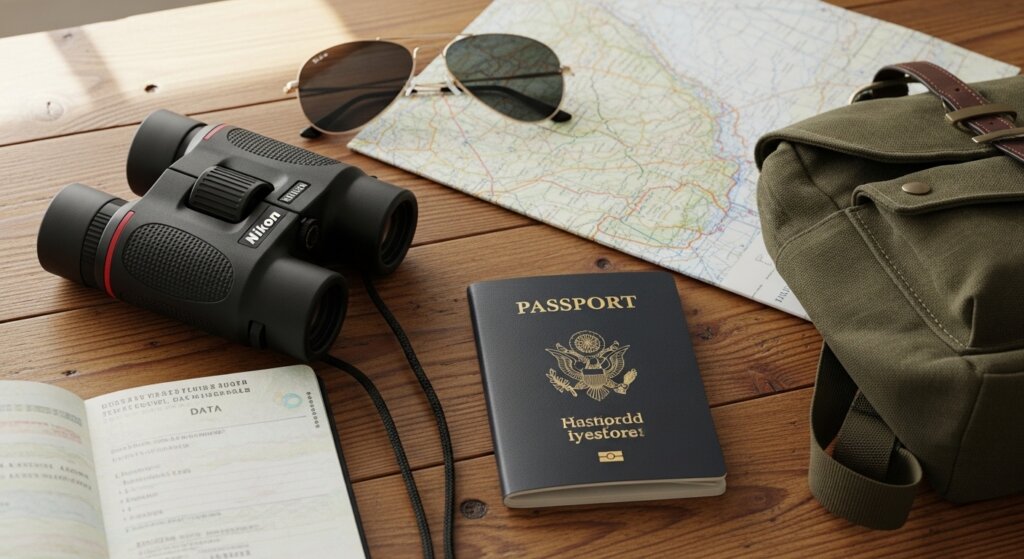
Why Compact Nikon Binoculars Make Sense for Travel
Nikon has a strong reputation in cameras, but its compact binoculars deserve more attention from travelers because they usually hit the right middle ground: decent optics, practical ergonomics, and less “toy-like” build quality than many cheap pocket binoculars.
The biggest reason to choose compact Nikon binoculars for travel is not luxury. It is reliability.
When you are standing on a ferry deck, looking across a canyon, checking architecture from a city viewpoint, or trying to read a distant trail marker, you do not want to fight the binocular. You want quick focus, a stable image, and enough clarity to make the view worth stopping for.
That is where Nikon’s compact models are useful. They are not magic. A 25mm travel binocular will not beat a premium 42mm model at dusk. But for daylight travel, sightseeing, hiking, cruises, road trips, national parks, safari lodges, and city breaks, a compact Nikon pair is often the better real-world choice.
Because weight matters more than most buyers realize.
A binocular that weighs around 10 ounces disappears into a sling bag. A full-size binocular may give you a better twilight image, but it also makes you hesitate before packing it. That hesitation kills usage.
The Sweet Spot: 8×25 Beats 10×25 for Most Travelers
Here is the practical advice: most people looking for compact Nikon binoculars for travel should start with 8×25, not 10×25.
Yes, 10x sounds more powerful. It brings distant objects closer. But travel is messy. You are often standing, walking, breathing hard, leaning over railings, sitting in vehicles, or viewing from windy overlooks. Higher magnification exaggerates hand shake. It also usually narrows the field of view.
With 8×25, the view feels calmer. You find things faster. You can scan buildings, coastlines, mountain ridges, harbors, wildlife areas, and stadiums without feeling like you are peering through a straw.
That matters more than people admit.
A 10x compact binocular makes sense if your travel style is more open-country viewing: deserts, mountains, ships, overlooks, or distant landmarks. But if this is your only travel pair, 8×25 is usually easier to live with.
Best Overall Pick: Nikon Trailblazer 8×25 ATB
If I had to recommend one pair of compact Nikon binoculars for travel to most readers, it would be the Nikon Trailblazer 8×25 ATB.
This is not the most expensive Nikon compact. That is part of the appeal. It gives you a travel-friendly size, waterproof/fogproof construction, a wide field of view, and enough optical quality for real sightseeing without pushing you into premium pricing.
For travel, that combination is more valuable than chasing one flashy spec.
The Trailblazer 8×25 ATB is the kind of binocular I would pack for a national park trip, an Alaska cruise, a European city break, a coastal road trip, or a day hike where I do not want a full-size optic bouncing against my chest.
It is small enough to carry casually, but it does not feel like a novelty item.
Pros
- Easy to pack in a day bag, sling, glove box, or jacket pocket
- 8x magnification is steady enough for handheld travel use
- Waterproof and fogproof design makes it safer for boats, rain, and humid climates
- Wide view helps when scanning landscapes or following movement
- Better “grab-and-go” value than many cheap generic compact binoculars
Cons
- Not ideal for serious low-light viewing
- Small exit pupil means dusk performance is limited
- Compact body may feel cramped for very large hands
- Not the best choice if you wear thick eyeglasses and need maximum eye relief
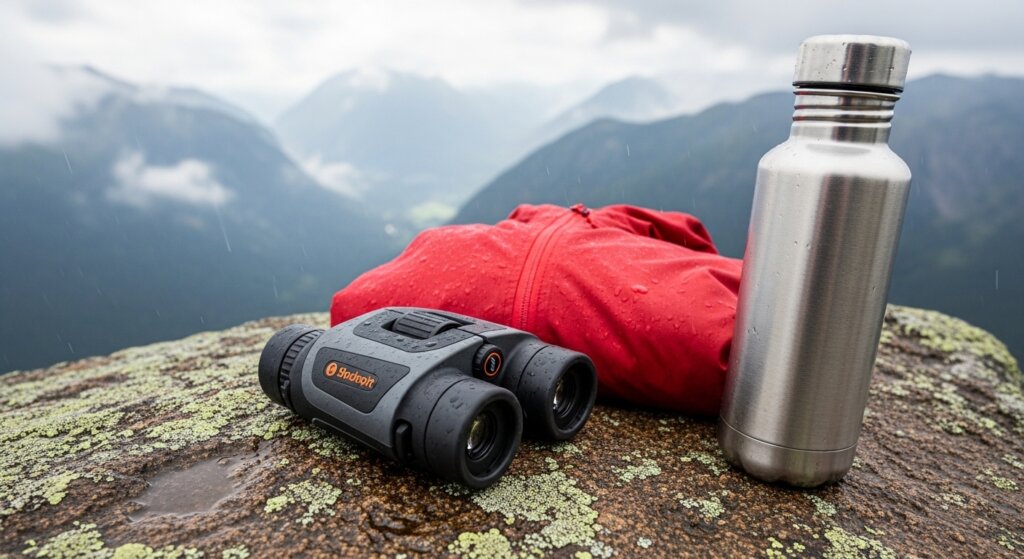
Compact Nikon Travel Binocular Comparison
| Model | Best For | Magnification | Objective Lens | Travel Personality |
|---|---|---|---|---|
| Nikon Trailblazer 8×25 ATB | Best all-around travel use | 8x | 25mm | Pocketable, weather-ready, steady |
| Nikon ACULON A30 10×25 | Budget-friendly distance viewing | 10x | 25mm | Light, affordable, narrower view |
| Nikon Travelite EX 8×25 | Classic compact Porro feel | 8x | 25mm | Comfortable, waterproof, slightly bulkier |
| Nikon PROSTAFF P3 8×30 | Better view if size matters less | 8x | 30mm | Brighter and wider, but less pocketable |
This is where many buyers make the wrong decision.
They want “compact,” but they also want “maximum brightness,” “highest power,” and “premium comfort.” Those things fight each other. A compact 25mm binocular is portable because it has smaller lenses. Smaller lenses mean less light gathering than a 30mm, 32mm, or 42mm binocular.
You cannot cheat physics.
So choose based on your trip, not just the biggest-looking specification.
When Compact Nikon Binoculars for Travel Are the Right Choice
Compact binoculars are best when the binocular is not the main activity. That includes:
City sightseeing. You can study cathedral carvings, rooftop details, clock towers, bridges, monuments, and distant viewpoints without pulling out a camera zoom.
Cruises and ferry rides. A compact waterproof binocular is perfect for coastlines, ports, lighthouses, ships, glaciers, and distant shorelines.
Road trips. Keep a small pair in the car and you will use it more than expected: overlooks, scenic pullouts, wildlife areas, roadside geology, and weather moving across open landscapes.
National parks. For casual visitors, compact Nikon binoculars for travel are often more practical than heavy birding or hunting binoculars.
Air travel. A compact 8×25 pair is easy to justify in a carry-on. A full-size binocular becomes a commitment.
Sporting events and concerts. Check venue rules first, but small binoculars are often easier to carry and less annoying than bulky optics.
When You Should Not Buy Compact Travel Binoculars
Compact Nikon binoculars for travel are not perfect for every situation.
Do not buy a 25mm compact if your main goal is serious birding at dawn, astronomy, hunting at last light, or long glassing sessions from a fixed location. You will want larger lenses.
For those situations, read my supporting article on best Nikon binoculars for low light. It explains why larger objective lenses and exit pupil size matter when the sun drops.
Also, if your budget is tight and you are comparing several entry-level Nikon models, my guide to best Nikon binoculars under $200 will help you avoid overpaying for features you may not need.
8×25 vs 10×25 for Travel
This is the most common decision, and people overthink it.
Choose 8×25 if:
You want a wider view, easier handling, less shake, and faster target finding. This is the better choice for most tourists, hikers, cruise travelers, and general sightseeing.
Choose 10×25 if:
You mostly view distant, slow-moving subjects in bright daylight and you have steady hands. Think far-off architecture, mountain ridgelines, ships, or open plains.
Here is the honest part: compact 10x binoculars can feel impressive for five minutes and irritating after an hour. The view is tighter. The image shake is more obvious. In a small body, 10x is less forgiving.
That is why the Nikon Trailblazer 8×25 ATB remains the safer recommendation for most people searching for compact Nikon binoculars for travel.
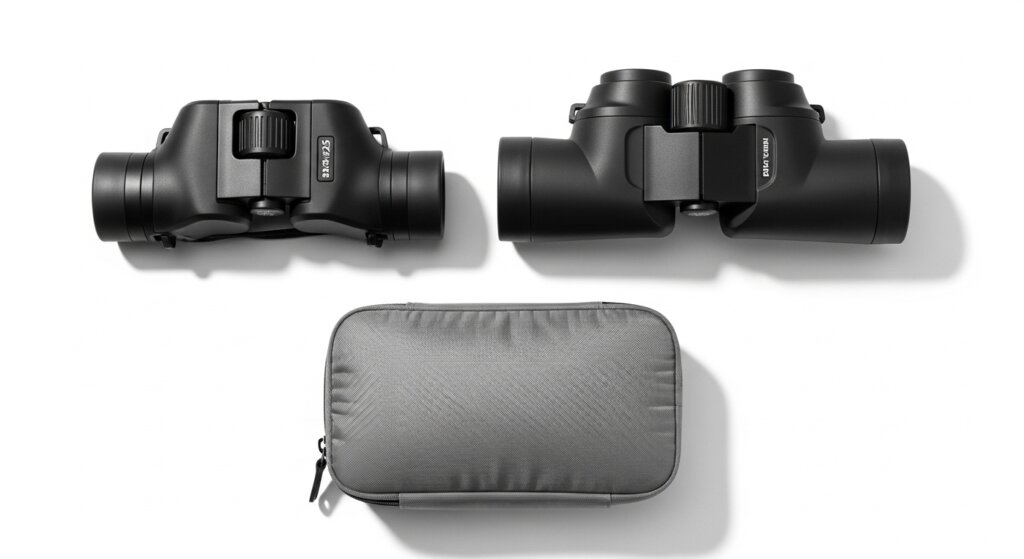
Buyer Tips Before You Pack a Nikon Compact Binocular
Check the Weather Resistance
If your trip includes boats, rainforest climates, snow, waterfalls, beaches, or humid cities, waterproof and fogproof design is not optional. It is insurance.
Travel exposes optics to temperature swings. You leave an air-conditioned hotel, step into tropical humidity, and cheap binoculars fog up internally. That is not a minor annoyance. It ruins the moment.
Prioritize Field of View
Field of view is underrated in travel binoculars. A wider view makes it easier to scan a skyline, follow movement, or find a landmark quickly.
This is one reason 8x often beats 10x for travel.
Think About How You Actually Carry Gear
Be honest. Are you the person who carries a full camera bag all day? Or are you the person who starts strong and dumps everything back at the hotel by lunch?
If you travel light, buy smaller. Compact Nikon binoculars for travel only work if they stay with you.
Do Not Ignore Eye Relief
If you wear glasses, check eye relief carefully. Compact binoculars can be less comfortable for eyeglass wearers than larger models. Twist-up eyecups help, but not every compact pair will suit every face.
Use the Neck Strap or Case
Small binoculars are easy to drop because people treat them casually. Use the strap. Keep them in the case during transit. Sand, keys, and loose coins are not kind to lenses.
Common Mistakes Travelers Make
The first mistake is buying too much magnification. A shaky 10x compact is not better than a steady 8x compact.
The second mistake is buying a no-name bargain binocular and expecting Nikon-level usability. Cheap binoculars often look fine in product photos, then disappoint with stiff focus wheels, poor alignment, dim edges, and fragile hinges.
The third mistake is waiting until the trip to test them. Use the binocular before you pack. Adjust the eyecups. Set the diopter. Practice focusing on signs, buildings, and trees at different distances.
The fourth mistake is assuming compact means low quality. It does not. Compact means compromise. The question is whether the compromise matches your use case.
The fifth mistake is choosing based only on Amazon ratings. Ratings can help, but they rarely tell you whether a binocular fits your hands, glasses, luggage style, or actual travel habits.
Real-World Travel Scenarios
For Cruises
Compact Nikon binoculars for travel make huge sense on cruises. You can leave them near your balcony door or in a small deck bag. The Trailblazer 8×25 ATB is especially appealing here because waterproofing matters around salt air, mist, and sudden weather.
Use them for coastlines, ports, passing boats, glaciers, cliffs, and distant landmarks.
For European City Trips
You do not need giant binoculars in Paris, Prague, Rome, Istanbul, or Barcelona. You need something small enough to carry while walking ten miles.
An 8×25 binocular lets you inspect domes, statues, towers, architectural details, and hilltop views without looking like you packed for a military exercise.
For National Parks
A compact Nikon pair is great for casual wildlife viewing and landscape scanning. But expectations matter. If you plan to sit for hours at dawn looking into shadows, go bigger.
For most travelers, though, a compact pair beats naked-eye viewing by a mile.
For Hiking
Weight is everything. A small binocular that sits in a hip belt pocket or chest pouch is more useful than a premium optic buried deep in your pack.
This is exactly where compact Nikon binoculars for travel earn their place.
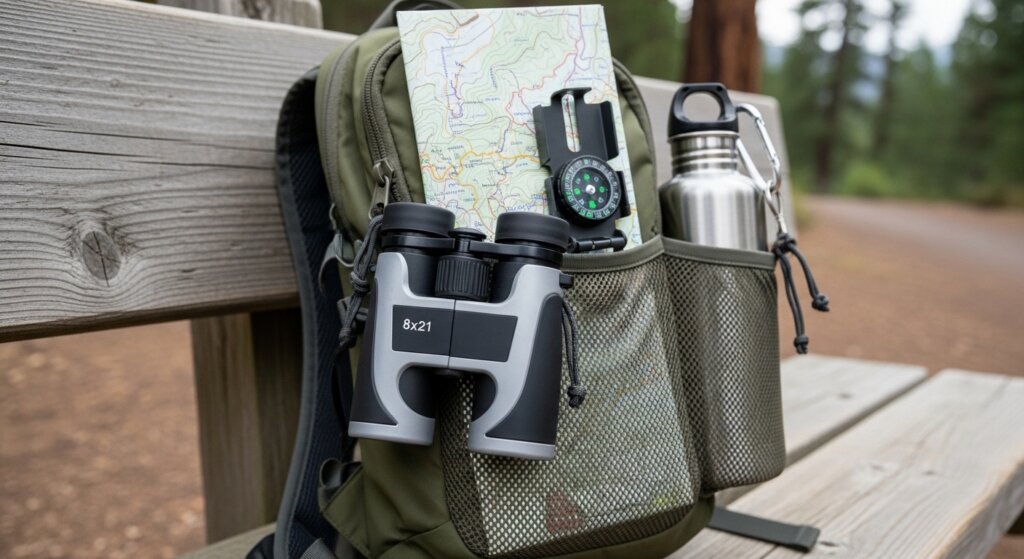
Where Compact Nikon Binoculars Fit in the Nikon Lineup
If you are building a Nikon binocular setup, think of compact travel binoculars as your everyday pair.
They are not replacing a full-size 8×42 for low light. They are not replacing a premium birding binocular. They are not replacing image-stabilized optics for boat-heavy use.
They are replacing missed views.
That is the point.
For a broader breakdown of Nikon models by use case, start with my main silo guide: Best Nikon Binoculars. It will help you decide whether a compact, mid-size, or full-size Nikon makes more sense for your situation.
Final Verdict: The Best Compact Nikon Binoculars for Travel
For most travelers, the best choice is the Nikon Trailblazer 8×25 ATB.
It is compact enough to carry, steady enough for handheld sightseeing, and rugged enough for unpredictable travel. It does not pretend to be a full-size low-light binocular, and that honesty is exactly why it works.
Buy it if you want one practical travel binocular for cruises, hiking, city viewpoints, road trips, and national parks.
Skip it if your main priority is twilight performance, astronomy, or serious long-distance glassing. In that case, step up to a larger Nikon model.
But for normal travel? The Trailblazer 8×25 ATB is the compact Nikon binocular I would tell most people to pack first.
FAQs About Compact Nikon Binoculars for Travel
Are compact Nikon binoculars good for travel?
Yes. Compact Nikon binoculars for travel are a strong choice because they balance portability, usable optics, and dependable build quality. They are especially good for sightseeing, cruises, road trips, hiking, and casual wildlife viewing in daylight.
Is 8x or 10x better for travel binoculars?
For most travelers, 8x is better. It gives a steadier image, wider field of view, and easier handling. Choose 10x only if you mostly view distant subjects in bright conditions and can hold binoculars steady.
Are 25mm binoculars bright enough?
In daylight, yes. A 25mm compact binocular is usually bright enough for travel, hiking, city views, and cruises. For dawn, dusk, forest shade, or astronomy, larger lenses such as 30mm, 32mm, or 42mm are better.
Can I use compact Nikon binoculars for bird watching?
You can use them for casual bird watching, especially while traveling. But if birding is your main hobby, you may eventually want a larger 8×32 or 8×42 binocular for better brightness, comfort, and detail.
Are compact binoculars allowed on planes?
Yes, compact binoculars are generally fine in carry-on luggage. They are small, non-electronic, and easy to pack. Keep them in a padded case to protect the lenses and hinge during travel.
What is the best compact Nikon binocular for cruises?
The Nikon Trailblazer 8×25 ATB is a strong cruise option because it is compact, easy to handle, and weather-resistant. For ship decks, mist, changing temperatures, and coastal viewing, waterproofing is a major advantage.
Should I buy cheap travel binoculars instead?
Only if you barely plan to use them. Very cheap compact binoculars often have dim views, poor focus feel, weak hinges, and uncomfortable eyecups. A reliable Nikon compact is usually the smarter long-term buy.
More Helpful Binocular Reading
If you are still comparing Nikon models, start with our Best Nikon Binoculars guide for a full buying breakdown.
If your trips include early mornings, forests, or twilight viewing, read our guide to the best Nikon binoculars for low light before choosing a compact model.
If you want Nikon value without overspending, compare budget-friendly options in our best Nikon binoculars under $200 guide.
For more field-tested binocular advice, visit our Best Binocular homepage or browse the latest blog tips.