
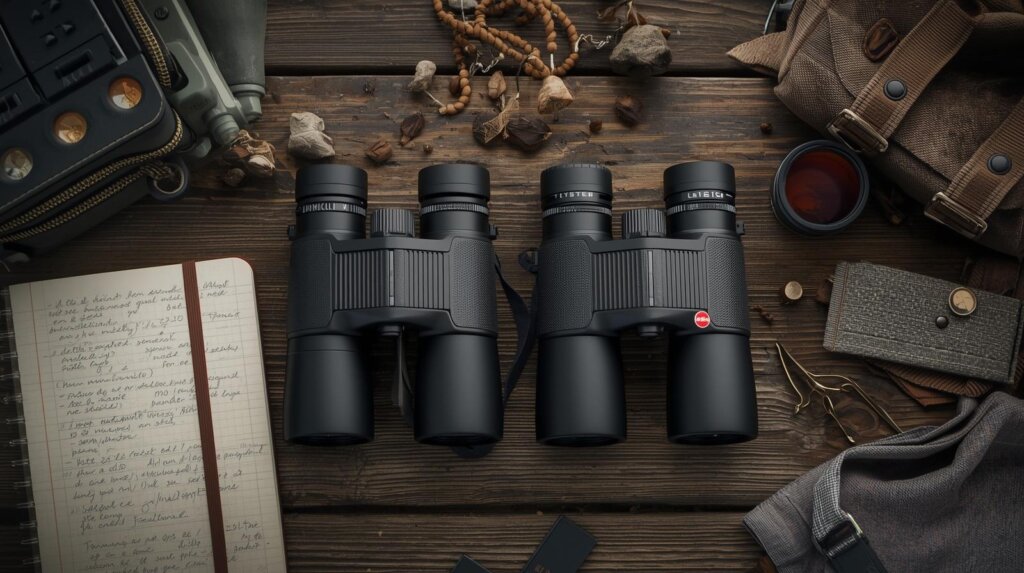
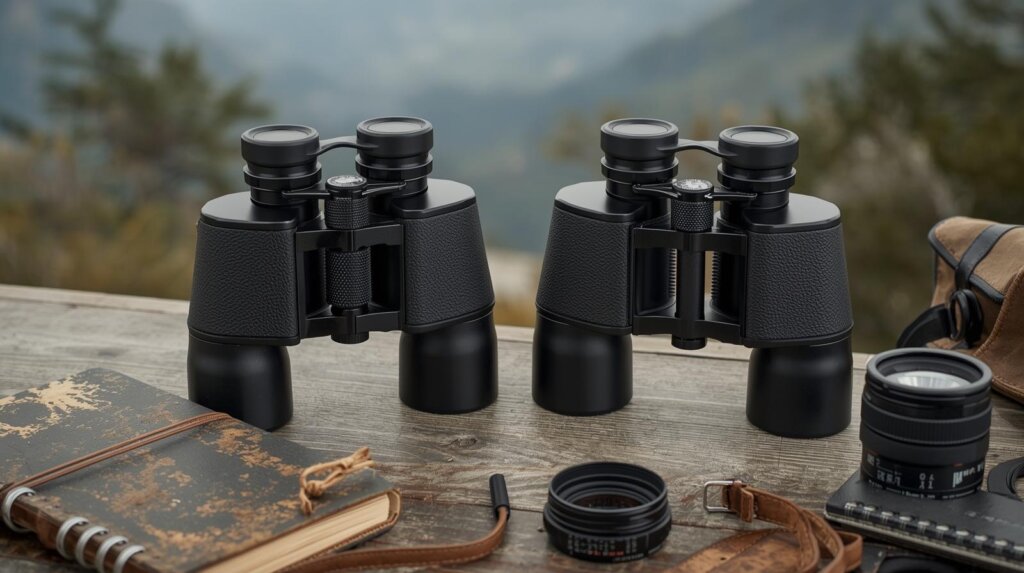
The Leica binoculars vs Zeiss debate is not about which brand has the nicer logo. That is too simplistic. Both brands sit near the top of the European optics world, both make serious binoculars, and both can make a cheap pair feel like you are looking through dusty plastic.
The real question is sharper: which brand fits your eyes, your hands, and your field routine better?
Leica usually feels compact, contrast-rich, dense in color, and mechanically refined. Zeiss often feels bright, open, fast, and wide. Leica gives you that rich, controlled image that works beautifully in mixed light. Zeiss often gives you a spacious, high-transmission view that feels quick and easy to acquire.
Neither brand wins every category. Anyone saying “Leica is always better” or “Zeiss is always better” is probably selling harder than they are thinking.
If you are still narrowing down Leica’s own lineup first, start with our guide to the best Leica binoculars. It helps you compare Noctivid, Ultravid, Trinovid, Geovid, and compact Leica models before you put them against Zeiss.
Quick Verdict: Leica Binoculars vs Zeiss
| Category | Leica | Zeiss | Better Fit |
|---|---|---|---|
| Image character | Rich, contrasty, dense | Bright, open, fast | Personal preference |
| Field of view | Strong but usually tighter | Often wider, especially Victory SF | Zeiss |
| Low-light feel | Strong contrast and shadow control | Bright, high-transmission image | Depends on habitat |
| Compact handling | Excellent, dense body feel | Excellent in SFL, larger in SF | Leica for dense feel, Zeiss for lightweight options |
| Birding | Excellent in woodland and mixed light | Excellent for fast scanning and open views | Zeiss for speed, Leica for contrast |
| Hunting | Strong, especially Geovid rangefinders | Strong bright standard binoculars | Leica if ranging matters |
| Travel | Ultravid and compact Leica models shine | SFL and compact Zeiss models compete well | Depends on size preference |
| Buyer personality | Detail-focused, tactile, contrast-loving | Speed-focused, brightness-loving, wide-view user | Depends on how you observe |
Here is the plain answer: choose Leica if you want compact premium handling, richer contrast, and a more controlled image. Choose Zeiss if you want a bright, wide, fast-acquisition view that feels effortless for scanning.
The Main Difference: Leica Feels Rich, Zeiss Feels Fast
When comparing Leica binoculars vs Zeiss, do not reduce the decision to sharpness. At this price level, both are sharp. That is the bare minimum.
The real difference is how the image behaves.
Leica often gives a darker, richer, more contrast-heavy image. It can make bark, shadows, wet leaves, rocks, and animal outlines stand out with real texture. The view has a dense quality. Not dull. Dense.
Zeiss often feels brighter and quicker. The image has an open, high-transmission feel, especially in models like the Victory SF. When you lift the binocular to your eyes, the scene feels easy to enter. Fast bird movement, open-country scanning, and quick target acquisition are where Zeiss feels very natural.
This is why some people love Leica immediately and others prefer Zeiss within ten seconds. Your eyes may simply respond better to one image style.
Leica Noctivid 8×42 vs Zeiss Victory SF 8×42
This is the flagship comparison most buyers care about.
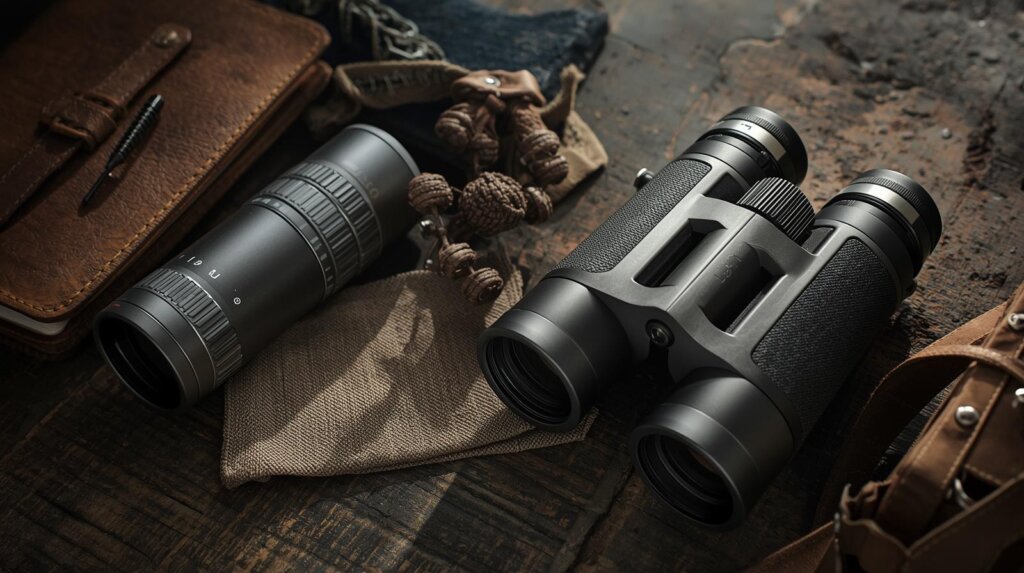
The Leica Noctivid 8×42 is Leica’s rich, controlled, premium all-rounder. It gives strong contrast, comfortable eye relief, and a compact-feeling body for serious field use.
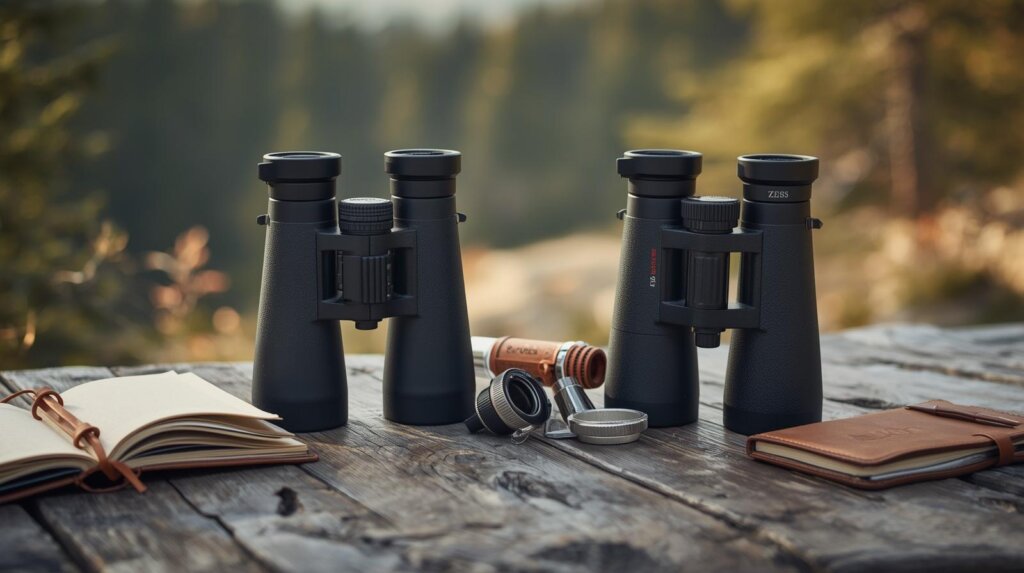
The Zeiss Victory SF 8×42 is built around speed, field of view, and a bright open image. Zeiss lists the Victory SF 8×42 with 92% light transmission, a 148 m field of view at 1,000 m, 18 mm eye relief, and 790 g weight. That wide field and lower weight are exactly why many birders and nature observers like it.
Leica’s Noctivid 8×42 is commonly listed with a 135 m field of view at 1,000 m, 19 mm eye relief, 92% transmission, and 860 g weight. In simple terms, the Zeiss gives you more field width and less weight, while Leica gives you a denser, more contrast-forward image and that classic Leica body feel.
Choose Leica Noctivid 8×42 If You:
- Prefer rich contrast over maximum field width
- Watch birds or wildlife in shaded woodland
- Like a compact, dense, premium body feel
- Want a calmer, more controlled image
- Value tactile mechanical refinement
- Often observe textured scenes like bark, brush, rock, and timber edges
Choose Zeiss Victory SF 8×42 If You:
- Want a wider view
- Track fast-moving birds
- Scan open spaces for long periods
- Prefer a lighter flagship 8×42
- Like a brighter, more open image style
- Want quick target acquisition with less visual searching
My Honest Take
For woodland birding or mixed-light wildlife watching, I would lean Leica Noctivid 8×42. The image has more grip in cluttered scenes.
For open-field birding, hawk watching, wetland scanning, or fast-moving subjects, I would lean Zeiss Victory SF 8×42. The wider field makes the job easier.
That is not avoiding the question; it is the practical answer.
Leica Ultravid HD-Plus vs Zeiss SFL
The Leica Ultravid HD-Plus and Zeiss SFL comparison is where things get more practical.
The Ultravid HD-Plus is one of Leica’s smartest buys. It is compact, rugged, and premium without feeling overdesigned. It does not shout like a flagship, but it quietly does serious work.
Zeiss SFL, especially the 8×40 and 10×40 models, is aimed at people who want high-quality optics in a lighter body. Zeiss lists the SFL 8×40 at 640 g with a 140 m field of view at 1,000 m, which makes it very attractive for hikers, travelers, and birders who hate heavy glass.
This is where the decision becomes less about “best” and more about carry style.
Leica Ultravid HD-Plus Strengths
- Compact, dense premium body
- Rich Leica contrast
- Rugged field feel
- Excellent for serious long-term ownership
- More traditional premium Leica handling
Zeiss SFL Strengths
- Lightweight for its optical class
- Wide field of view
- Fast, open viewing feel
- Great for hiking and travel
- Less tiring over long walking days
If you already know you want Leica but are stuck between its two main premium lines, read our Leica binoculars review. That review gives you a cleaner breakdown of Noctivid, Ultravid, Trinovid, and Geovid without dragging Zeiss into every decision.
Birding: Leica or Zeiss?
For birding, the Leica binoculars vs Zeiss choice is very personal.
Zeiss has a strong argument for birders because speed matters. Birds move. They jump branches, cross open sky, disappear into reeds, and punish slow optics. A wider field of view and bright image can help you find the bird faster and track it longer.
Leica answers with contrast. In woodland birding, that matters more than some people admit. Small birds often sit against chaotic backgrounds: twigs, leaves, shadows, bark, and backlight. Leica’s denser image can help separate the subject from the mess.
For Woodland Birding
Leica Noctivid 8×42 is excellent. The contrast helps in shaded, busy scenes.
For Wetland and Open Birding
Zeiss Victory SF 8×42 is extremely strong in this use case. The field of view and bright image make scanning easier.
For Travel Birding
Zeiss SFL 8×40 is very tempting because of its lightweight design. Leica Ultravid HD-Plus is better if you want a more compact, dense, premium feel.
For Fast Bird Tracking
Zeiss usually has the advantage. The wider view and quick acquisition feel natural when birds are moving.
Hunting: Leica or Zeiss?
For hunting, Leica has one serious weapon: Geovid.
Zeiss makes excellent hunting binoculars. The Victory SF and SFL lines can be very useful for hunters who want bright, wide, standard binoculars. But Leica’s Geovid rangefinding binoculars change the conversation.
If you need built-in rangefinding and ballistic support, Leica becomes the more complete hunting tool. It lets you glass, range, and make distance-based decisions with fewer movements and fewer separate devices.
That matters when light is dropping, the animal is moving, and your hands are cold.
For hunters who already use a separate rangefinder, Zeiss becomes more competitive. A Zeiss Victory SF or SFL can be brilliant for scanning terrain. But if you want one integrated field optic, Leica’s Geovid line is hard to ignore.
Choose Leica for Hunting If:
- You want Geovid rangefinding
- You need ballistic support
- You glass in timber or mixed shadows
- You prefer dense contrast
- You want one integrated optic for viewing and ranging
Choose Zeiss for Hunting If:
- You want a bright standard binocular
- You already carry a separate rangefinder
- You scan open country for long periods
- You prefer wider field of view
- You want lighter carry options like SFL
For hunters, this is not only about image quality. It is about workflow. If Leica reduces gear switching, that can matter more than a slightly wider field.
Low Light: Leica Contrast vs Zeiss Brightness
Low-light performance is where people oversimplify the Leica binoculars vs Zeiss debate.
Zeiss often feels brighter and more open. That can make dawn and dusk viewing easier, especially across fields, marshes, or open hillsides.
Leica often feels stronger in contrast and shadow separation. That can help when you are looking into woods, brush, or dark textured terrain.
So which is better?
It depends on what you mean by low light.
If you are glassing across an open meadow at sunset, Zeiss may feel brighter and easier. If you are looking into dark timber trying to separate a shape from branches and shadows, Leica may feel more useful.
Brightness helps you see. Contrast helps you identify. You need both, but your habitat decides which one matters more.
Handling and Ergonomics
Leica binoculars often feel compact and dense. The body has a serious mechanical feel, almost like a precision tool. Some users love that because it feels stable and premium.
Zeiss binoculars often feel more open and fast in the hand. The Victory SF is designed for balance and long viewing sessions. The SFL line is lighter and easier to carry, especially for people who hike, travel, or bird all day.
Neither approach is wrong.
Leica feels like a compact instrument.
Zeiss feels like a fast viewing machine.
If your hands are smaller or you prefer a short, dense body, Leica may feel better. If you want lighter carry and quick positioning, Zeiss may win.
Price and Value: Which Brand Makes More Sense?
Both brands are expensive. No point pretending otherwise.
The smart value depends on the model, not the logo. Leica Ultravid HD-Plus can be a very strong value if you want compact premium glass without going all-in on Noctivid. Zeiss SFL can be a strong value if you want lightweight premium performance without buying Victory SF.
At flagship level, Noctivid and Victory SF are both serious purchases. You are paying for refinement, not basic functionality.
Leica Feels Like Better Value If:
- You love contrast-rich viewing
- You want compact premium handling
- You are considering Ultravid HD-Plus
- You need Geovid rangefinding for hunting
- You value dense mechanical feel
Zeiss Feels Like Better Value If:
- You want wider field of view
- You value lighter carry weight
- You like bright, fast acquisition
- You are considering SFL for hiking or birding
- You spend long hours scanning open areas
The mistake is comparing brand to brand instead of model to model. A Leica Ultravid buyer and a Zeiss Victory SF buyer may not even be the same type of user.
One Product Recommendation: Leica Noctivid 8×42
For this comparison, the one Leica product I would naturally recommend is the Leica Noctivid 8×42.
It best represents what Leica does well: rich contrast, premium handling, generous eye comfort, and strong all-round field performance. It is the Leica model that makes the strongest case against Zeiss Victory SF if you prefer image depth over pure field width.
Should everyone buy it over Zeiss? No.
If you want the widest, fastest, brightest-feeling 8×42, the Zeiss Victory SF deserves a serious look. But if you want the Leica image at its most balanced, the Noctivid 8×42 is the cleanest recommendation.
For a deeper value discussion before spending premium money, read our guide on whether Leica binoculars are worth it. That article helps you decide whether Leica pricing makes sense for your actual use, not just your wishlist.
Common Mistakes When Choosing Leica or Zeiss
Choosing Based on Brand Loyalty
Brand loyalty is not a buying strategy. Your eyes do not care about internet arguments. Compare how the binocular actually feels.
Ignoring Field of View
Zeiss often has a real advantage here. If you track birds or scan open space, field width matters.
Confusing Brightness With Better Identification
Bright is nice. Contrast matters too. A brighter image is not always more informative in cluttered shadows.
Buying 10x When 8x Fits Better
Both Leica and Zeiss make excellent 10x models, but 10x is not automatically better. For most birding and general use, 8x is easier.
Forgetting Weight
A binocular that looks perfect on paper can feel annoying after hours on your chest. Weight and balance matter.
Expecting One Brand to Win Everything
That is an oversimplified answer. Leica and Zeiss have different strengths. Match the strength to your use case.
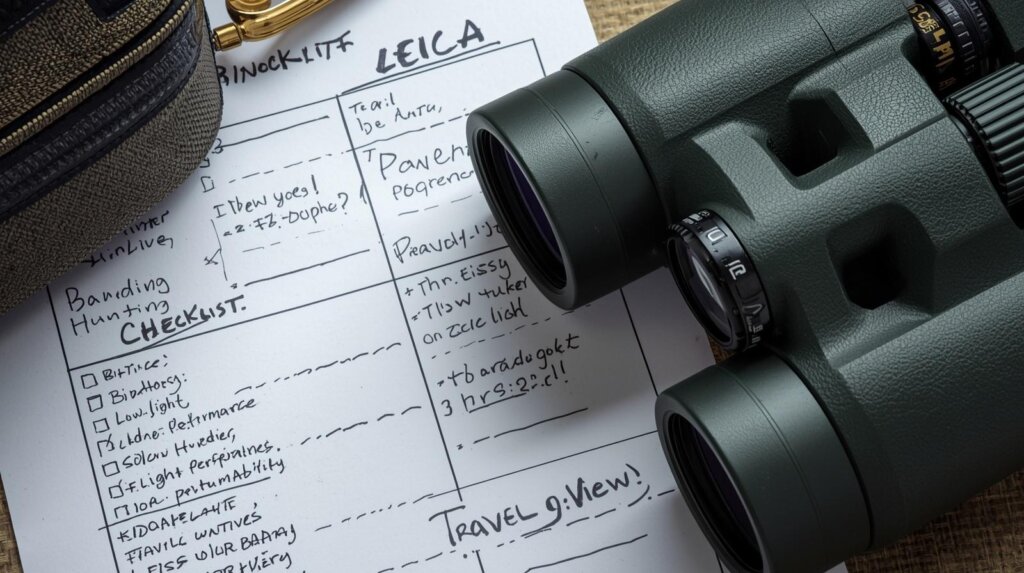
Final Verdict: Leica Binoculars vs Zeiss
The Leica binoculars vs Zeiss decision comes down to image character and field behavior.
Choose Leica if you prefer rich contrast, compact build, tactile mechanical feel, and a dense image that works beautifully in woodland, mixed light, and textured terrain. Leica also becomes the stronger hunting choice if you want Geovid rangefinding and ballistic support.
Choose Zeiss if you want a bright, wide, fast image that helps with quick scanning, open-country viewing, and long birding sessions. Zeiss Victory SF is especially strong if field of view and fast subject acquisition matter most. Zeiss SFL is excellent if lower carry weight is a priority.
My honest field answer would change by use case.
- For woodland birding, I would lean Leica Noctivid 8×42.
- For open wetland scanning, I would lean Zeiss Victory SF 8×42.
- For hunting with built-in ranging, I would choose Leica Geovid Pro.
- For lightweight hiking optics, Zeiss SFL deserves a serious look.
That is the real answer. There is no universal winner. There is only the binocular that helps you see better in your real conditions.
For more practical optics help, visit the blog tips page. And for the full binocular buying library, start from BestBinocular.net to compare Leica, Zeiss, Swarovski, hunting optics, birding binoculars, and travel-friendly gear.
FAQs About Leica Binoculars vs Zeiss
Are Leica binoculars better than Zeiss?
Leica binoculars are better if you prefer rich contrast, compact handling, and a dense image style. Zeiss binoculars are better if you want a bright, wide, fast-acquisition view. The better choice depends on your viewing style.
Which is better for birding, Leica or Zeiss?
Zeiss is often better for open birding and fast tracking because of its wide field of view. Leica is excellent for woodland birding and mixed light because of its strong contrast and subject separation.
Which is better for hunting, Leica or Zeiss?
Leica is better if you want built-in rangefinding and ballistic support through the Geovid line. Zeiss is better if you prefer a bright standard binocular and already use a separate rangefinder.
Is Leica Noctivid better than Zeiss Victory SF?
Leica Noctivid is better if you prefer contrast, color depth, and compact handling. Zeiss Victory SF is better if you want a wider field of view, lighter 8×42 body, and faster scanning experience.
Do Zeiss binoculars have a wider field of view than Leica?
In many direct flagship comparisons, yes. Zeiss Victory SF 8×42 offers a wider field of view than Leica Noctivid 8×42, which makes Zeiss very appealing for birders and open-space glassing.
Are Leica binoculars better in low light than Zeiss?
Leica often performs very well in low light because of strong contrast and shadow separation. Zeiss often feels brighter and more open. The better choice depends on whether you need contrast in timber or brightness in open terrain.
Which brand is better value, Leica or Zeiss?
Leica can be better value if you choose Ultravid HD-Plus or need Geovid features. Zeiss can be better value if you choose SFL for lightweight premium performance. Value depends on the model and your use case.
Should I buy Leica or Zeiss binoculars?
Buy Leica if you want compact premium build, rich contrast, and tactile handling. Buy Zeiss if you want a wider, brighter, faster view. Try both if possible because personal preference matters heavily at this price.




